
- 90% reduction in energy consumption for IoT devices
- 75 nanowatts of power consumption by the nPZero IC
- Decade-long battery life for IoT devices
Experts view Nanopower's nPZero IC as a groundbreaking solution for IoT power management, offering a system-level revolution that could redefine device longevity, sustainability, and economic viability.
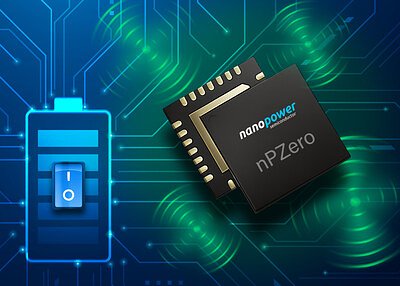
Nanopower's nPZero IC Aims for Decade-Long IoT Battery Life
NUREMBERG, Germany – March 10, 2026 – European semiconductor firm Nanopower Semiconductor announced today that its award-winning nPZero power-saving integrated circuit (PSIC) has entered volume production. The move signals a major shift from evaluation to mass deployment for manufacturers of battery-powered Internet of Things (IoT) devices, promising to slash energy consumption by up to 90% and dramatically extend the operational life of sensors in fields from smart agriculture to urban infrastructure.
The announcement, coinciding with the Embedded World conference in Nuremberg, addresses one of the most significant hurdles to the mass scaling of IoT: power consumption. As billions of devices are deployed, the logistical and financial burden of replacing batteries has become a critical barrier. Nanopower's solution aims to fundamentally rewrite the power budget for these devices, enabling them to operate for years, or even a decade, on a single battery.
A New Paradigm for Power Management
At the heart of the nPZero's innovation is an architectural shift in how IoT devices manage power. In many current systems, the main microcontroller (MCU)—the device's brain—must frequently wake from a low-power sleep state simply to poll attached sensors and check for changes. Even these brief moments of activity, repeated thousands of times a day, cumulatively drain the battery, burning power even when no meaningful event has occurred.
Nanopower's nPZero introduces a different approach. It acts as an ultra-low-power companion chip, an intelligent power management hub that sits between the host MCU and its peripherals. In this model, the power-hungry MCU can be completely powered down for long periods. The nPZero, which itself consumes as little as 75 nanowatts, takes over the role of monitoring up to four sensors. It autonomously handles sensor configuration, power-up, and data reading based on user-defined rules.
Only when a specific threshold is met—such as a temperature rising above a set point or a motion sensor being triggered—does the nPZero wake the host MCU to process the data and, if necessary, transmit it wirelessly. This creates what the company describes as an "active system without an active microcontroller." By offloading routine monitoring to a specialized, hyper-efficient chip, the system avoids the constant power cost of waking the main processor.
This efficiency is achieved through an advanced subthreshold design, where the IC's transistors operate at extremely low voltages, reducing power consumption by orders of magnitude compared to traditional designs. While most modern MCUs feature deep-sleep modes, the nPZero's ability to completely manage the system while the host is off represents a significant leap forward, moving beyond incremental improvements in MCU efficiency to a system-level power revolution.
Redefining IoT Economics and Sustainability
The implications of this technology extend far beyond the technical specifications. For Original Equipment Manufacturers (OEMs), the ability to offer products with vastly extended battery life presents a powerful competitive advantage. The reduction in maintenance creates a compelling case for a lower Total Cost of Ownership (TCO), a crucial metric for large-scale enterprise and industrial deployments.
Consider a smart city deploying thousands of environmental or structural health sensors across bridges and buildings, or a smart agriculture operation with sensors spread across vast, remote fields. The cost and labor associated with regularly replacing batteries in such scenarios are prohibitive. A device that can operate maintenance-free for years makes these deployments more economically viable and reliable.
This shift also carries significant environmental weight. Extending battery life directly reduces the number of batteries manufactured and discarded, cutting down on electronic waste, which often contains hazardous materials. Furthermore, minimizing the need for maintenance crews to service devices in the field reduces the carbon footprint associated with transportation. As the IoT industry faces increasing scrutiny over its environmental impact, particularly the embodied energy in manufacturing and maintaining billions of devices, solutions that promote longevity and efficiency are becoming critical.
Navigating a Crowded Low-Power Market
Nanopower Semiconductor enters a competitive landscape dominated by semiconductor giants like STMicroelectronics, NXP Semiconductors, and Nordic Semiconductor, all of whom are heavily invested in the low-power electronics space. These established players have focused primarily on making the MCU itself more efficient, introducing progressively deeper sleep states, dynamic voltage scaling, and specialized low-power cores.
However, Nanopower's unique selling proposition lies in its different architectural philosophy. Rather than just optimizing the MCU, the nPZero acts as a technology-agnostic power management hub that can be paired with any host MCU, processor, or wireless System-on-Chip (SoC). This flexibility allows designers to select the best-performing MCU for their core application without being solely constrained by its idle power consumption, as the nPZero can effectively negate that factor for the majority of the device's life.
The company's innovative approach has already gained industry recognition, having been named to the prestigious "EE Times' Silicon 100" list of emerging startups to watch for two consecutive years, lending credibility to its claims and market potential.
From Evaluation to High-Volume Deployment
With the transition to volume production, Nanopower is now moving to capitalize on this potential. The immediate availability of samples and development kits is a crucial step in enabling engineers to validate the nPZero's performance within their own designs. To accelerate this process, the company provides the nPZero Configurator, a graphical user interface (GUI) that allows developers to set up monitoring rules and automatically generate the necessary application programming interface (API) code. This tool significantly lowers the barrier to entry, reducing manual configuration and speeding up prototyping.
The evaluation kits are designed for flexibility, featuring compatibility with the popular Arduino format and PMOD connectors for easily attaching various sensors. This allows developers to quickly build and test proof-of-concept systems, measuring the real-world power savings in applications ranging from asset trackers to smart home alarms.
The technology's potential is perhaps most compelling in the burgeoning field of energy harvesting. With a system power draw that can be as low as 50 nanoamps while monitoring sensors, the nPZero makes it feasible for devices to be powered entirely by ambient energy sources like small, indoor solar cells or vibrational harvesters. This opens the door for truly autonomous, "install-and-forget" devices that never require a battery replacement. This shift from merely extending battery life to potentially eliminating batteries altogether marks a pivotal moment in the quest for a truly autonomous and sustainable connected world.