
- 2025 IMD World Digital Competitiveness Ranking: Taiwan secured a top-10 position globally, with 3rd place in "Future Readiness".
- Observer Global AI Index 2025: Taiwan ranked 16th, with standout rankings for Infrastructure (7th) and Government Strategy (8th).
- ANBA Computing Infrastructure: 207 PFlops, one of the most powerful in Asia-Pacific, with Foxconn's supercomputing center powered by NVIDIA's Blackwell GB300 chips.
Experts view Taiwan's strategic pivot from hardware manufacturing to AI solutions leadership as a well-founded evolution, leveraging its infrastructure and government strategy strengths, but caution that talent shortages and geopolitical risks could challenge its long-term success.
Taiwan's AI Pivot: Kaohsiung Hub Aims for Global Solutions Leadership
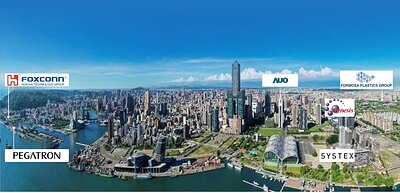
KAOHSIUNG, Taiwan – March 16, 2026 – For decades, Taiwan's name has been synonymous with the silicon at the heart of the world's technology. Now, as artificial intelligence reshapes every industry, the island is executing a strategic pivot from being the world's chip foundry to becoming a global architect of integrated AI solutions. At the epicenter of this transformation is the Asia New Bay Area (ANBA) in the southern port city of Kaohsiung, a burgeoning innovation district rapidly exporting not just hardware, but a complete "Taiwan Experience" in AI.
Fresh off a major showcase at NVIDIA's GTC summit where over 20 Taiwanese firms displayed their prowess, ANBA is being positioned as the tangible proof of this new national strategy. The ambition is clear: to leverage its deep-seated hardware excellence to build and export the full-stack AI systems—from smart city management to intelligent manufacturing—that will power the next industrial revolution.
From Hardware Heartland to AI Proving Ground
The sentiment from NVIDIA CEO Jensen Huang, "Without Taiwan, there is no NVIDIA," has long captured the island's indispensable role in the global technology supply chain, primarily for its dominance in producing the world's most advanced semiconductors. Yet, a new chapter is being written. Taiwan is leveraging this foundation to climb the value chain, a move validated by its performance in global competitiveness rankings.
In the 2025 IMD World Digital Competitiveness Ranking, Taiwan secured a top-10 position globally, propelled by an impressive 3rd-place finish in the "Future Readiness" category. This metric assesses an economy's ability to adapt and explore new digital technologies. Similarly, the Observer Global AI Index 2025 saw Taiwan jump five spots to 16th, with standout rankings for its world-class "Infrastructure" (7th) and a clear "Government Strategy" (8th).
ANBA is the physical manifestation of this strategy. The district is aggressively building out a formidable 207 PFlops computing infrastructure, which promises to be one of the most powerful in the Asia-Pacific region. This initiative is anchored by major investments, including Foxconn's partnership with NVIDIA to establish what is slated to be Asia's first supercomputing center powered by the next-generation Blackwell GB300 chips, expected to be operational by mid-2026. This raw computational power is the engine for a thriving ecosystem focused on developing, validating, and exporting sophisticated AI applications.
ANBA in Action: Building Smart Cities and Factories
Beyond impressive statistics and infrastructure plans, ANBA's success is being measured by the real-world deployment of its innovations. A roster of Taiwan's industrial giants is using the district as a testbed and launchpad for cutting-edge "AI + Industry" solutions that are already being exported to 11 countries, including the United States and Japan.
Foxconn, the world's largest AI server manufacturer, is a prime example. The company is deploying its "CityGPT" platform in Kaohsiung, using NVIDIA's AI and Digital Twin technology to enhance urban safety. The system is currently being used for safety inspections at accident-prone intersections, with ambitious plans to scale the technology across the city's 120,000 intersections. Foxconn envisions Kaohsiung as a blueprint for exporting smart city management systems globally.
The transformation is also evident at the city's port, a critical artery for the island's trade. Genesis Technology Inc., in partnership with Cisco, has established an AI and IoT R&D center within ANBA. Its "Smart⁺" solutions have been instrumental in digitizing the Kaohsiung Port, incorporating digital twins, advanced cybersecurity, and AI-powered vision recognition to elevate it to a world-class smart port.
The trend extends across diverse industries. Formosa Plastics Corporation is using its proprietary "FormosaGPT" to infuse generative AI into its petrochemical operations, capturing decades of institutional knowledge to bridge experience gaps in its workforce. In the metal processing sector, IT services leader SYSTEX is deploying AI to analyze complex industrial data, reportedly cutting production cycle times by over 30%. Meanwhile, display giant AUO is pioneering an "AI + Display as a Service" (ADaaS) model to deliver smart healthcare solutions, such as its 3D Smart Surgical Imaging Platform, to international markets.
Navigating Headwinds on the Path to AI Leadership
Despite the clear momentum and ambitious vision, Taiwan's journey to become a top-tier AI solutions provider is not without significant challenges. While the nation excels in infrastructure and government planning, its global rankings reveal critical vulnerabilities that could temper its growth.
The most pressing issue is a severe talent shortage. The 2025 Global AI Index ranked Taiwan a concerning 33rd in "Talent," highlighting a deficit of high-level AI professionals needed to create and scale innovative software. While ANBA's partnership with Cisco aims to cultivate 5,000 professionals, the island is in a fierce global competition for experts, often struggling against the higher salaries and opportunities available in hubs like Silicon Valley or Singapore.
Furthermore, the very hardware dominance that forms Taiwan's foundation also exposes it to geopolitical risks. As global tensions persist, the international drive to de-risk the semiconductor supply chain could eventually erode some of Taiwan's strategic indispensability. This underscores the urgency of its pivot towards software and integrated solutions, but that transition itself is challenging. The AI Index ranked Taiwan just 30th in "Commercial Ecosystem," suggesting a need to foster a more vibrant startup scene capable of turning AI research into profitable commercial ventures.
Finally, the immense energy required to power AI ambitions presents a practical hurdle. The buildout of massive data centers, like the 27-megawatt Foxconn facility, will place further strain on an energy grid that is already heavily reliant on imported fossil fuels, raising questions about long-term sustainability and cost.
ANBA stands as a powerful symbol of Taiwan's strategic foresight and industrial might, successfully leveraging a legacy of manufacturing excellence to compete in the new AI-driven economy. Its ability to export comprehensive solutions marks a significant evolution. However, the ultimate success of this national pivot will depend not just on building powerful computers, but on cultivating the human talent, commercial creativity, and geopolitical resilience needed to secure a lasting place among the world's AI leaders.