
- $110 million: The global nano positioning systems market in 2023
- $250 million: Projected market value by 2032
- 100 billion cycles: NASA's rigorous testing of PICMA® actuators for Mars missions without failure
Experts agree that the adaptation of space-proven nanometer-precision technology from Mars rovers is revolutionizing industries like semiconductors, photonics, and life sciences, enabling unprecedented levels of accuracy and reliability in mission-critical applications.
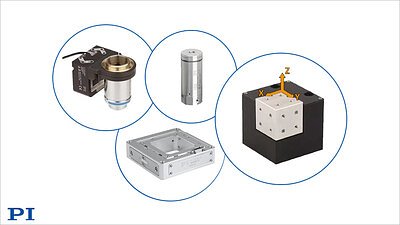
Mars Rover Tech Drives Earth's Nanometer-Precision Revolution
SHREWSBURY, Mass. – March 03, 2026 – Technology once trusted to focus a camera on the dusty surface of Mars is now at the heart of a new generation of industrial and scientific tools on Earth, promising to unlock the next wave of innovation in everything from semiconductor chips to life-saving medical research. Physik Instrumente (PI), a global leader in precision motion control, has unveiled a comprehensive portfolio of piezo flexure stages that leverage this space-proven reliability to achieve positioning accuracy at the nanometer scale.
This development comes at a critical time. The global nano positioning systems market, valued at over $110 million in 2023, is on a steep growth trajectory, with projections showing it could surpass $250 million by 2032. This surge is fueled by an insatiable demand for smaller, faster, and more powerful technology across a swath of high-tech industries. For these sectors, the ability to move and place components with near-atomic precision is no longer a luxury—it is a fundamental requirement for progress.
The Engineering of Ultimate Precision
At the core of PI's announcement are its piezo flexure stages, devices engineered to overcome the physical limitations of traditional motion systems. Unlike conventional stages that rely on ball bearings or roller guides, which inevitably suffer from friction, wear, and microscopic play known as backlash, flexure-guided systems operate on a different principle entirely.
These stages are built from monolithic structures or feature solid-state hinges that achieve motion through the elastic deformation of the material itself. This friction-free design provides several profound advantages. It eliminates stiction and particle generation, making the stages ideal for pristine environments like cleanrooms and high-vacuum chambers. More importantly, it enables motion that is exceptionally smooth, highly repeatable, and free from the mechanical play that can ruin precision-critical tasks.
This flexure guidance is paired with high-force piezoelectric actuators, which expand or contract with sub-nanometer resolution when a voltage is applied. To ensure accuracy, the system operates in a closed loop, with integrated capacitive sensors providing direct, real-time position feedback. These sensors boast linearity of better than 99.9%, allowing the system's digital controller to make instantaneous corrections and hold a position with unwavering stability. The result is a motion platform with millisecond response times and the ability to execute movements with sub-nanometer resolution, a scale where even the slightest vibration or imprecision can have catastrophic consequences.
From Mars to the Fab Floor: A Legacy of Reliability
The most compelling testament to the technology's robustness is its performance beyond Earth's atmosphere. The company's patented PICMA® multilayer actuators, which are integral to the new flexure stages, were selected by NASA for the Mars Science Laboratory (MSL) mission. These actuators were critical components on the Curiosity rover, where they performed the delicate task of focusing the Mars Hand Lens Imager (MAHLI), the camera responsible for capturing stunningly detailed images of Martian rocks and soil.
To earn a ticket to Mars, the actuators had to endure a qualification process of almost unimaginable rigor. This included a now-famous test where the components completed 100 billion cycles of operation without a single failure. This extreme reliability, proven in the unforgiving environment of space where maintenance is impossible, is now a core feature of the commercial stages used in semiconductor fabrication plants, university laboratories, and medical device manufacturing facilities. This transfer of space-grade technology provides industries with an unprecedented level of confidence for mission-critical applications where downtime is not an option and performance must be flawless over millions of cycles.
Powering Industrial and Scientific Frontiers
This level of precision is not just an engineering feat; it's a critical enabler for entire industries. In the semiconductor sector, the relentless pursuit of Moore's Law has pushed chip features to the single-digit nanometer scale. Manufacturing and inspecting these complex architectures requires wafer stages that can position, scan, and align with sub-nanometer accuracy, a task for which piezo flexure stages are perfectly suited.
Similarly, the burgeoning field of photonics, which uses light for high-speed data communication and sensing, depends on the precise alignment of optical fibers and components. A misalignment of even a fraction of a micron can lead to massive signal loss. PI's stages automate and accelerate this alignment process, enabling the high-throughput production of next-generation communication hardware.
In the life sciences, these tools are pushing the boundaries of what is visible. Super-resolution microscopy techniques, which allow scientists to see biological structures smaller than the traditional diffraction limit of light, rely on piezo stages for rapid Z-axis focusing and sample scanning. This enables researchers to observe cellular processes in real-time and in three dimensions, opening new windows into the mechanisms of disease and the development of new therapies. The applications extend further into advanced diagnostics, gene sequencing, and even robotic surgery, where precise manipulation at the micro-scale is paramount.
A Competitive Landscape of Microns and Milliseconds
While Physik Instrumente has solidified its position as a leader with this extensive portfolio, it operates within a fiercely competitive and innovative landscape. The precision motion control market is home to other major players like Aerotech Inc., MKS Instruments' Newport brand, and Thorlabs, all of which are vying for dominance. The market, though moderately concentrated, is characterized by intense R&D investment as companies race to deliver more cost-effective, specialized, and higher-performing systems.
This competition is a boon for the industries that depend on this technology. As companies push the envelope in fields like quantum computing, advanced materials science, and laser micromachining, the demand for even greater precision, speed, and reliability will only grow. The battle for nanometer-level control is intensifying, pushing an entire ecosystem of engineering firms to deliver motion systems that are not just precise, but virtually perfect.