
- $340 million: Non-dilutive grant from the Republic of Poland for Ascend Elements' new plant.
- 15,000 tons annually: Planned lithium carbonate production by 2027 at Covington, Georgia facility.
- $40 billion: Projected global battery recycling market size by the early 2030s.
Experts agree that strategic partnerships between investors and hard-tech startups, like the one between Ascend Elements and TDK Ventures, are crucial for scaling circular battery materials and addressing global supply chain challenges.
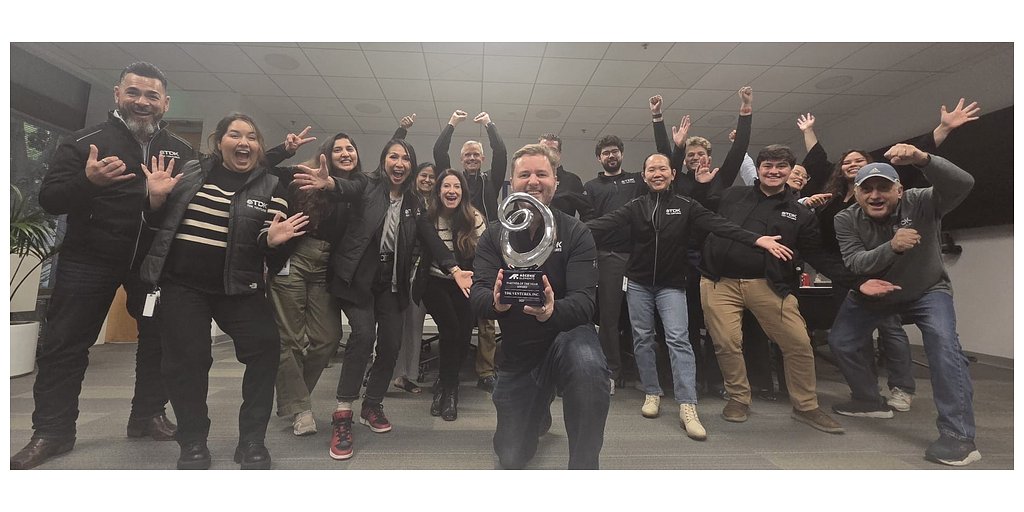
Beyond Capital: How a Strategic VC Fueled Ascend Elements' Ascent
WESTBOROUGH, Mass. – February 17, 2026 – In a move that highlights a deepening trend in cleantech investment, circular battery materials leader Ascend Elements has named TDK Ventures its 2025 Partner of the Year. While such awards are common, this one signifies something more profound: a blueprint for how strategic capital, not just cash, is becoming the critical catalyst in the global race to build resilient, local supply chains for the electric vehicle revolution.
The recognition celebrates a year of pivotal growth for Ascend Elements, a period in which the company transitioned from a promising innovator to a commercial-scale producer. The partnership with TDK Ventures, the corporate venture arm of Japanese electronics giant TDK, proved instrumental, showcasing an evolved investor-startup relationship that extends far beyond the boardroom and into the trenches of commercial negotiations, industry advocacy, and strategic planning.
A Partnership Forged in Deep Tech
The relationship between Ascend Elements and TDK Ventures underscores a shift in how "hard-tech" companies are built. Unlike software startups that can scale with code, companies tackling fundamental materials science challenges require investors who bring more than financial backing to the table.
“TDK Ventures has been an indispensable partner during one of the most formative chapters in Ascend Elements’ journey,” said Linh Austin, CEO of Ascend Elements, in a statement. “What distinguishes Nicolas and the TDK Ventures team is not just the depth of their strategic insight, but the selfless consistency with which they show up.”
This hands-on support included facilitating key customer introductions, providing counsel at critical inflection points, and offering direct support during commercial negotiations. This model aligns perfectly with TDK Ventures' stated mission to invest in and accelerate startups solving fundamental scientific challenges in sectors like energy transition and advanced materials. Their portfolio, which includes innovators in green hydrogen, nuclear fusion, and next-generation materials, reflects a focus on long-term, transformative impact.
“We are deeply honored to be recognized as Ascend Elements’ 2025 Partner of the Year,” said Nicolas Sauvage, Founder & President, TDK Ventures. “Ascend Elements is at the forefront of battery materials innovation, and we are proud to support their progress through strategic collaboration, commercial partnership, and long-term investment.”
A Transformational Year of Milestones
The award comes on the heels of a landmark year for Ascend Elements, where the company delivered on key promises and solidified its position as a leader in the circular battery economy. In 2025, the company proved its patented Hydro-to-Cathode® process could work at scale, a crucial step in de-risking its technology.
A major breakthrough occurred in September 2025, when Ascend Elements became America's first commercial-scale producer of high-purity, recycled battery-grade lithium carbonate at its facility in Covington, Georgia. With plans to produce over 15,000 tons annually by 2027, the Covington plant directly addresses the critical mineral shortages facing North America and Europe. This facility is now the only commercial-scale lithium carbonate recycler in the U.S., a significant step toward domestic supply security.
The company's commercial progress was equally impressive. In November 2025, it signed a multi-year off-take agreement with global commodities powerhouse Trafigura to supply 15,000 metric tons of its low-carbon lithium carbonate. This deal not only validates Ascend's product but also provides a clear channel to market, with Trafigura handling global logistics and distribution. That same month, a milestone agreement was announced with Chinese battery recycling specialist GEM Co. to develop a recycling network in Europe, further expanding Ascend's global footprint.
This international expansion was bolstered by a major financial commitment from the Republic of Poland, which offered a non-dilutive grant of up to $340 million to support the construction of a new precursor cathode active material (pCAM) and lithium processing plant in the country.
Riding a Wave of Policy and Demand
Ascend Elements' success is not happening in a vacuum. It is being propelled by powerful geopolitical and economic tailwinds. The global battery recycling market, valued at over $7 billion in 2025, is projected by some analysts to explode to over $40 billion by the early 2030s, driven by soaring EV adoption and the massive build-out of energy storage systems.
Western governments are actively fostering this growth through landmark legislation. In the United States, the Inflation Reduction Act (IRA) provides significant subsidies for EV battery materials recycled domestically, regardless of their original source. This policy effectively turns recycling into a strategic national asset.
Similarly, the European Union's Critical Raw Materials Act (CRMA), enacted in 2024, sets ambitious targets for 2030, requiring at least 25% of the bloc's annual consumption of strategic materials to come from recycled sources. The CRMA also aims to streamline permitting for "strategic projects" like battery recycling plants, reducing dependence on single-country suppliers. Currently, China dominates the processing of many critical minerals, a reality that poses significant supply chain and national security risks for the U.S. and its allies.
By converting battery waste into high-value cathode materials with a carbon footprint up to 90% lower than traditional mining, companies like Ascend Elements are providing a direct solution to these intertwined challenges of sustainability, cost, and geopolitical risk.
An Industry Built on Collaboration
The model of deep, strategic partnerships is becoming a hallmark of the rapidly maturing battery materials industry. Ascend Elements is not alone in leveraging these alliances to scale. Its chief competitor, Redwood Materials, has forged deep ties with automakers like Ford and Toyota to create closed-loop recycling systems. Likewise, Li-Cycle has a global strategic partnership with commodities giant Glencore, which includes both feedstock supply and a significant equity investment.
These collaborations underscore a crucial reality: no single company can build the circular battery economy alone. It requires an ecosystem of innovators, off-takers, investors, and automakers working in concert. The recognition of TDK Ventures by Ascend Elements is more than a simple thank you; it is a public acknowledgment of the symbiotic relationship required to turn ambitious green technology into a scaled, industrial reality. As the world transitions to an electric future, these partnerships are proving to be as critical as the minerals themselves.