
- 3,100 exhibitors at CIBF 2026, the world's largest battery exhibition
- $82.279 billion in China's battery export value in 2025, up 22.8%
- 65% market share held by CATL and BYD in China's domestic EV battery market
Experts agree that China's dominance in the battery industry is unmatched, driven by technological innovation, economies of scale, and strategic global expansion, though geopolitical tensions and sustainability challenges remain critical factors.
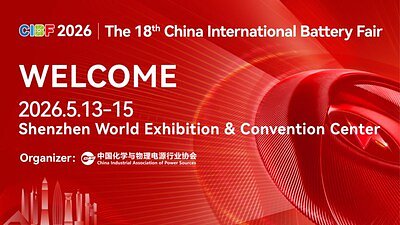
China's Battery Power Play: CIBF 2026 Spotlights Global Dominance
SHENZHEN, China – April 30, 2026 – The global energy transition is set to converge on Shenzhen next month as the 18th China International Battery Fair (CIBF 2026) prepares to open its doors. Billed as the world's largest battery exhibition, the event is more than a trade show; it is a powerful demonstration of China's commanding position in the technology that underpins the green revolution. From May 13-15, over 3,100 exhibitors will gather, showcasing a sprawling ecosystem that extends from raw materials to advanced recycling, solidifying the nation's role as the indispensable hub for the global battery industry.
The Economic Engine of a New Era
The sheer scale of CIBF 2026 is a direct reflection of China's staggering economic momentum in the battery sector. The nation's battery industry closed 2025 with remarkable results, as export value surged by 22.8% to a colossal $82.279 billion. This growth wasn't merely about volume; it signified a strategic pivot towards higher-value products. High-end lithium-ion batteries, crucial for electric vehicles (EVs) and large-scale energy storage, now constitute over 93% of these exports, underscoring a successful shift from mass production to high-quality, advanced manufacturing.
This export boom is reshaping global trade dynamics. In 2025, Germany became the top destination for China's battery exports, with shipments valued at over $13 billion, highlighting Europe's deep reliance on Chinese technology to fuel its own green transition. In contrast, exports to the United States saw a notable decline, a clear consequence of geopolitical frictions and policies like the Inflation Reduction Act (IRA) aimed at fostering a domestic supply chain.
Driving this industrial might are domestic titans like CATL and BYD. In 2025, these two companies alone commanded nearly 65% of China's domestic EV battery market. Their dominance is built on relentless innovation and massive economies of scale, particularly in lithium iron phosphate (LFP) battery technology, which has become the standard in the world's largest EV market. This domestic overcapacity is now a key driver for an aggressive global expansion, positioning Chinese firms not just as suppliers but as integral partners in energy projects worldwide.
Beyond Lithium: The Next Frontier of Energy Storage
While China's current dominance is built on lithium-ion, CIBF 2026 is poised to offer a glimpse into the future. The exhibition floor will be a hotbed of next-generation technologies, with solid-state and sodium-ion batteries taking center stage. These innovations promise to overcome the limitations of current technologies and unlock new possibilities across industries.
Solid-state batteries are the holy grail for the EV industry, offering the potential for significantly higher energy density, faster charging, and enhanced safety by replacing flammable liquid electrolytes with a solid material. However, their path to commercialization is fraught with challenges. Analysts note that production costs remain prohibitively high—estimated at up to eight times that of conventional lithium-ion cells—and scaling manufacturing processes is a major hurdle. While major players are targeting mass production between 2027 and 2030, these batteries are expected to remain a premium, pre-commercial technology for the immediate future.
In contrast, sodium-ion batteries present a more imminent and pragmatic path forward. Built with abundant and inexpensive sodium, they offer a compelling solution to the supply chain vulnerabilities and rising costs associated with lithium and cobalt. With cell costs already approaching parity with LFP batteries and projected to fall as low as $40 per kWh at scale, sodium-ion is emerging as a disruptive force, particularly for stationary energy storage and budget-friendly EVs. Major manufacturers like BYD are reportedly gearing up for volume production by 2027, a development that could democratize energy storage globally. The fair will also spotlight advancements for niche but critical applications, including batteries for electric aviation, where the demand for lightweight, high-density power sources is pushing the boundaries of material science.
A Global Supply Chain Under Geopolitical Strain
The technological showcase at CIBF 2026 unfolds against a backdrop of intense geopolitical competition. China's control over the global battery supply chain has become a source of significant strategic concern for Western nations. This dominance is not limited to cell manufacturing, where China holds over 60% of global capacity; it extends deep into the upstream, controlling the processing of critical minerals like lithium, graphite, and cobalt.
This concentration of power has triggered a wave of industrial policy in the West aimed at reducing dependency. The United States' Inflation Reduction Act and the European Union's Critical Raw Materials Act are ambitious, multi-billion-dollar efforts to build resilient, alternative supply chains. These policies use a combination of subsidies, tax credits, and regulatory requirements to incentivize domestic manufacturing and "friend-shoring"—sourcing materials and components from allied nations.
However, analysts caution that decoupling from China's mature and highly integrated ecosystem is a monumental task that will take years, if not decades. For now, international companies and policymakers will flock to Shenzhen not just to procure technology, but to gauge the trajectory of China's industrial strategy and identify opportunities and risks in a rapidly polarizing world. The event serves as both a marketplace and a geopolitical barometer.
The Push for a Sustainable and Circular Industry
Amid the focus on performance and market share, CIBF 2026 also places a significant emphasis on sustainability—a critical issue for an industry central to the green transition. The exponential growth in battery production brings with it pressing environmental questions, from the impact of mineral extraction to the challenge of end-of-life waste management.
In response, the industry is increasingly focused on creating a circular economy. The exhibition will feature a growing number of companies specializing in low-carbon manufacturing, carbon footprint tracking systems, and advanced battery recycling. These technologies are vital for mitigating the environmental impact of production and recovering valuable materials like lithium, cobalt, and nickel from spent batteries. Establishing a robust recycling infrastructure is not only an environmental imperative but also a strategic one, as it can help alleviate reliance on primary resource extraction and insulate supply chains from geopolitical volatility.
The discussions at CIBF's high-profile forums will delve into these topics, exploring pathways to zero-carbon industrial parks and establishing global standards for sustainable battery lifecycle management. As the industry matures, its ability to prove its green credentials from cradle to grave will be just as important as the performance of its products, making this a crucial pillar of its long-term viability and social license to operate.