
- 20% of Hong Kong’s 157 licensed insurers were actively using AI in early 2026
- 90% of global insurance executives plan to increase AI spending in 2026 (Accenture survey)
- 10 core participants in Hong Kong’s AI Cohort Programme, including Manulife, AIA, AXA, and Prudential
Experts would likely conclude that Manulife’s participation in Hong Kong’s AI Cohort Programme signals a strategic shift toward AI-driven innovation in insurance, with regulatory support ensuring responsible adoption and industry-wide collaboration.
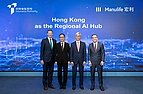
Manulife Joins Regulatory Push to Reshape Hong Kong's Insurance with AI
HONG KONG – June 15, 2026 – Manulife Hong Kong’s announcement that it has joined a key regulatory initiative for artificial intelligence is more than just a corporate milestone; it’s a clear signal of a broader, state-backed ambition to fundamentally rewire the city’s insurance landscape. The insurer was named a Core Participating Insurer in the Insurance Authority's (IA) AI Cohort Programme, a move that places the 125-year-old institution at the center of Hong Kong's strategic push to become a regional hub for AI innovation.
This isn't about simply bolting on new technology. Manulife's participation underscores a deepening commitment to integrating AI across its entire value chain, from customer service to underwriting. "AI is rapidly transforming the insurance landscape, enabling insurers to reimagine how we serve customers while driving greater efficiency and resilience," said Patrick Graham, CEO of Manulife Hong Kong and Macau. "Through this initiative... we aim to scale the responsible adoption of AI across our business, deepen collaboration and knowledge sharing with industry partners, and contribute to the broader application of AI across the sector."
The move aligns Manulife with a select group of industry heavyweights in a collaborative effort to define the future of insurance. For investors and market watchers, this signals that the race to lead in AI is no longer a fringe activity but a core strategic priority for legacy players determined not to be outmaneuvered by digital-native disruptors.
An Acceleration of an Existing AI Strategy
While the announcement marks a formal entry into the regulatory cohort, Manulife is not starting from a standstill. The company has been methodically embedding AI into its operations, treating it less as a novel experiment and more as a fundamental business tool. This latest step is an acceleration, not an initiation.
The insurer is already deploying a suite of AI-powered applications aimed at enhancing both customer and agent experiences. A customer-facing AI assistant provides 24/7 bilingual support, offering policyholders instant access to information that once required a phone call and a lengthy wait. For its vast network of agents, Manulife has rolled out an AI-powered sales enablement tool designed to deliver data-driven insights for more personalized client engagement. Another AI assistant specifically supports agents with the complexities of new business and underwriting inquiries, aiming to streamline processes and reduce administrative friction.
This internal push is being augmented by strategic external partnerships. The company recently announced a collaboration framework with Alibaba Cloud, exploring the creation of a joint AI hub to co-develop new use cases. This move suggests Manulife is looking beyond off-the-shelf solutions and is prepared to invest in building proprietary AI capabilities tailored to the unique demands of the insurance market. By combining its deep industry knowledge with the technological prowess of a cloud giant, the insurer is positioning itself to create next-generation tools for risk assessment, claims processing, and personalized product development.
Forging Hong Kong’s AI Vanguard
Manulife's participation shines a spotlight on the broader, coordinated effort by Hong Kong's regulators to cultivate a world-class AI ecosystem. The IA's AI Cohort Programme, which actually launched in August 2025, is the centerpiece of this strategy. It initially brought together seven major insurers—including AIA, AXA, and Prudential—to establish AI Centres of Excellence and foster talent. Manulife, along with BOC Life and China Life (Overseas), now joins this expanded group of ten core participants, adding significant weight and momentum to the initiative.
The program's timing is critical. Recent industry data reveals that only about 20% of Hong Kong’s 157 licensed insurers were actively using AI in their operations as of early 2026, with another 40% in the exploratory phase. This highlights a significant opportunity for growth and underscores the need for a structured, collaborative approach to drive adoption. The IA’s program is designed to bridge this gap by connecting insurers with technology providers and creating a safe space for innovation.
This initiative doesn't exist in a vacuum. It is a key pillar of a much larger regulatory framework. In March 2026, Hong Kong's financial watchdogs—including the IA, the Hong Kong Monetary Authority (HKMA), and the Securities and Futures Commission (SFC)—jointly launched the Generative Artificial Intelligence (GenA.I.) Sandbox++. This expanded sandbox provides a supervised environment for financial institutions to test GenAI applications in areas like fraud prevention and customer service, offering them technical support and complimentary access to the GPU resources at Cyberport's powerful AI Supercomputing Centre. This concerted regulatory push sends a powerful message: Hong Kong is not just allowing AI innovation; it is actively nurturing and guiding it.
The Evolving Human-Machine Partnership
For consumers and the thousands of agents who form the backbone of the industry, this AI revolution promises a tangible shift in the insurance experience. The integration of AI is set to move the needle on efficiency and personalization. Customers can expect faster claims settlements, more intuitive digital interactions, and policies that are better tailored to their individual needs.
The role of the human agent is not being replaced but redefined. Industry leaders emphasize that the goal is to free agents from repetitive administrative tasks—such as filing compliance paperwork and generating routine client follow-ups—so they can focus on what they do best: building relationships and providing complex, empathetic advice. The AI tools being deployed are designed to augment, not automate, the agent's workflow. An AI might summarize a dense policy document or qualify a lead, but the final strategic recommendation and the crucial element of human trust remain firmly in the agent's hands.
This vision of a human-machine partnership is reflected in global trends. An Accenture survey from late 2025 found that 90% of insurance executives worldwide plan to increase their AI spending in 2026, viewing the technology primarily as a catalyst for revenue growth, not just a tool for cost reduction. The focus is on empowering their workforce to deliver higher-value services, a strategy that Manulife’s initiatives clearly reflect.
Governance as the Essential Guardrail
Amid the excitement for innovation, the critical issue of governance remains front and center. Manulife's press release was careful to note that all its AI initiatives are "underpinned by a robust governance framework to ensure responsible, secure and compliant implementation." This is not mere corporate jargon; it is a direct response to the primary concern of regulators and consumers alike.
The IA has made "responsible adoption" a core tenet of its AI strategy. While specific AI guidelines for the insurance sector are still being finalized for release later this year, the regulator has already set clear expectations. For instance, any client-facing documents generated by AI must be reviewed and approved by a licensed human representative, preventing unvetted "AI hallucinations" from reaching customers. The GenA.I. Sandbox++ further emphasizes this focus on risk management, even promoting "AI vs. AI" approaches where one AI system is used to test and challenge another to identify vulnerabilities.
This balanced approach—aggressively promoting innovation within a tightly controlled, ethics-focused framework—is becoming Hong Kong's signature in the global AI race. By participating so publicly in the IA's cohort, Manulife is not only advancing its own technological capabilities but also actively co-authoring the rulebook for the next generation of insurance. This collaborative model between a major industry player and its regulator may well serve as a blueprint for other markets navigating the complex transition to an AI-driven economy.