
- $5.8M in seed funding raised by Lua for its human-AI collaboration platform.
- 30% week-on-week revenue growth since launching its agent developer platform in October 2025.
- AI agent market projected to grow from $7.6B in 2025 to $47B by 2030.
Experts view Lua's platform as a strategic solution for businesses seeking to integrate AI agents efficiently, avoiding technical complexity and vendor lock-in, while positioning itself as a key player in the rapidly expanding AI agent market.
Lua Raises $5.8M to Build the OS for Human-AI Collaboration
LONDON, UK – April 16, 2026 – Lua, a company building what it calls an "operating system for human agent collaboration," today announced it has secured $5.8 million in seed funding. The round was led by Norrsken22, a tech growth equity fund focused on Africa, signaling strong confidence in Lua's globally-focused approach to the rapidly expanding AI agent market.
The funding round also saw participation from a roster of prominent investors including Flourish Ventures, 20VC, P1 Ventures, Phosphor Capital, and the influential startup accelerator Y Combinator. A group of notable angel investors, including Privy CEO Henri Stern and OpenTable CEO Kaz Nejatian, also contributed. The capital injection is earmarked for expanding Lua's developer community and its unique distribution channel, the Lua Implementation Network.
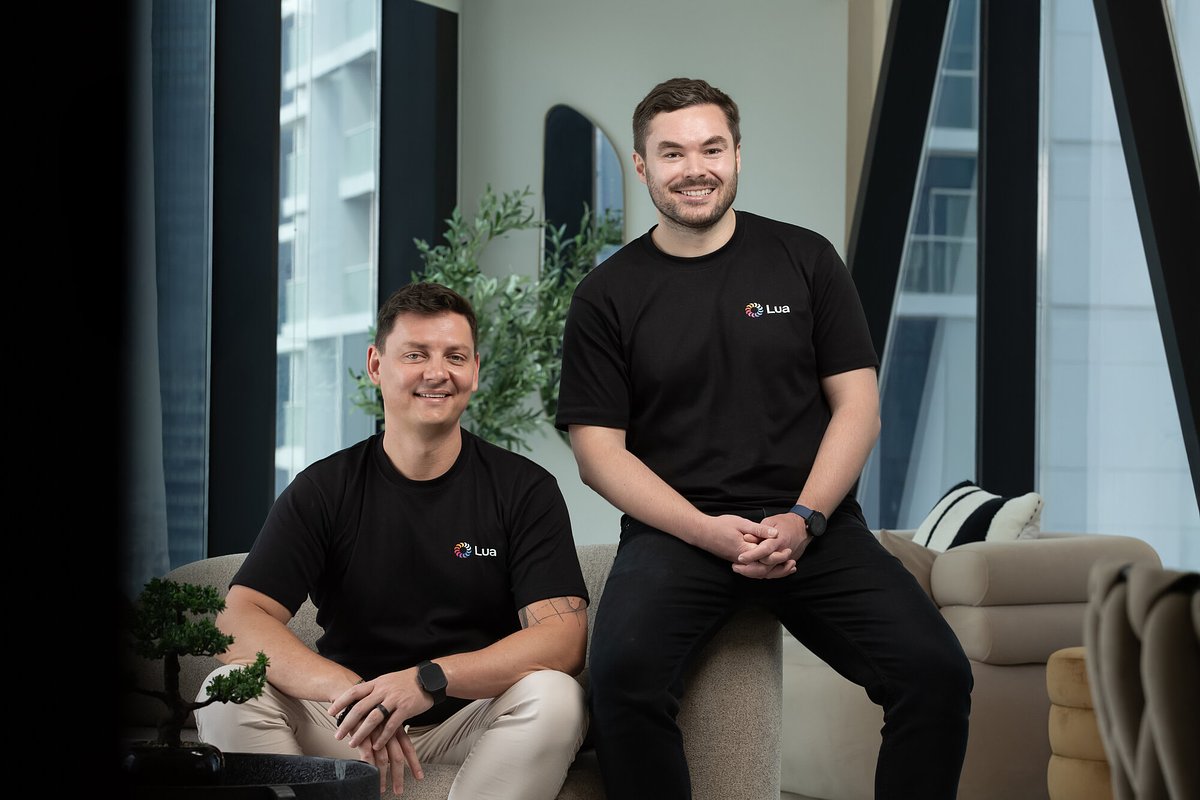
Founded by Lorcan O'Cathain and Stefan Kruger, Lua aims to solve a critical problem for modern businesses: how to integrate powerful AI agents into their workflows without getting bogged down by technical complexity or locked into expensive, rigid systems. The company provides a platform that enables any team, regardless of its technical skill level, to build, manage, and, crucially, own its own workforce of AI agents.
An Operating System for the New Workforce
At the heart of Lua's offering is a platform designed to abstract away the complexities of AI infrastructure. It's an 'opinionated, full-stack' system, meaning it handles the difficult parts—like server infrastructure, model orchestration, data handling, and channel integrations—so that businesses can focus solely on the business logic that makes their agents effective.
Deployment is designed for speed, accessible via a single command in a developer's terminal or through a conversational, natural language interface for non-technical users. This dual approach is central to Lua's philosophy: both technical and non-technical teams can collaborate on the same agents, on the same platform. According to the company, a team can stand up a fully functional agent workforce, capable of coordinating complex handoffs between AI agents and human employees, within hours.
“The companies that will win over the next few years are the ones that build their agent workforce with the same intentionality they bring to their human workforce,” said CEO Lorcan O'Cathain in the official announcement. He argues that many businesses are either blocked by the steep learning curve of AI or trapped by inflexible tools that don't reflect their actual operational needs.
O'Cathain was particularly critical of prevailing business models in the AI space. “Most agent platforms compound this with black box tooling and per-outcome pricing: the more your agents succeed, the more you pay, with no pathway to improving your agent economics," he stated. "Lua is built on the opposite principle: teams own their agents, own their outcomes, and build compounding efficiency over time.” This concept of "owning your outcomes" is a significant differentiator, promising an escape from the "outcomes tax" that penalizes efficiency in some vendor relationships.
Navigating the Crowded AI Agent Landscape
Lua enters a market that is both booming with opportunity and crowded with competitors. The AI agent space, valued at over $7.6 billion in 2025, is projected to grow explosively, with some analysts forecasting a market size of nearly $47 billion by 2030. This explosive growth has attracted a diverse array of players.
The competitive landscape includes developer-centric frameworks like the widely adopted LangChain, which offer maximum control but demand deep technical expertise. On the other end of the spectrum are no-code and low-code builders such as Zapier Central and Microsoft's Copilot Studio, which prioritize ease of use for business users. In between are comprehensive enterprise suites from giants like Google and UiPath, which offer powerful orchestration but can come with significant overhead.
Lua is carving out a strategic position in this middle ground. By providing a full-stack platform that serves both developers and business users, it aims to combine enterprise-grade power with the agility required by mid-market companies. Its public stance against per-outcome pricing and its emphasis on agent ownership directly addresses a key pain point for businesses wary of unpredictable costs and vendor lock-in. This positions Lua not just as a tool for automation, but as a strategic partner in building long-term, cost-effective AI capabilities.
Explosive Growth Fuels Investor Confidence
The $5.8 million funding round is not just a bet on a vision; it's a validation of tangible, rapid growth. Since launching its agent developer platform in October 2025, Lua has reported staggering momentum, with revenue growing close to 30% week-on-week. In a particularly telling metric, the company stated that more agents were built on its platform in February 2026 alone than in the entire preceding period since its launch.
This trajectory has clearly resonated with investors. Lexi Novitske, General Partner at lead investor Norrsken22, highlighted the synergy between Lua's mission and its leadership. “We are thrilled to support Lua. The founders fundamentally understand how agent and human workforces need to collaborate to get work done,” she said.
Novitske also pointed to the company's unique global positioning. “They are a global company that has deployed in Africa, Asia, the U.S. and Europe with deep experience, a volume of data, and a pricing intuition that's difficult to replicate. We’re excited to help them build out this operating system for human and agent workforces.”
The founders' backgrounds are integral to this global narrative. O'Cathain and Kruger met while scaling a fintech business in East Africa. O'Cathain previously led the Africa business for VC/PE fund Zephyr Management, while Kruger served as VP of Engineering at Paystack, the Nigerian fintech powerhouse acquired by Stripe. This deep, hands-on experience in scaling technology in emerging markets provides Lua with a level of credibility and strategic insight that is rare among early-stage AI startups.
A Global Strategy from Day One
Unlike many startups that focus on a single market before expanding, Lua has been "global since day one." This strategy is about more than just geographical reach; it's a core part of the company's product and distribution model. The funding will fuel the growth of the Lua Implementation Network, a community of independent partners and developer agencies that deploy Lua's agent workforces in their local markets. This partner-led model allows for rapid, capital-efficient scaling and ensures that implementations are tailored to local contexts.
This approach is already bearing fruit, with the platform being used to build a wide range of solutions across the globe. Use cases include digital banks in emerging markets overhauling their core systems, on-demand delivery services shifting to chat-first commerce, and growth marketing agencies automating lead qualification funnels.
By combining a powerful, accessible platform with a globally-minded, partner-driven strategy, Lua is not just building tools for automation. It is providing the foundational layer for what its founders see as the future organization: a hybrid structure where human teams work in seamless collaboration with a growing workforce of intelligent AI agents, transforming how businesses operate and compete on a global scale.