
- $500B: The size of the home remodeling industry being transformed by AI.
- 300%: Year-over-year surge in platform adoption for WeVisu.
- $9B: Projected market value of home renovation planning AI by 2033.
Experts would likely conclude that WeVisu's AI-driven platform is revolutionizing the home remodeling industry by addressing critical gaps in clarity, efficiency, and predictability, thereby fostering resilience in a traditionally volatile sector.
The AI Blueprint: Remodeling a $500B Industry for Resilience
ENCINO, CA – December 10, 2025 – In an economic climate where stability is prized above all, the notoriously fragmented and unpredictable home remodeling industry seems an unlikely place to find it. Yet, a California-based technology firm, WeVisu, is laying a new digital foundation for this $500 billion sector. The company’s recent announcement of a national expansion, fueled by a self-reported 300% year-over-year surge in platform adoption, signals more than just corporate growth; it points to a fundamental shift in how renovations are designed, managed, and executed.
While the 300% growth figure comes directly from the company, it lands in a market ripe for change. The home renovation planning AI market, valued at nearly $2 billion in 2024, is projected to soar to over $9 billion by 2033. This explosive growth reflects a deep-seated demand from both contractors and homeowners for the very things the traditional remodeling process lacks: clarity, predictability, and efficiency. WeVisu appears to be capitalizing on this demand not by merely launching a new tool, but by building what it calls an “AI operating system” for remodeling commerce, an integrated approach that could bring long-term resilience to a volatile industry.
Addressing the Core Certainty Gap
For decades, the remodeling process has been plagued by a fundamental disconnect between homeowner imagination and on-the-ground reality. The question, “How will it actually look?” was often met with sketches, mood boards, and ambiguous drawings, leaving homeowners to make six-figure decisions based on guesswork. Research validates this pain point, with studies showing that nearly a third of homeowners have delayed renovations simply because they were overwhelmed by design and material decisions. Furthermore, an astounding 77% of homeowners report frustration with their overall remodel experience.
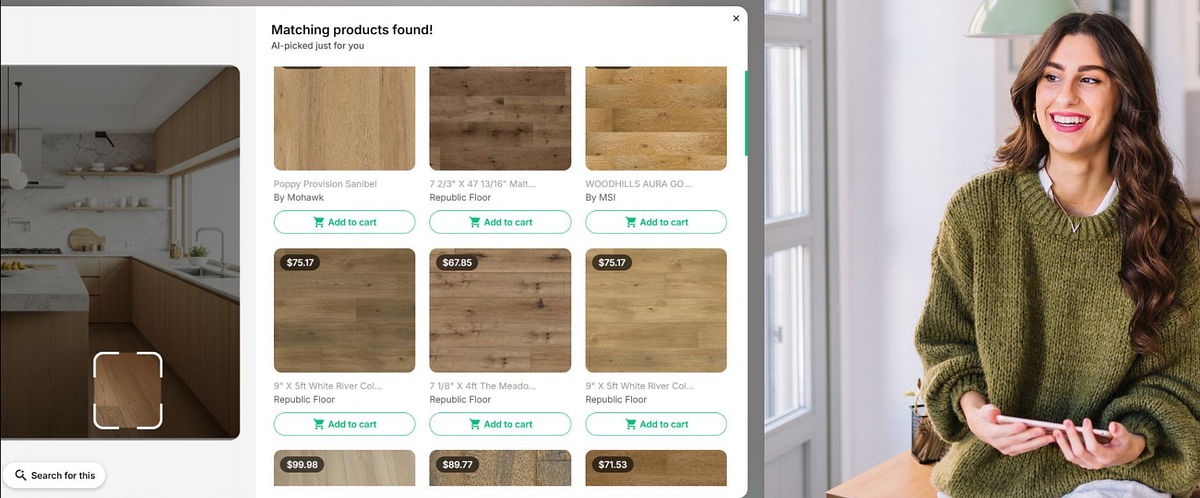
WeVisu addresses this “certainty gap” head-on. Its platform allows contractors to embed a real-time AI 3D design engine directly onto their own websites. Within seconds, a homeowner can see a photorealistic rendering of their future kitchen or bathroom. Crucially, these are not generic visualizations. They are built using an extensive, curated database of over 100,000 real-world products from more than 200 national suppliers. This means a homeowner isn’t just seeing a cabinet; they are seeing the exact cabinet, with the correct finish, next to the specific countertop and tile they are considering.
This shift from abstract concept to visual fact has profound economic implications. By providing clarity upfront, the platform dramatically shortens the decision-making cycle for homeowners. For contractors, this means less time spent on back-and-forth design discussions and a faster path from initial consultation to a signed contract, directly improving their sales cycle efficiency and project pipeline.
An Operating System, Not Just an App
The market for construction and design software is crowded with point solutions, from project management apps to standalone estimating tools. Competitors like Houzz Pro and Block Renovation offer powerful platforms, but WeVisu’s strategic focus appears to be on creating a deeply integrated, contractor-centric ecosystem. It's less of a tool to be used and more of an operating system to be run on.
The platform unifies once-siloed functions: AI-powered 3D design, a digital showroom for materials, real-time inventory and availability data from suppliers, logistics tracking, and even AI-powered website generation for contractors who lack a digital presence. By consolidating these functions, the system attacks the primary drivers of cost overruns and delays: mistakes, miscommunications, and material sourcing errors.
Traditionally, a contractor might discover mid-project that a specified tile has been discontinued or a vanity is backordered for months, leading to costly delays and frantic, last-minute substitutions. WeVisu’s real-time materials availability engine mitigates this risk by connecting the design phase directly to the supply chain. Before a single product is finalized in the design, both contractor and homeowner can see its availability, specifications, and compatibility. This creates a more predictable and stable workflow, reducing the financial shocks that can derail a project budget and damage a contractor's profitability and reputation.
Empowering Contractors to Build Resilient Businesses
Perhaps the most compelling aspect of WeVisu’s model from a business resilience perspective is its unwavering focus on empowering the contractor. Unlike platforms that pull users into a third-party marketplace, WeVisu’s technology operates entirely within the contractor’s own branded environment. The visualization engine, the digital showroom, and the material catalog all live on the contractor's website, reinforcing their brand and positioning them as a modern, tech-forward authority.
This approach effectively democratizes technology, allowing smaller, independent contractors to offer a sophisticated digital experience that was once the exclusive domain of large, well-funded firms. With the platform’s AI Website Builder, even a sole proprietor with no technical expertise can generate a professional, SEO-optimized website complete with interactive 3D design tools in minutes. This levels the playing field, enabling small businesses to compete more effectively and build stronger, more direct relationships with their clients.
By making the contractor the hero of the digital experience, WeVisu creates a sticky, symbiotic relationship. The platform’s success is directly tied to the contractor’s ability to win more projects, operate more efficiently, and increase profitability. Early adopters cited by the company, such as Anura Design and Royal Construction, report shorter sales cycles and fewer material-related delays—metrics that translate directly to a healthier bottom line. This B2B2C model fosters a loyal user base and builds a defensive moat in a competitive market, creating a foundation for durable, long-term growth.
As the remodeling industry continues its inevitable march toward digitization, the demand for integrated, intelligent solutions will only intensify. WeVisu has positioned itself not merely as a participant in this trend, but as a key architect of the new digital infrastructure. By solving the core problems of visual uncertainty and operational inefficiency, the company is building a resilient business by helping thousands of contractors do the same.