
- 99% recovery rate for platinum and palladium, 95% for rhodium from spent catalytic converters
- 46% lower emissions for PGM recovery compared to conventional smelting
- 220,000 ounces of PGMs annually from a single recycling module
Experts would likely conclude that Lifezone's breakthrough in hydrometallurgical PGM recovery represents a significant advancement in sustainable metal production, offering both environmental and strategic benefits for U.S. resource independence.
Lifezone's PGM Breakthrough to Boost U.S. Metal Independence
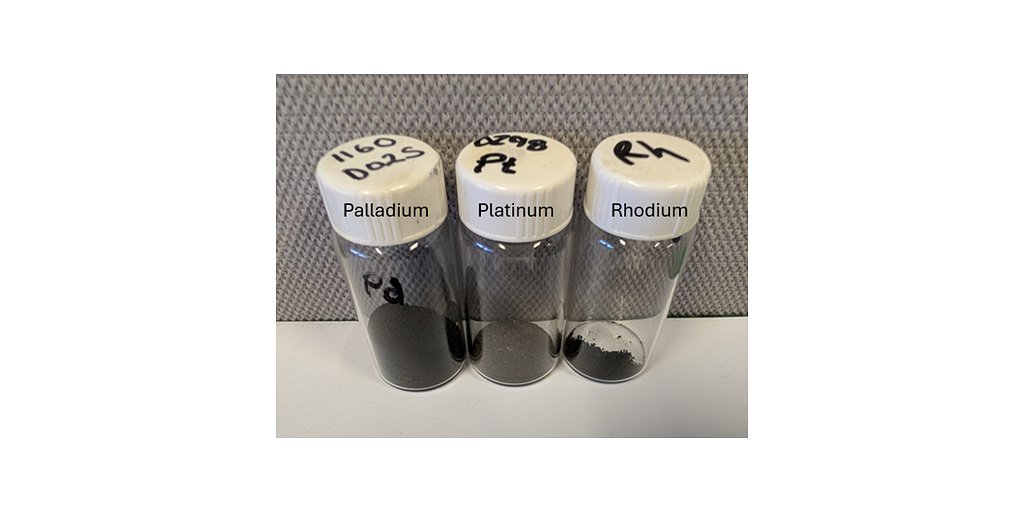
NEW YORK, NY – April 07, 2026 – Lifezone Metals has achieved a landmark in the quest for American resource independence, announcing the first-ever production of refined platinum, palladium, and rhodium from spent U.S. automotive catalytic converters using its proprietary clean technology. The milestone validates the company's innovative hydrometallurgical process and paves the way for a planned commercial refinery in the United States, aimed at slashing the nation's heavy reliance on foreign imports for these critical metals.
The announcement from the New York-based company (NYSE: LZM) follows a two-year, intensive testing campaign that successfully demonstrated a cleaner, more efficient, and potentially more profitable method for recycling Platinum Group Metals (PGMs) than traditional, high-heat smelting.
A Greener Path for Precious Metals
At the heart of this achievement is Lifezone's Hydromet Technology, a process that stands in stark contrast to the centuries-old pyrometallurgical methods that dominate the metals industry. Instead of melting down materials at extreme temperatures—a process that is energy-intensive and releases significant pollutants—hydrometallurgy uses a water-based chemical solution at lower temperatures to selectively dissolve and recover target metals.
Lifezone projects that its technology will generate substantially lower carbon dioxide emissions per ton of metal produced and, critically, zero sulfur dioxide emissions, a common and harmful byproduct of smelting. An independent study commissioned by the company suggested that the Hydromet Technology could result in 46% lower emissions for PGM recovery compared to conventional methods. This positions the technology as a key enabler for a circular economy, aligning with tightening environmental regulations and growing market demand for sustainably sourced materials.
The technical success was proven through an exhaustive series of 1,179 locked-cycle and pilot batch tests conducted at its Simulus Laboratories. Using one ton of U.S.-sourced catalytic converter material, the process demonstrated remarkable efficiency, achieving recovery rates of over 99% for both platinum and palladium, and 95% for rhodium. The initial metal purities exceeded 99%, with a clear path to optimize the process for purities above 99.9%.
“The production of platinum, palladium and rhodium metal samples from spent Autocats is a groundbreaking achievement for our integrated technology team,” said Dr. Mike Adams, Lifezone’s Chief Technology Officer. He emphasized that the success “highlights the effectiveness of our hydrometallurgical techniques and our commitment to sustainable production of critical metals,” and proves the technology can recover PGMs “in a cleaner and more efficient way than conventional smelting and refining methods.”
Securing America's Strategic Resources
The geopolitical and economic implications of this technological advance are profound. The United States is structurally dependent on foreign nations for its PGM supply, importing approximately 2 million ounces annually. The primary sources are South Africa and Russia, creating a supply chain fraught with potential economic and national security vulnerabilities.
These metals are not luxury goods; they are indispensable inputs for critical U.S. industries. PGMs are essential for automotive emissions control systems in gasoline and hybrid vehicles, advanced defense and aerospace manufacturing, life-saving medical technologies, and the burgeoning clean energy sector, particularly in hydrogen and fuel-cell applications. The U.S. Geological Survey has ranked rhodium, for instance, in the highest supply chain risk category.
Lifezone's project directly addresses this strategic weakness. The company’s stated ambition is to provide the United States with a scalable, closed-loop system for PGMs, turning domestic waste into a secure resource.
“Achieving the first-ever production of platinum, palladium and rhodium metal samples from spent Autocats marks a historic milestone,” stated Lifezone CEO Chris Showalter. “Our customized flowsheet lays a strong foundation for the Company’s overarching aspiration to become the U.S.’ closed loop, traceable and responsibly sourced critical metals solution.”
Showalter highlighted the project's transformative potential, noting that a single recycling module could produce 220,000 ounces of PGMs annually, nearly matching the output of the only significant primary PGM mine in the U.S. “On rhodium specifically,” he added, “we could produce more than five times the current annual figure coming out of the country’s only producing mine, from a single Lifezone Autocats Recycling plant.”
The Commercial Play and Competitive Landscape
Beyond its environmental and strategic benefits, Lifezone's venture is a calculated business move, backed by major industry players and poised to disrupt a lucrative market. Global mining and trading giant Glencore has signaled its confidence by investing $1.5 million for a 6% stake in the project and retaining an option to fund 50% of the future plant's capital costs.
This partnership provides not only financial validation but also strategic support from a key figure in the global commodities market. While the PGM recycling industry has established leaders like BASF and Umicore, Lifezone aims to carve out a significant niche with its technology's superior environmental profile and efficiency. The company’s process promises a substantially shorter production timeline—recycling metals in weeks rather than the months required by traditional smelters—which reduces the amount of valuable metal tied up in inventory and improves working capital efficiency.
With the technical flowsheet now proven and locked down, the company is advancing its engineering design and feasibility study work. All eyes are on the second quarter of 2026, when Lifezone anticipates making a final financial investment decision (FID) on the construction of its first commercial plant in the United States. This timeline aligns favorably with U.S. government initiatives like the Inflation Reduction Act, which provides incentives for developing domestic critical mineral supply chains.
From Pilot Success to Industrial Scale
The journey from concept to this point has been a meticulous, multi-year effort. The successful pilot plant operations have provided the essential design criteria needed to engineer a full-scale commercial refinery with confidence. The company’s in-house capabilities, bolstered by the integration of Simulus Laboratories, have allowed it to accelerate testing, control costs, and protect its intellectual property throughout the development process.
With the pilot phase complete, the focus now shifts to scaling up. The engineering team is working to finalize the design for the commercial plant, building upon the pilot's success to ensure robust and reliable operations. The next phase will also involve further refining the process to consistently achieve the ultimate purity targets of over 99.95% for platinum and palladium and more than 99.9% for rhodium, grades required by high-tech applications.
This successful production of refined metals from American scrap is more than a laboratory curiosity; it is a crucial proof point that de-risks the path to commercialization. It provides tangible evidence that a domestic, environmentally responsible, and economically viable source of critical PGMs is within reach, heralding a new era for American resource security.
Topics & Related
Software & SaaS
Automotive Manufacturing
Renewable Energy
Circular Economy
Trade Wars & Tariffs
AI & Emerging Technology
Regulatory & Legal
Related Company Pulse