
- PCIe 6.0 Bandwidth: 64 gigatransfers per second per lane
- Retimer Power Consumption: Over 10 watts for a 16-lane PCIe 6.0 retimer
- Optical Connection Distance: Extended from meters to several hundred meters
Experts agree that Kyocera's optical module represents a significant advancement in AI data center infrastructure, addressing critical bottlenecks in power consumption, speed, and physical design by leveraging optical fiber technology.
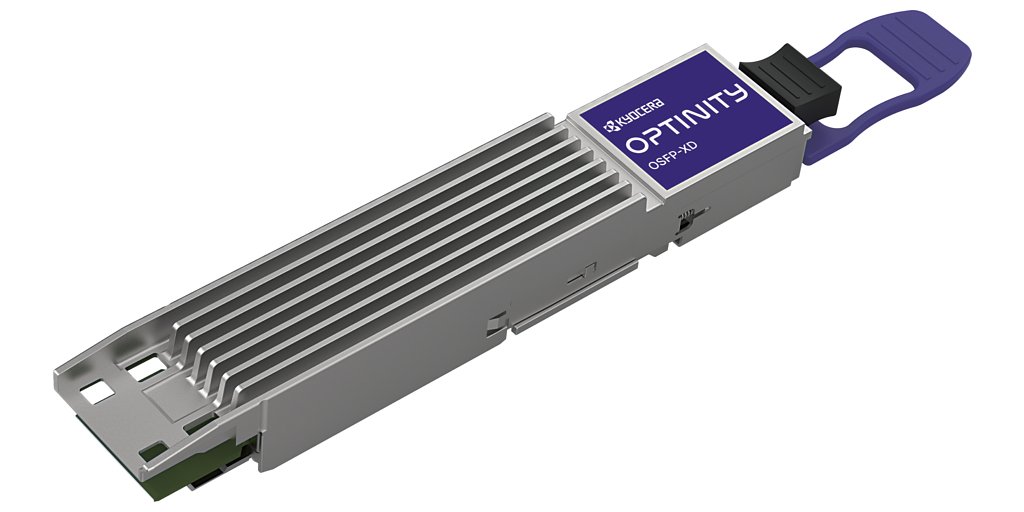
Kyocera's New Optical Module Aims to Unleash AI Data Centers
KYOTO, Japan – March 10, 2026 – Kyocera Corporation has unveiled a new pluggable optoelectronic module designed to break a critical bottleneck in the artificial intelligence revolution. The new module, part of its OPTINITY® series, supports the next-generation PCIe 6.0 standard, using light to transmit data at immense speeds and with far greater efficiency than the copper wiring currently straining the limits of modern data centers.
This development positions Kyocera in a high-stakes race against tech giants to define the infrastructure that will power the next decade of AI advancement. By converting electrical signals from processors into optical signals, the technology promises to solve pressing issues of power consumption, speed, and physical design that threaten to cap the growth of large-scale AI systems.
Overcoming the Copper Barrier in the AI Era
The explosive growth of generative AI has created an insatiable demand for computational power, leading to a corresponding surge in data traffic within data centers. The connections linking thousands of GPUs and AI accelerators, known as Peripheral Component Interconnect Express (PCIe), are the superhighways for this data. However, as the industry moves to the PCIe 6.0 standard—which doubles bandwidth to a staggering 64 gigatransfers per second per lane—traditional copper wiring is hitting a wall.
Electrical signals degrade rapidly over distance. At PCIe 6.0 speeds, connections are often limited to less than a meter within a server rack, forcing a dense, heat-intensive architecture. To extend this reach, data centers rely on power-hungry components called retimers, which clean up and re-boost the signal. A single 16-lane PCIe 6.0 retimer can consume over 10 watts of power, and these components add latency, a critical performance penalty in AI workloads. This physical constraint severely limits how data centers can be designed, hindering cooling efficiency and making maintenance a complex challenge.
A Leap to Light Speed: The Optical Solution
Kyocera's new module addresses these challenges by replacing electrical pathways with optical fiber. The company has developed a pluggable module in the OSFP-XD form factor that enables high-capacity communication using PCIe 6.0 x16. By translating data into pulses of light, the connection distance can be extended from mere meters to several hundred meters or more, all while maintaining signal integrity.
This leap has profound implications. First, it eliminates the need for retimers between connected devices, resulting in a direct and significant reduction in both power consumption and latency. This contributes not only to lower electricity bills for data center operators but also to a smaller environmental footprint—a growing concern for the energy-intensive AI industry.
Furthermore, the module's pluggable format provides crucial versatility. Unlike permanently onboarded solutions, these modules can be easily installed, replaced, or upgraded, allowing for greater flexibility in system design and future-proofing investments. This enables architects to build more disaggregated systems, where pools of GPUs, CPUs, and storage can be located in different racks and connected optically, optimizing for performance, cooling, and maintenance rather than being constrained by the length of a copper cable.
Strategic Alliances in a High-Stakes Race
This technological advance is the fruit of a strategic partnership between Kyocera and AuthenX, Inc., a Taiwanese startup specializing in silicon photonics. Kyocera leveraged its corporate venture capital fund, KVIF-I, to invest in AuthenX in December 2025, accelerating a collaboration that combines AuthenX's cutting-edge module design with Kyocera's deep expertise in PCIe protocol management and signal integrity.
This move highlights a broader industry trend of established corporations partnering with agile startups to stay ahead in the fast-moving AI hardware market. Kyocera is not alone in this race. The market for optical interconnects is fiercely competitive, with major players like Broadcom, Intel, and NVIDIA all making significant pushes.
Broadcom has already demonstrated PCIe Gen6 over optics, while Intel is developing its co-packaged optical (OCI) chiplets. NVIDIA, meanwhile, has invested billions in optical technology companies to secure its supply chain for future AI systems. Kyocera's announcement places it squarely in this group of innovators, betting that its flexible, pluggable solution will find favor with data center operators looking for practical, scalable upgrades.
Paving the Way for Greener, More Flexible Data Centers
The ultimate impact of technologies like Kyocera's optical module will be a fundamental rethinking of data center architecture. The ability to connect resources across racks and rows with low-latency, high-bandwidth optical links enables a move towards a more efficient, modular, and scalable infrastructure. This flexibility is expected to dramatically improve cooling efficiency by allowing heat-generating components to be spaced further apart, directly addressing one of the biggest operational costs and challenges in high-density computing.
Looking ahead, Kyocera plans to expand its lineup to include other form factors, such as Optical CDFP, catering to a wide range of applications and system configurations. The company will showcase the new OSFP-XD module at the upcoming OFC 2026 conference in Los Angeles, one of the world's premier events for the optical communications industry. The demonstration, held at the AuthenX booth, is expected to draw significant attention from data center operators and hardware architects eager to see the next wave of technology designed to sustain the momentum of the AI revolution.