
- 13 Canadian children selected as Official Match Ball Carriers (OMBCs) for the 2026 FIFA World Cup.
- Two selection pathways: Athletic talent (OMBC Cup) and community impact (Inspiring Stories program).
- $1B+ in taxpayer costs for hosting the World Cup, with Kia's program offering a fraction of that investment for high brand equity.
Experts would likely conclude that Kia's OMBC program is a strategic masterstroke, blending emotional engagement with long-term brand loyalty, effectively leveraging the World Cup's cultural impact to create lasting connections with Canadian families.
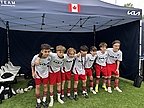
Kia's World Cup Play: More Than a Match Ball, It's a Masterclass in Brand Strategy
TORONTO, ON – June 05, 2026 – As Canada gears up to co-host the largest FIFA World Cup in history, the on-field action is still two years away. Yet, the strategic maneuvers have already begun. This week, Kia Canada announced the names of 13 Canadian children who will serve as Official Match Ball Carriers (OMBCs), granting them the "once-in-a-lifetime" opportunity to walk onto the pitch in Toronto or Vancouver. On the surface, it’s a heartwarming story of dreams realized. But beneath the feel-good headlines lies a sophisticated and calculated execution of modern brand strategy, a case study in transforming a massive sponsorship deal into tangible, human-centered engagement.
For leaders watching the cross-industry trends where innovation meets execution, Kia’s playbook offers a critical assessment. This isn't just about corporate social responsibility; it's a multi-layered investment designed to embed the brand into the cultural fabric of a nation at a pivotal moment. The company is not merely sponsoring an event; it is actively curating the memories that will define it for a generation of young Canadians and their families.
The Human Face of a Global Partnership
At the core of this strategy are 13 young people, from Halifax to Delta, selected through two distinct pathways. Seven were chosen through the rigors of the Kia OMBC Cup, a national tryout that culminated in an international youth tournament in Los Angeles. There, players like Jayden Fernandes of Toronto and John Armstrong of Vancouver competed against teams from eight other nations, even securing a win against the United States. This high-performance track, which included mentorship from Canadian soccer icon Christine Sinclair, identifies and rewards athletic dedication.
The second pathway, the "Inspiring Stories" program, reveals a deeper strategic layer. Here, six youth, including Jaisen Occenad from Caledon and Hana Ganief from Delta, were selected based on video nominations that showcased not just their love for soccer, but their perseverance and positive community impact. This dual-pronged approach is brilliant in its simplicity. It allows the brand to celebrate both elite youth talent and the character-building aspects of sport, widening its appeal immeasurably.
"We're celebrating young Canadians who demonstrate passion, perseverance and leadership both on and off the pitch," stated Michael Kopke, Director of Marketing at Kia Canada, in the official announcement. His words underscore the program's design: to find and amplify stories that align perfectly with the company’s brand slogan, 'Movement that inspires.' By providing this platform, the automaker moves from being a passive logo on a banner to an active enabler of personal achievement and community spirit.
Driving Brand Loyalty Beyond the Dealership
This initiative is a far cry from traditional automotive advertising. In an era of ad-blockers and fragmented media, creating genuine emotional connection is the holy grail of marketing. The OMBC program is a masterclass in experiential marketing, a strategy that recognizes that shared experiences build far stronger brand affinity than a 30-second commercial. The return on investment here isn't measured in immediate car sales, but in the long-term cultivation of brand loyalty.
Consider the network effect. For each of the 13 children selected, there is a network of parents, grandparents, coaches, teammates, and community members who are now emotionally invested in the Kia brand. The automaker has successfully associated itself with one of the most powerful moments in these families' lives. This type of deep, authentic connection is what brands spend billions trying to manufacture. The company's long-standing partnership with FIFA, along with its support for teams like Toronto FC and organizations like Special Olympics Canada, demonstrates a consistent, long-term strategy rather than a one-off marketing stunt. This isn't a campaign; it's a core tenet of their business model in Canada.
This approach aligns with their global World Cup campaign, "Inspiration connects us all." The OMBC program is the tangible proof point of that slogan, transforming an abstract corporate message into the very real story of a child from Baie-de-Bouctouche, New Brunswick, stepping onto the world's biggest stage.
Fueling the Grassroots Engine
While Kia's program is a strategic win for the company, its significance extends into the broader landscape of Canadian sports development. The timing could not be more critical. Soccer is already the number one participation sport for Canadian youth, and the "World Cup Effect" is expected to cause a new surge in registrations. The challenge for the nation is to convert this wave of enthusiasm into a sustainable legacy.
Kia’s initiative provides a high-profile example of how corporate partnership can fuel this engine. It complements a wider ecosystem of development efforts. Canada Soccer is set to mandate new Grassroots Standards in 2026, shifting focus from winning to skill development and positive experiences. Charities like Canadian Tire Jumpstart are building 25 new pitches in underserved communities. And the federal government is injecting hundreds of millions into youth sports, with some funds directly tied to World Cup legacy projects.
In this context, the OMBC program acts as a powerful aspirational beacon. It shows the nearly one million registered youth soccer players in Canada that there is a tangible link between their local pitch and the global spectacle of the World Cup. It demonstrates that dedication, whether through athletic prowess or community leadership, can lead to extraordinary opportunities.
The Billion-Dollar Backdrop: A Calculated Investment
It is impossible to analyze this program without acknowledging the immense financial scale of its backdrop. Hosting the FIFA World Cup 2026 will cost Canadian taxpayers over a billion dollars, with host cities Toronto and Vancouver facing significant cost overruns for stadium upgrades and security. In return, governments are banking on a projected multi-billion-dollar lift to the national GDP, driven by tourism and domestic spending.
Within this high-stakes environment, Kia’s investment in the OMBC program appears remarkably efficient. While the exact cost is not public, it is a fraction of the capital being deployed for infrastructure. Yet, the brand equity it generates is arguably more direct and enduring. While governments invest in concrete and steel, Kia is investing in human stories and emotional capital. As the public debates the costs and benefits of hosting, the automaker has positioned itself unequivocally on the side of inspiration and opportunity for the next generation. It is a shrewd move that insulates the brand from potential criticism of the event's public cost while capturing all of the upside associated with its excitement and legacy. The program ensures that when the final whistle blows and the economic impact reports are filed, the most resonant memories for many Canadians will be tied not to stadium capacity, but to the image of a local child standing proudly in the center of the world.
This is the essence of resilient, human-centered strategy: creating quantifiable benefits that are felt on a personal level, thereby building a brand that is not just recognized, but genuinely valued.