
- 58% unmet demand for qualified technicians in the skilled trades, costing the economy $7.4 billion annually (TechForce Foundation).
- 14,000+ motorcycle mechanic jobs available in 2023, with a widening skills gap due to aging workforce and misperceptions about technical careers.
- $67 billion projected industry growth by 2034, threatened by technician shortages.
Experts would likely conclude that Yamaha's exclusive sponsorship of the Motorcycle Service Technology Competition is a strategic long-term investment in talent acquisition and brand loyalty, addressing a critical industry-wide technician shortage.
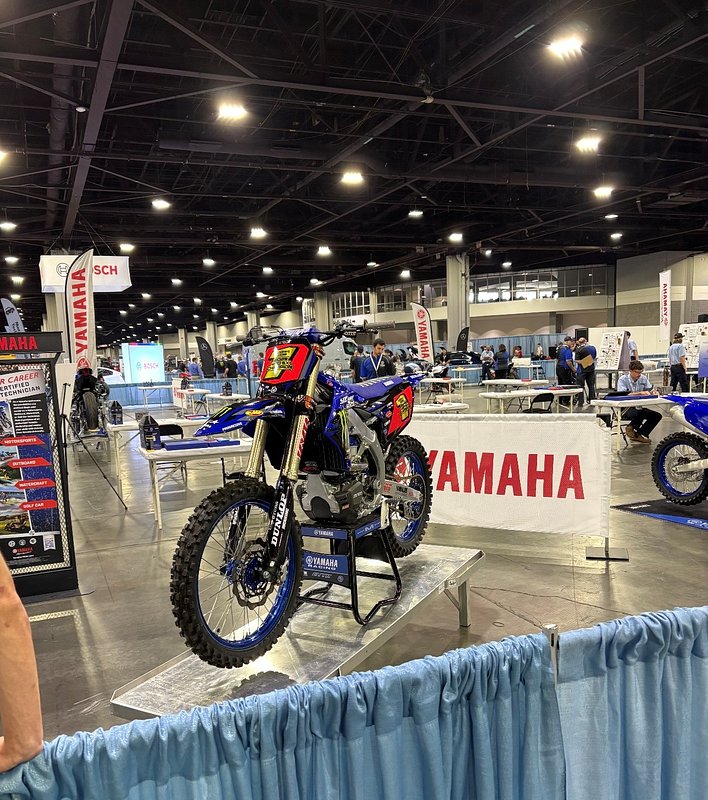
Yamaha's Strategic Gambit: Why Backing Students is a Power Play
MARIETTA, GA – June 15, 2026 – In a move that speaks volumes about the shifting priorities of global manufacturing, Yamaha Motor Corporation, USA, has drawn a line in the sand. By announcing its role as the sole original equipment manufacturer (OEM) supporting the Motorcycle Service Technology Competition at SkillsUSA’s National Leadership Conference, the company is making a calculated bet not on new engine technology or futuristic designs, but on the very people who will keep those machines running.
This exclusive sponsorship is far more than a philanthropic gesture; it is a strategic maneuver aimed squarely at one of the most significant threats to the powersports industry: a catastrophic and deepening shortage of skilled technicians. While competitors focus on proprietary training networks, Yamaha is investing at the grassroots level, positioning itself as a foundational partner in the next generation’s technical education—a move that could grant it a decisive long-term advantage.
A Crisis on Two Wheels
The hum of a finely tuned engine is being drowned out by the deafening silence from empty service bays across the country. The powersports industry is grappling with a full-blown workforce crisis. According to a recent report by the TechForce Foundation, the skilled trades face a staggering 58% unmet demand for qualified technicians, a deficit that rips an estimated $7.4 billion from the economy annually.
For the powersports sector, this isn't a future problem; it's a present-day emergency. The number of available motorcycle mechanic jobs, which stood at over 14,000 in 2023, is only part of the story. The real issue is a widening “skills gap.” As motorcycles, ATVs, and side-by-sides evolve into complex machines laden with advanced electronics and diagnostic systems, the demand for true diagnosticians has far outpaced the supply of traditional mechanics. An aging workforce is retiring in droves, while younger generations have been historically steered away from what are often wrongly perceived as low-tech careers. The result is a bottleneck that chokes dealership revenue, frustrates customers with long wait times, and ultimately threatens the industry's growth trajectory, which is projected to reach nearly $67 billion by 2034.
Yamaha's Bet on the Next Generation
Against this turbulent backdrop, Yamaha’s exclusive partnership with SkillsUSA appears less like a sponsorship and more like a strategic supply chain investment. SkillsUSA is not a niche organization; it is a national workforce development powerhouse, with its programs reaching hundreds of thousands of students. The Motorcycle Service Technology Competition is a rigorous gauntlet designed by industry experts, testing students on everything from precision measurement and electrical diagnostics to brake service and customer interaction—the exact competencies desperately needed in modern service departments.
“Being the only OEM represented at this year’s National Leadership Conference is both an honor and a responsibility,” said Mike Doughty, Yamaha's General Manager of Sales & Dealer Network. His statement underscores the strategic thinking behind the move. “Our involvement demonstrates Yamaha’s commitment not just to innovation in motorsports, but to the people and communities that sustain our industry, especially the young individuals who will lead it into the future.”
This initiative directly addresses the dealer network's most pressing concern. “Our dealers rely on passionate and knowledgeable professionals,” Doughty added, framing the sponsorship as a direct effort to “build that pipeline” of talent. By embedding its brand and technology within the educational framework, Yamaha is not only cultivating future technicians but also future brand loyalists, ensuring its nationwide dealer network has first-dibs on the nation's best-trained emerging talent.
A Crowded Field with Divergent Strategies
Yamaha’s approach is particularly noteworthy when contrasted with the strategies of its primary competitors. Other major OEMs are by no means idle. Honda invests heavily in its proprietary HonTech program and an annual National Technician Contest to sharpen the skills of its existing dealership workforce. Harley-Davidson has a long-standing and robust partnership with institutions like the Universal Technical Institute (UTI) through its Harley-Davidson University network. Kawasaki, meanwhile, is set to open a new technical training center focused on advanced diagnostics for its dealers.
These are all credible and necessary initiatives, but they largely focus on refining talent already within or adjacent to their own ecosystems. Yamaha’s strategy is different in its scope and target. By becoming the sole OEM partner for a national, student-focused competition, it is casting a wider net at an earlier stage. It is a public, visible commitment to the foundational level of technical education, positioning the company as a leader in solving an industry-wide problem, not just its own staffing needs. This move could prove to be a masterstroke in brand positioning, painting Yamaha as the manufacturer most invested in the long-term health of the entire powersports community.
From Classroom to Career
The impact of this investment is most evident on the ground. Instructors at vocational colleges report a palpable sense of purpose and motivation among students participating in SkillsUSA. They see the program as a direct pathway to “lucrative careers,” with competitions providing the pressure-testing that forges true professionals. For students, the program offers more than just skills; it provides validation, confidence, and a clear line of sight to a viable and rewarding career.
This initiative is not an anomaly for Yamaha but a cornerstone of a consistent, long-term corporate strategy. The company is a signatory of the President’s Pledge to America’s Workers and has a well-established Marine Technical School Partnership program that has expanded to 120 schools. These programs, alongside its internal Yamaha Technical Academy, reveal a holistic and sustained effort to de-risk its future by securing its most valuable resource: human capital. In an era defined by rapid innovation and geopolitical turbulence, Yamaha is demonstrating that the most durable competitive advantage may not come from a faster engine or a lighter frame, but from a deep and strategic investment in the people who build, sell, and service the products.