
- 1-year validation in low Earth orbit (LEO): TORMED® successfully completed a rigorous one-year test aboard the International Space Station (ISS) as part of the MISSE-13 mission, proving its durability against extreme space conditions.
- Negative Coefficient of Thermal Expansion (CTE): IMIDETEX® contracts when heated, enabling ultra-stable satellite components that maintain precision despite extreme temperature fluctuations in orbit.
- Ultra-low outgassing: TORMED® minimizes contamination risks in space, ensuring long-term performance of sensitive satellite systems.
Experts agree that I.S.T. Corporation's space-proven materials, TORMED® and IMIDETEX®, represent a transformative advancement in satellite engineering, offering unprecedented durability, precision, and performance that will redefine satellite design and operations.
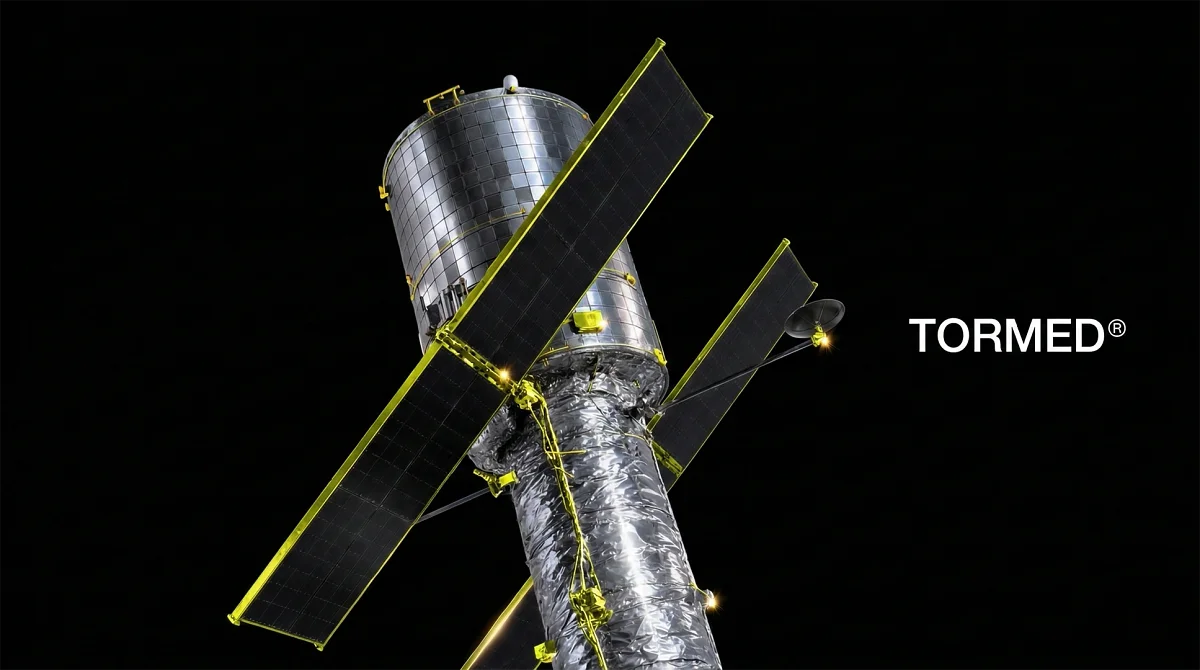
I.S.T. Unveils Space-Proven Materials to Reshape Satellite Engineering
WASHINGTON, DC – March 23, 2026 – As the global space industry converges on the nation's capital for SATShow Week 2026, Japanese material science specialist I.S.T Corporation is set to showcase a portfolio of advanced polyimides that could fundamentally alter how satellites are designed, built, and operated. The company will feature two groundbreaking materials, TORMED® and IMIDETEX®, which promise to solve some of the most persistent engineering challenges in space by offering unprecedented durability, precision, and performance.
The highlight of I.S.T's presentation is the space-proven status of TORMED®, a transparent polyimide film that has successfully completed a rigorous one-year validation in the harsh environment of low Earth orbit (LEO). This transition from orbital experiment to operational deployment marks a significant milestone, providing satellite engineers with a new class of material that is no longer theoretical but tested and ready for mission-critical applications.
From Orbit to Operations: A New Standard in Space Materials
The validation of any new material for space is a meticulous and arduous process. For TORMED®, this trial by fire took place aboard the International Space Station (ISS) as part of the Materials International Space Station Experiment-13 (MISSE-13) mission. For a full year, samples of the film were exposed to the unyielding realities of LEO: intense ultraviolet (UV) and vacuum UV radiation, extreme temperature fluctuations, and the corrosive effects of atomic oxygen.
According to I.S.T., the material exhibited "excellent performance," maintaining its crucial properties after the year-long exposure. This successful validation, analyzed in collaboration with partners including the Austrian Academy of Sciences, provides the high level of assurance required by satellite manufacturers, who operate with little to no margin for error. Having proven its resilience, TORMED® is already being designed into commercial satellite solar cell programs, demonstrating a rapid adoption curve from validation to integration.
TORMED®'s unique value proposition lies in a combination of properties rarely found in a single material. It boasts high optical transparency, allowing maximum light to pass through, coupled with robust radiation and UV resistance. Furthermore, it features ultra-low outgassing—a critical characteristic in the vacuum of space, as gasses released from materials can contaminate sensitive optical surfaces and thermal radiators, degrading satellite performance over time. Its mechanical flexibility and low dielectric constant further expand its utility for a new generation of spacecraft.
Redefining Satellite Architecture
The availability of a space-proven, transparent, and durable polyimide like TORMED® directly impacts the core architecture of satellites, enabling designs that are lighter, more powerful, and more reliable.
One of the most immediate applications is in solar panel coverlays. Traditionally, solar cells are protected by heavier, more rigid materials. TORMED® film offers a lightweight, flexible alternative that protects the delicate cells from radiation and physical impacts without significantly impeding the incoming sunlight needed for power generation. This improved efficiency and reduced mass translate directly into lower launch costs—a key economic driver in the commercial space industry—and a greater power budget for the satellite's payload.
For thermal management, TORMED® is being used to create advanced Optical Solar Reflectors (OSR). These surfaces help regulate a satellite's temperature by reflecting solar radiation. The film's unfading transparency and strong adhesion ensure long-term stability, preventing the degradation that can compromise thermal control on long-duration missions.
Perhaps most innovatively, the material's properties enable the creation of flexible transparent antennas. By leveraging its high-temperature resistance and RF transparency, engineers can integrate antennas directly onto other surfaces, such as solar panels. This "embedded functionality" saves precious volume and mass, a crucial advantage for small satellites and CubeSats where every gram and cubic centimeter counts.
Precision and Stability in the Void: The Promise of IMIDETEX®
While TORMED® addresses challenges related to optics and surface protection, I.S.T's second featured product, IMIDETEX®, is engineered to provide a new level of structural integrity and precision. This advanced polyimide-based composite material is designed for components that require extreme dimensional stability in the face of space's wild temperature swings.
The standout feature of IMIDETEX® is its precisely controllable and negative Coefficient of Thermal Expansion (CTE). Most materials expand when heated and contract when cooled. In orbit, where a satellite moves from direct sunlight to Earth's shadow, temperatures can fluctuate by hundreds of degrees, causing components to distort. This thermal distortion can throw sensitive instruments like telescopes and high-frequency antennas out of alignment, rendering their data useless.
A material with a negative CTE contracts when heated, allowing engineers to design composite structures that hold their exact shape and dimensions regardless of temperature. This enables the construction of ultra-stable optical benches, antenna reflectors, and instrument housings that maintain their precision throughout a mission.
Beyond its thermal properties, IMIDETEX® offers excellent vibration damping. The violent forces of a rocket launch can damage sensitive payloads, and even on-orbit micro-vibrations from reaction wheels or thrusters can affect instrument performance. IMIDETEX® helps absorb and dissipate this energy, protecting delicate components. It also boasts a lower density than carbon fiber and superior radio frequency (RF) transparency compared to glass fiber, giving designers more options to create lighter, more efficient structures that do not interfere with communication signals.
Driving the Economics of the New Space Race
The innovations offered by TORMED® and IMIDETEX® are not merely technical achievements; they carry significant economic and strategic implications for the burgeoning space economy. By enabling lighter satellites, these materials directly reduce launch costs, which can constitute a major portion of a mission's budget. This cost reduction lowers the barrier to entry for new companies and services, fostering competition and innovation.
Furthermore, by enhancing durability and resilience against the space environment, these materials extend the operational lifespan of satellites. A satellite that functions reliably for 15 years instead of 10 provides a significantly better return on investment for its operator. This longevity also has a positive impact on space sustainability. Longer-lasting satellites reduce the rate at which new ones must be launched, helping to mitigate the growing problem of orbital debris.
By combining optical performance, structural control, and environmental resilience, I.S.T. Corporation's advanced polyimides empower satellite engineers to move beyond traditional design trade-offs. Instead of choosing between mass, durability, and performance, they can now integrate more capability into less mass with greater reliability, accelerating the development of next-generation satellite constellations for communication, Earth observation, and scientific discovery.