
- 249 grams: The weight of the A1 drone, making it highly accessible and exempt from registration in many countries.
- 1,000 free uploads: The number of free 10-minute video uploads offered to the public for creating Gaussian Splatting models.
- 2003: The year CyArk first used high-definition laser scanning at Pompeii, marking the beginning of its digital preservation efforts.
Experts view Project Eternal as a groundbreaking initiative that combines cutting-edge technology with community engagement to preserve cultural heritage, though they caution that challenges like data ownership, equitable access, and long-term digital stewardship must be addressed.
Digital Immortality: AI and Drones Race to Save Our Fading Past
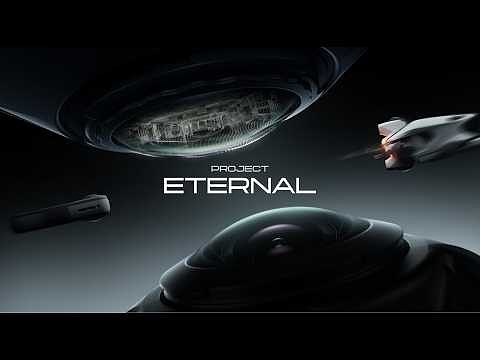
LOS ANGELES, CA – April 23, 2026 – In a world where cultural landmarks face accelerating threats from climate change, conflict, and the simple passage of time, a new initiative aims to build a digital ark. Following the International Day for Monuments and Sites, technology firm Antigravity has launched Project Eternal, an ambitious global effort to preserve humanity's shared heritage using a powerful combination of drone technology, advanced AI, and community participation.
The project's mission is twofold: to capture at-risk sites with unprecedented fidelity and minimal disruption, and to democratize the technology, allowing anyone, anywhere, to become a digital archivist. By partnering with cultural institutions like CyArk and technology platforms like Splatica, Project Eternal is not just documenting the past—it's inviting the world to help save it.
The Technology of a Digital Twin
At the heart of Project Eternal is a revolutionary 3D reconstruction technique known as Gaussian Splatting (GS). A significant leap beyond traditional photogrammetry, GS creates hyper-realistic, navigable 3D scenes from a series of images or videos. Instead of building models from polygons, the technique represents a scene using millions of tiny, translucent ellipsoids, or "splats." Each splat holds data on position, color, and transparency, blending together to create a stunningly detailed digital twin that can be rendered in real-time.
This technology offers dramatic improvements in both speed and quality over previous methods like Neural Radiance Fields (NeRFs), cutting down training time from hours to minutes while producing visuals that can be explored fluidly from any angle.
To gather the vast amount of visual data required, Antigravity is deploying its A1 drone. Weighing just 249 grams, the drone falls below the registration threshold in many countries, making it highly accessible. Yet, its small size belies its power. Equipped with a dual-lens 8K 360-degree camera system developed in partnership with imaging specialist Insta360, the A1 captures a complete spherical view in a single pass. Its design and advanced software render the drone itself invisible in the final footage, providing an uninterrupted, immersive perspective ideal for creating seamless 3D models. This allows for what the project calls "preservation without disruption," enabling detailed documentation of fragile sites without the need for intrusive scaffolding or large crews.
A Race Against Oblivion in Italy
Project Eternal is launching its efforts with a critical pilot project in Italy, collaborating with the non-profit CyArk, a veteran in the digital preservation space. The chosen sites, Civita di Bagnoregio and Pompeii, serve as poignant symbols of both the fragility and the enduring value of our cultural history.
Civita di Bagnoregio, known as the "Dying City," sits precariously on a plateau of soft volcanic tuff that is constantly eroding. The very ground beneath this ancient village is crumbling away, making its digital preservation an urgent race against geological time. CyArk has previously worked to document the site, and this new collaboration will leverage Gaussian Splatting to create an even more detailed and dynamic record of the town before more of it is lost forever.
Meanwhile, Pompeii, the city frozen in time by the eruption of Mount Vesuvius in AD 79, presents a different set of challenges. While famously preserved, the excavated site is now exposed to weathering, seismic activity, and the pressure of millions of annual tourists. Structural collapses are a persistent threat. For CyArk, which first used high-definition laser scanning at Pompeii in 2003, returning with Antigravity's cutting-edge technology represents a full-circle moment, promising to capture the intricate details of ancient Roman life with a fidelity previously unimaginable.
Crowdsourcing a Global Memory Bank
Beyond these institutional collaborations, the most revolutionary aspect of Project Eternal may be its commitment to public participation. In partnership with the 3D platform Splatica, Antigravity has launched what it calls the "world's largest Gaussian Splatting UGC campaign." The initiative invites anyone with a 360-degree camera or drone to contribute to the digital ark.
Under the theme, "If you could preserve one place forever, what would it be?", the project is offering 1,000 free 10-minute video uploads to the Splatica platform. This service automates the complex process of converting 360-degree footage into a navigable Gaussian Splatting model, effectively putting the power of high-end 3D reconstruction into the hands of everyday users, creators, architects, and archaeologists worldwide.
Participants are encouraged to capture locations meaningful to them—from world-famous landmarks to local parks or childhood homes—and share their creations and stories online. A jury of experts from the fields of technology, art, and heritage will review the submissions, offering global recognition for the most outstanding contributions. This crowdsourcing element transforms preservation from a niche academic pursuit into a collective, global movement.
The Future of Heritage and Its Hurdles
Project Eternal's long-term vision is to evolve into a global intellectual property, a self-sustaining ecosystem that unites technology, creators, and communities in a perpetual mission to safeguard cultural memory. However, such a grand ambition is not without significant challenges.
The creation of a massive digital archive raises complex questions of data ownership, cultural sensitivity, and long-term stewardship. Who owns the digital twin of a sacred site? How can communities of origin be assured that their heritage won't be decontextualized or commercialized without consent? Furthermore, the practical issue of storing and maintaining these massive data sets for future generations is a monumental task in itself, requiring a robust strategy to combat digital obsolescence.
There is also the risk of a "digital divide," where communities without access to the necessary technology or internet connectivity are left out of the preservation narrative. Even as Project Eternal aims to democratize the tools, ensuring equitable access and representation will be a persistent challenge.
Despite these hurdles, the initiative represents a paradigm shift in how we approach our past. By harnessing the power of emergent technology and the passion of a global community, Project Eternal is not merely creating static records. It is building living, explorable memories, ensuring that even as physical sites may fade, their stories and their essence can be preserved for generations to come.