
- 220,000 participants: Record number of students and faculty from over 100 countries in the 10th Huawei ICT Competition Global Final.
- 177 teams: Representing 49 nations competed for prizes in Shenzhen.
- 2,000+ universities: Partnered with Huawei ICT Academy to embed certified curricula globally.
Experts would likely conclude that Huawei’s ICT Competition is a strategic move to cultivate a global talent ecosystem, project soft power, and secure its technological future amid geopolitical challenges.
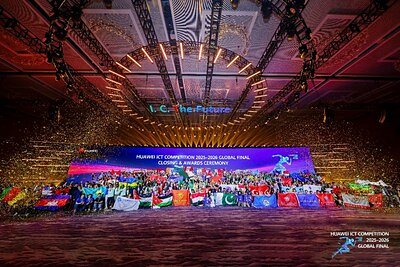
Huawei’s Global Talent Gambit: More Than Just a Competition
SHENZHEN, China – June 09, 2026 – As the confetti settled at the 10th Huawei ICT Competition Global Final, the scale of the event was undeniable. A record 220,000 students and faculty from over 100 countries had participated, with 177 teams from 49 nations gathering in Shenzhen to claim their prizes. On the surface, it was a triumphant celebration of young talent and a testament to corporate commitment to education.
Ritchie (Honghua) Peng, President of Huawei's ICT Strategy & Business Development Department, stated the competition reflects the company's "long-standing commitment to using technology for good and for sustainable social and environmental development." But beneath the surface of academic achievement and corporate goodwill lies a masterfully executed strategic play. The Huawei ICT Competition is far more than an annual event; it is the capstone of a sophisticated, decade-long strategy to cultivate a global talent ecosystem, project soft power, and secure the company's technological future amid fierce geopolitical crosswinds.
Forging a Self-Sufficient Talent Ecosystem
The most immediate rationale behind the competition is addressing the global ICT talent shortage, a gap projected to reach millions of jobs in key regions by 2030. While competitors like IBM and Microsoft are also racing to upskill the global workforce, Huawei’s approach is distinguished by its deep integration with its own proprietary technology stack.
The competition's structure, with tracks in Network, Cloud, Computing, and crucially, Ascend AI, is not accidental. The announcement of a new Ascend AI Operator Development Track for the next edition underscores this point. This track is designed to immerse young developers in Huawei’s full-stack AI platform, from its Ascend chips to its software frameworks. By training the next generation of engineers on its own tools, the company is building a global workforce fluent in its technological language, creating a durable talent pipeline that is less dependent on external ecosystems where it faces restrictions.
This pipeline doesn't begin at the competition. It starts with the Huawei ICT Academy program, which has partnered with over 2,000 universities worldwide. These academies serve as the foundational layer, embedding Huawei-certified curricula into higher education. Students progress from the academy to national, regional, and finally, the global competition. Success stories abound, like that of a former Tanzanian participant who, after excelling in the competition, became a certified professional and now serves as a part-time instructor at a local Huawei ICT Academy, perpetuating the cycle. The system is designed to identify, train, and certify talent, with the company organizing dozens of job fairs annually with its partners, effectively creating a direct pathway from campus to career within its sphere of influence.
Education as the New Frontier of Influence
Beyond talent acquisition, the ICT Competition is a powerful instrument of soft power. The partnership with UNESCO, prominently featured at the event, lends the initiative significant international legitimacy. Dr. Shafika Isaacs, a director at a UNESCO institute, praised the collaboration, noting that the future of AI requires a unified effort from industry, academia, and international organizations. This is not just a casual endorsement; the Huawei ICT Competition is recognized as a key partner flagship program by UNESCO's Global Skills Academy.
This collaboration provides Huawei with deep institutional access, particularly in the developing world. Joint initiatives for AI capacity building in Arab countries and ICT education programs across Central Asia and the Caucasus are not random acts of charity. They are strategic investments in regions critical for future growth and market development. By helping to shape educational standards and build digital infrastructure, the tech giant embeds itself as an indispensable partner for national development, fostering long-term relationships that can weather political storms.
The presence of diplomatic representatives from numerous countries at the awards ceremony is telling. It transforms a corporate event into a quasi-diplomatic one, reinforcing Huawei's image as a global citizen and a reliable technology partner, a crucial narrative in its ongoing battle for international perception.
Engineering a Responsible Future: Diversity and Sustainability as Strategy
In today's global landscape, technological leadership is increasingly tied to social and environmental values. Huawei has astutely woven this understanding into the fabric of its competition. The introduction of special awards for 'Women in Tech' and 'Green Development' is a strategic move to align the company with global priorities.
This year, the Women in Tech Award went to seven all-female teams from nations including Azerbaijan, Nigeria, Kenya, and Bahrain. The success of a Kenyan all-female team, which not only won this award but also secured a Second Prize in the highly competitive Computing Track, sends a powerful message about fostering female participation in STEM. Similarly, the Green Development Award, won by teams from Ghana and China, highlights solutions that use technology for environmental protection. One winning project from Ghana, for instance, employed AI to protect endangered forests.
These awards do more than just celebrate good ideas; they function as strategic assets. They demonstrate a commitment to diversity, equity, and sustainability—values prized by governments, NGOs, and the United Nations. This alignment makes Huawei a more attractive partner for collaborative projects and helps insulate it from criticism, positioning the company not merely as a vendor of technology, but as a co-creator of a more equitable and sustainable future.
The Battle for Tomorrow's Developers
Huawei’s initiative does not exist in a vacuum. It is a key front in the broader “ecosystem wars” being waged by global tech giants. IBM's SkillsBuild program aims to train 30 million people by 2030, AWS has its Educate and Academy programs, and Microsoft recently launched an AI Skills Navigator. These companies are all competing to capture the hearts and minds of the next generation of developers.
However, Huawei's competition-centric model offers a distinct advantage. While rivals often focus on self-paced online courses and certifications, Huawei's approach fosters a high-stakes, hands-on environment that tests practical problem-solving and teamwork under pressure. This intense, competitive format can forge a deeper sense of loyalty and community among participants. By bringing the world's brightest young minds together in Shenzhen, the company isn't just testing their skills; it's inducting them into its world, showcasing its technological prowess and corporate culture on a global stage.