
- Event Duration: April 13-14, 2026
- Attendees: Government officials, industry leaders, and academics
- Focus Areas: AI governance, cross-border data flows, and digital economy development
Experts view the summit as a strategic move to position Hong Kong as a critical bridge between Mainland China's digital economy and the international community, fostering global collaboration on AI and data governance.
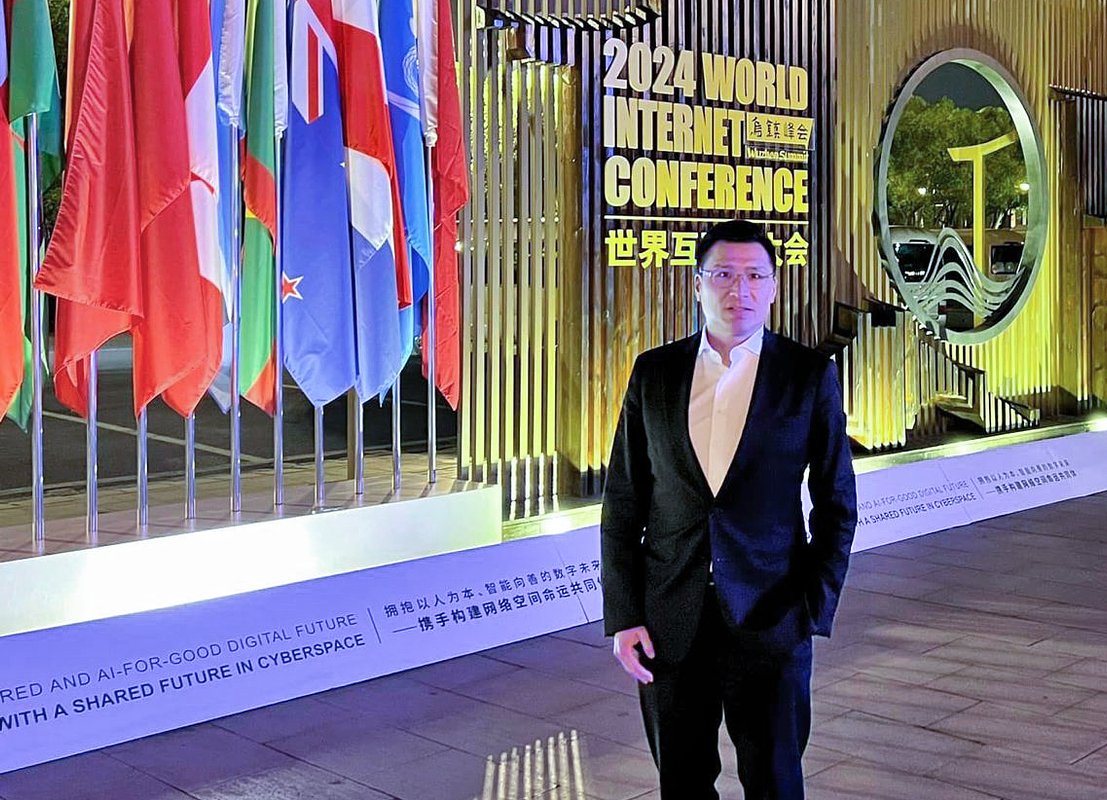
Hong Kong Hosts Tech Summit to Bridge Global AI & Data Divides
HONG KONG – April 08, 2026 – Hong Kong is set to reaffirm its ambition as a global technology hub as it prepares to host the World Internet Conference (WIC) Asia-Pacific Summit from April 13 to 14. The high-profile event, held at the Hong Kong Convention and Exhibition Centre, will convene a formidable assembly of government officials, industry titans, and academic pioneers to tackle the most pressing issues shaping the digital future, from artificial intelligence governance to cross-border data flows.
Under the theme "Digital and Intelligent Empowerment for Innovative Development — Jointly Building a Community with a Shared Future in Cyberspace," the summit aims to do more than just showcase technology. It represents a strategic move by Hong Kong to solidify its unique position as a critical bridge between Mainland China's burgeoning digital economy and the international community, injecting fresh momentum into its innovation and technology (I&T) ecosystem.
A Strategic Hub in a Digital Age
For years, Hong Kong has leveraged its strategic location and unique political framework to serve as a global financial center. Now, it is aggressively pivoting to replicate that success in the technology sector. Organizers and government officials are framing the WIC Summit as a cornerstone of this strategy, emphasizing the city’s role as a "super-connector" and "super value-adder."
Mr. Daniel Cheung, Acting Commissioner for Digital Policy, highlighted this vision, stating that the summit will "enhance connectivity of the Hong Kong and global I&T networks." He emphasized that the event serves to "connect Mainland enterprises with international markets, injecting continuous momentum into the I&T ecosystem." This role is particularly crucial for the integrated development of the Guangdong-Hong Kong-Macao Greater Bay Area (GBA), a national initiative to create a world-class city cluster driven by innovation.
The Hon Duncan Chiu, a Member of the Legislative Council, echoed this sentiment, noting the event's "profound strategic significance for promoting the regional digital economy development." He believes the summit's focus on cross-boundary data governance and AI applications is key to "leveraging Hong Kong's advantage in connecting the Mainland and overseas and supporting high-quality research and development." This underscores a concerted effort to position Hong Kong not just as a conduit for capital, but for data, talent, and ideas.
Navigating the AI Frontier: Governance and Innovation
A central focus of the summit will be the complex and rapidly evolving field of artificial intelligence. As AI's capabilities expand at an exponential rate, the global conversation has intensified around establishing frameworks for its ethical development and deployment. The summit wades directly into this debate with sub-forums dedicated to "AI Security and Governance" and "Innovation and Application of AI Agent."
These discussions are particularly timely. International bodies like the United Nations and the Organisation for Economic Co-operation and Development (OECD) are actively working to establish global norms for trustworthy AI that respects human rights and democratic values. The summit provides a vital Asia-Pacific platform for these conversations, bringing regional perspectives to a global challenge. A major highlight is the inaugural Ministerial Meeting, designed as a high-level forum for ministers and international representatives to discuss how AI can drive economic growth while strengthening regional cooperation on policy.
The Hon Elizabeth Quat, Member of the Legislative Council, noted that the summit provides a "high-level dialogue platform for government and business leaders, experts and scholars from around the globe." She added that by "facilitating international collaboration and experience sharing, the Summit will accelerate Hong Kong’s development as an influential international I&T centre." This collaborative approach is seen as essential for navigating the dual imperatives of fostering AI innovation and mitigating its potential risks.
Bridging Data Divides and Digital Borders
Beyond AI, the summit will tackle the equally thorny issue of cross-border data flow. In a digitized global economy, the ability to move data seamlessly across borders is the lifeblood of international trade, logistics, and innovation. However, a patchwork of divergent national regulations, including increasingly stringent data localization laws in countries like China, has created significant compliance hurdles for multinational corporations.
The summit's agenda, which includes a Government-Enterprise Dialogue on cross-boundary data flow, aims to address these challenges head-on. The discussions are expected to explore pathways toward what some policymakers call "Data Free Flow with Trust" (DFFT)—a framework that enables data movement while ensuring privacy and security are protected. For Hong Kong, finding a workable solution is paramount to its "super-connector" ambitions, especially in harmonizing data policies within the GBA and facilitating smoother digital trade between China and the rest of the world.
The Hon Duncan Chiu specifically stated he looks forward to the Ministerial Meeting to "further deepen policy alignment in cross-boundary data and talent flows, and foster complementarity with infrastructure in the Guangdong-Hong-Kong-Macao Greater Bay Area (GBA)." This focus highlights the practical, economic urgency of resolving digital border issues to unlock the full potential of regional integration.
A Convergence of Pioneers and Powerhouses
The influence of the summit is amplified by its guest list, which reads like a who's who of the global internet. The presence of Prof. Nii Narku Quaynor, the "Father of the Internet in Africa," and Prof. Kilnam Chon, the "Father of the Internet in Korea," lends a unique historical weight to the proceedings. Their pioneering work in extending internet connectivity across continents provides a powerful context for discussions about building a shared and inclusive digital future.
They will be joined by senior executives from some of the world's most influential technology companies, including Qualcomm, a leader in on-device AI for mobile platforms, and Tesla, which is pushing the boundaries of autonomous systems with its vision-based AI. The participation of these firms, alongside prominent Chinese tech enterprises like Manycore Tech, Mininglamp Technology, and Yunji Technology, ensures that the dialogue will be grounded in the real-world applications and commercial realities of cutting-edge technology.
This convergence of historical pioneers, modern innovators, and policymakers reflects the multifaceted nature of the challenges at hand. As Hong Kong positions itself at the center of these critical conversations, the outcomes of the WIC Asia-Pacific Summit could have ripple effects far beyond the city's shores, potentially shaping the trajectory of digital collaboration and governance across the entire region. The event not only aligns with China's national 15th Five-Year Plan's goals for a dominant digital economy but also serves as a global stage to negotiate the very rules of our shared digital future.