
- 53 distinct styles: Cangzhou preserves over 40% of China's registered martial arts.
- 120 volumes and 6,000 minutes: The city's documentation effort has created a vast archive of Kung Fu knowledge.
- 12th China Cangzhou International Wushu Competition: A major event showcasing the city's preservation efforts.
Experts view Cangzhou's copyright initiative as a pioneering but complex effort to balance preservation and innovation, with potential global implications for protecting intangible cultural heritage.
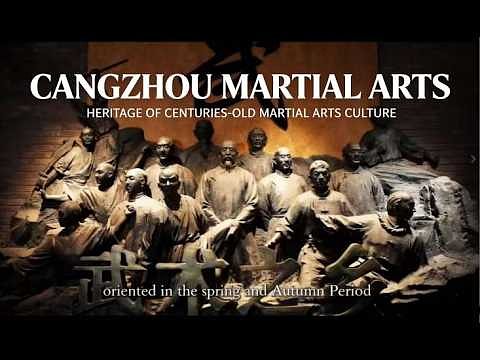
Copyrighting Kung Fu: China's Bid to Save Its Ancient Martial Arts
CANGZHOU, China – April 16, 2026 – In Cangzhou, a city steeped in 2,000 years of martial arts history, an ancient legacy is meeting modern law. Known as one of China's original "Hometowns of Martial Arts," this hub along the UNESCO-listed Grand Canal is pioneering an ambitious strategy: using copyright to preserve, verify, and revitalize its vast Kung Fu heritage. The initiative aims to transform centuries of lineage-based knowledge into legally protected assets, a move that could redefine the future of intangible cultural heritage worldwide.
From Oral Tradition to Tangible Archive
For centuries, the intricate techniques of Chinese martial arts were passed down through a fragile chain of oral and embodied transmission. A master would teach a disciple, who would in turn become a master, carrying the knowledge forward. But this method, while sacred, was inherently vulnerable to the erosions of time, memory, and modernization. Cangzhou, a living repository preserving 53 distinct styles—over 40% of China's registered martial arts—recognized this threat acutely.
In 2008, the city launched a monumental documentation effort to create a permanent record. Led by Lanshouquan master Tian Xiufeng, a dedicated team of researchers and practitioners collaborated with the region's most senior masters. They worked systematically to record every nuance of their expertise, from the subtlest movements to the deepest philosophical underpinnings. The result is a scholarly collection of staggering scope: over 120 volumes of text and 6,000 minutes of technical footage, effectively converting a fluid, "living archive" into a concrete, reviewable library of knowledge.
Securing Lineage and Sparking Innovation
With this vast body of work documented, the next challenge was to protect its integrity. For masters like Qi Mingsong, a national-level successor of the Yanqingquan style, modern intellectual property law offers a powerful solution. After spending a decade painstakingly consolidating scattered manuscripts into a unified record, he sees copyright as a crucial safeguard against misrepresentation and dilution.
"In our community, lineage is sacred," says Master Qi. "Copyright ensures that students worldwide receive the authorized curriculum, preserving the unadulterated truth of our heritage."
This legal framework, however, is proving to be more than just a defensive shield. It is also acting as a catalyst for innovation. Liu Lianjun, a master of the powerful Bajiquan style, used the system to formalize and register new weapon routines, filling historical gaps within the art form. The legal protection gave him the assurance needed to share his developments publicly. "Formal registration gave me the confidence to publish," Liu notes, highlighting how IP can encourage evolution rather than simply freezing a tradition in time.
A Global Blueprint or a Legal Quagmire?
Cangzhou's approach places it at the forefront of a complex global debate: how can legal frameworks designed for individual, tangible creations protect collective, intangible heritage? Global bodies like the World Intellectual Property Organization (WIPO) and UNESCO have long grappled with this issue, exploring ways to safeguard traditional knowledge and cultural expressions from misappropriation.
While precedents exist—from India's Traditional Knowledge Digital Library, which defensively documents ancient practices, to Peru's laws recognizing Indigenous collective knowledge—Cangzhou's effort represents one of the largest-scale applications of copyright to a martial tradition. The benefits are clear: a standardized, verifiable curriculum can prevent the spread of inaccurate techniques and protect the art's reputation.
However, experts caution that this path is fraught with challenges. "The core conflict is fitting a collective, evolving heritage into a legal box designed for individual, static creations," notes one legal scholar specializing in cultural property. Critics of such approaches worry about the potential for over-commercialization, where sacred practices become commodified products. Questions also arise about ownership—does the copyright belong to the master, the lineage, or the community? And can a time-limited copyright truly protect a tradition meant to be passed down for eternity?
Standardizing for a Global Audience
Despite the legal and philosophical complexities, the practical benefits for international practitioners are already becoming apparent. The creation of structured, authorized materials is building a new level of trust and consistency for the global Wushu community.
Henny Eleonora, who heads the Cangzhou Qunying Wushu Europe organization, has seen the impact firsthand. "I have been studying martial arts for many years, but this is the first time I have seen books and videos organized in such a comprehensive and systematic way," she says. Eleonora observes that this systematic approach is highly valued by students in Europe, who are eager to learn an art form they know is authentic and officially sanctioned.
This growing global interest will be on full display this September, when Cangzhou hosts the 12th China Cangzhou International Wushu Competition. First established in 1989, the event is the nation's longest-running martial arts competition and serves as a major platform for cultural exchange. This year, it will offer martial arts enthusiasts from around the world a unique opportunity to experience the living legacy of Chinese Kung Fu, now fortified by a modern legal shield. The competition will not just be a test of skill, but a showcase for a new model of cultural preservation.
As practitioners gather in Cangzhou, they will be engaging with a tradition that is simultaneously ancient and pioneering. The city's bold experiment in copyrighting Kung Fu is a high-stakes endeavor, balancing the need for preservation against the risks of commodification. Its success or failure could provide a crucial blueprint for countless other cultures seeking to navigate the difficult passage of their intangible heritage into the 21st century. The world will be watching to see if this legal armor can truly protect the soul of the art.
Topics & Related
Financial Services
Software & SaaS
Artificial Intelligence
Generative AI
Digital Transformation
Regulation & Compliance
Related Company Pulse