
- 99% defect detection accuracy with AI-powered Automated Optical Inspection (AOI) systems
- 15% reduction in cycle time and 95% improvement in yield from AI-driven CIM solution
- RM500 billion ($106 billion) investment target under Malaysia's National Semiconductor Strategy (NSS)
Experts view Gtrontec's AI-driven solutions as critical enablers for Malaysia's transition to high-value semiconductor manufacturing, aligning with national strategies to enhance technological sophistication and global competitiveness.
Gtrontec's AI Fuels Malaysia's High-Value Semiconductor Ambitions
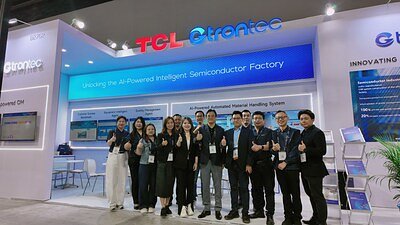
KUALA LUMPUR, Malaysia – May 13, 2026 – As the semiconductor world gathered for SEMICON Southeast Asia 2026, industrial AI specialist Gtrontec offered a glimpse into the future of manufacturing—a future where Malaysian factories could play a far more advanced role in the global supply chain. The company’s showcase of intelligent factory solutions at the Malaysia International Trade and Exhibition Centre (MITEC) was more than a product demonstration; it was a clear signal of its deepening commitment to a region rapidly transforming its industrial identity.
Since establishing its regional headquarters in Penang in 2023, Gtrontec has been embedding itself within the local ecosystem. Its latest presentation reinforces a strategy focused on helping local fabrication plants (fabs) and Outsourced Semiconductor Assembly and Test (OSAT) facilities transition from traditional strengths to higher-value, technologically sophisticated manufacturing. This aligns perfectly with Malaysia's ambitious national strategies, positioning the company as a key enabler in the nation's quest to become a high-tech powerhouse.
The Blueprint for an Autonomous Fab
At the heart of Gtrontec's exhibit was a comprehensive blueprint for the next-generation autonomous factory. The company unveiled a full-stack Computer Integrated Manufacturing (CIM) architecture, a sophisticated digital nervous system for the entire production floor. Anchored by its Manufacturing Execution System (MES) and Equipment Automation Program (EAP), the platform enables real-time production control and seamless connectivity between hundreds, or even thousands, of complex manufacturing tools.
Built upon this foundation is an industrial AI platform designed for rapid deployment and scalability across an entire facility. This isn't just about automation; it's about intelligence. The system's Intelligent Autonomous Manufacturing (IAM) layer continuously learns from vast streams of factory data to optimize workflows, predict equipment failures before they happen, and support closed-loop decisions without human intervention. This moves the needle from simply automating tasks to creating a self-governing, self-optimizing production environment.
A standout feature was the company's AI-powered quality intelligence. Gtrontec demonstrated deep learning-driven Automated Optical Inspection (AOI) systems that achieve over 99% defect detection accuracy—a critical metric in the zero-error world of semiconductor production. But the system goes further. AI agents autonomously classify defects, trace issues back to their root cause across the production line, and recommend corrective actions. Crucially, they learn from these events to prevent similar defects from recurring, directly boosting manufacturing yield and reducing costly process variability.
To complete the vision of a fully connected smart factory, Gtrontec also showcased its Automated Material Handling System (AMHS). Fully integrated with the CIM, the system uses intelligent dispatching and dynamic routing to ensure that wafers, masks, and other critical materials arrive at the right tool at precisely the right time. This eliminates production bottlenecks and optimizes the flow of materials across the entire fab, a logistical challenge that grows exponentially with factory size and complexity.
To ground these capabilities in reality, the company shared results from a recent deployment in radar-related semiconductor packaging and testing. The integrated AI-driven CIM solution reportedly delivered 100% product traceability, a 15% reduction in cycle time, and a remarkable 95% improvement in yield—metrics that translate directly to significant competitive and financial advantages.
Powering Malaysia's National Semiconductor Strategy
Gtrontec's technological push arrives at a pivotal moment for Malaysia. The country, long a dominant force in the global OSAT market, is actively seeking to climb the value chain through its New Industrial Master Plan (NIMP) 2030 and a dedicated National Semiconductor Strategy (NSS). With a target of attracting RM500 billion (approximately $106 billion) in investment, these initiatives aim to build capabilities in more lucrative areas like integrated circuit (IC) design, advanced packaging, and front-end wafer fabrication.
This strategic shift requires a massive leap in technological capacity. The solutions Gtrontec provides are seen by industry observers as critical enablers for this transition. Moving into advanced manufacturing means handling processes of immense complexity where efficiency, precision, and yield are paramount. AI-driven process control, predictive maintenance, and end-to-end traceability are no longer optional luxuries but essential components for competing at the highest level.
The Malaysian government has backed its ambitions with significant financial commitments, earmarking over RM25 billion to nurture local talent and incentivize investment in high-value activities. Gtrontec, by providing the foundational technology for smart factories, directly supports this national vision, helping to transform existing facilities and attract new investment in cutting-edge manufacturing.
From Global Player to Regional Catalyst
While its presence in Southeast Asia is relatively recent, Gtrontec is not a newcomer to the global stage. Incubated by electronics giant TCL in 2018, the company draws on deep manufacturing expertise and has delivered nearly 200 fab projects worldwide. Its global team includes seasoned experts from industry leaders like Intel, IBM, and TSMC, giving it the credibility to tackle some of the most complex challenges in semiconductor manufacturing.
This global experience is now being deployed as a catalyst for regional growth. By establishing a headquarters in Penang—a long-standing hub for Malaysia's electronics industry—the company has placed itself at the center of the action. Its strategy involves working closely with local partners to adapt its globally proven solutions to meet the specific needs and challenges of the Southeast Asian market. This approach of combining global expertise with local collaboration is crucial for building a resilient and advanced regional supply chain.
Navigating the Path to Industry 4.0
The journey toward the fully autonomous, AI-driven factory envisioned by Gtrontec and sought by nations like Malaysia is not without its challenges. The adoption of Industry 4.0 technologies in the capital-intensive semiconductor sector faces significant hurdles. The high cost of implementation, a persistent global shortage of talent with the dual expertise in both AI and semiconductor physics, and complex issues around proprietary data management are all major barriers.
Successfully implementing these advanced systems requires more than just new software; it demands a holistic digital strategy, a culture of continuous learning, and close collaboration between technology providers, manufacturers, and government bodies. The success of Malaysia's NSS, for instance, will depend as much on its ability to train and retain 60,000 new high-skilled engineers as it will on attracting foreign direct investment.
As the semiconductor industry grapples with ever-increasing chip complexity and geopolitical supply chain pressures, the trend toward intelligent automation is irreversible. Companies like Gtrontec are providing the tools not only to enhance efficiency and yield but also to build the more resilient, agile, and advanced manufacturing ecosystems that will define the next chapter of the global technology landscape.