
- 33% expansion of Grocery TV's retailer-owned network over the past year, now covering 6,500+ stores and 120+ retail partners.
- U.S. in-store retail media ad spend projected to nearly triple by 2028, growing from $370M (2024) to $1.06B.
- In-store media can increase campaign reach by 49% on average, with 80% of advertisers planning to boost retail media spend.
Experts agree that in-store media is transitioning from an experimental channel to a high-performance, essential component of modern advertising strategies, driven by its measurable impact and high operating margins.
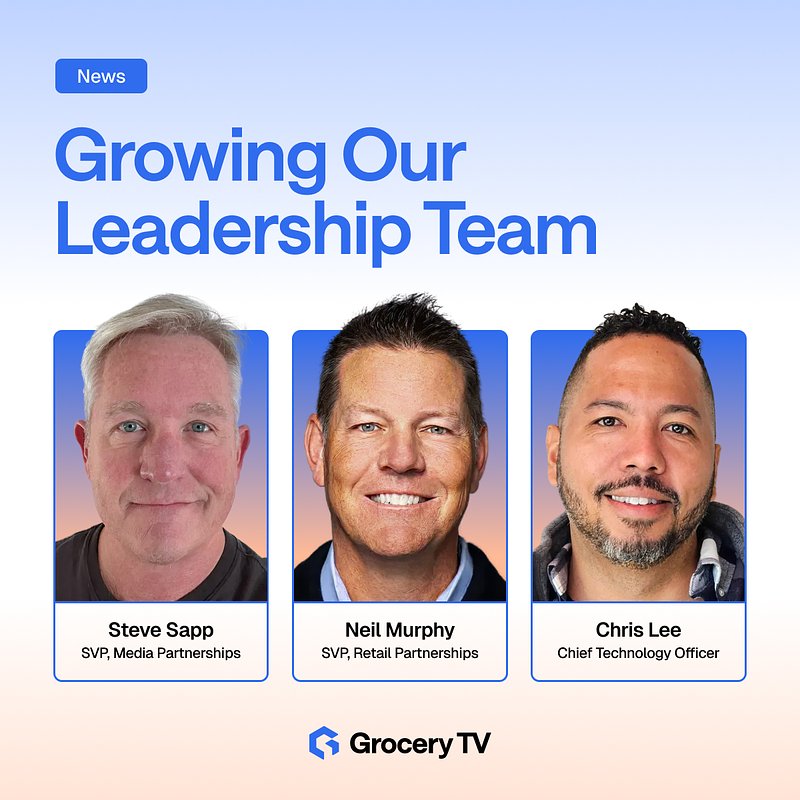
Grocery TV's New Hires Signal In-Store Media's Rise to Power
NEW YORK, NY – January 28, 2026 – In a move that underscores the rapid maturation of in-store advertising, retail media platform Grocery TV has announced the appointment of three seasoned executives to its leadership team. The company has brought on Neil Murphy as SVP of Retail Partnerships, Steve Sapp as SVP of Media Partnerships, and Chris Lee as Chief Technology Officer, signaling a significant investment in scaling its operations amid surging market demand.
The strategic hires come as Grocery TV reports a 33% expansion of its retailer-owned network over the past year, now encompassing over 6,500 stores and more than 120 retail partners. This growth mirrors a broader industry shift where in-store digital screens are evolving from a novel curiosity into a cornerstone of modern advertising strategy, a market poised for explosive growth.
From Experiment to Essential Channel
For years, in-store media was considered an experimental add-on to larger digital campaigns. Today, it stands as one of the fastest-growing segments of the advertising world. Industry forecasts project that U.S. in-store retail media ad spend will nearly triple in the next four years, growing from an estimated $370 million in 2024 to over $1.06 billion by 2028. This surge is driven by a confluence of factors, including the search for effective advertising channels in a world without third-party cookies and the realization that over 83% of retail sales still happen in physical stores.
Retailers are increasingly looking to monetize their physical footprint, and retail media offers a high-margin revenue stream, with some analysts estimating operating margins between 70% and 80%. Grocery TV positions itself as a key enabler of this transition.
"We've built the foundation that makes in-store retail media work at scale, and now, we're ready to accelerate," said Marlow Nickell, Founder & CEO of Grocery TV, in a recent statement. "Neil, Steve, and Chris bring the expertise to help Grocery TV lead the growth of the in-store media category, turning what was once experimental into a proven, high-performance channel for retailers and advertisers."
Assembling a Veteran Leadership Team
The caliber of the new hires reflects the company's ambitious goals. Each executive brings a wealth of experience from adjacent high-growth sectors in retail, media, and technology, positioning Grocery TV to tackle the distinct challenges of scaling a nationwide physical media network.
Neil Murphy, the new SVP of Retail Partnerships, has over two decades of experience launching and scaling formidable retail media platforms. His background includes foundational work on what became Walmart Connect and a seven-year tenure helping build Criteo's retail media division. His role will focus on streamlining the process for grocers to establish their own in-store media networks.
"Retailers are ready to move fast on in-store media, but they need a partner who can navigate the complexity of execution," Murphy stated. "Grocery TV has already figured out the hard parts. We're helping retailers launch proven networks in months, not years."
On the media sales front, Steve Sapp brings over 25 years of experience from leadership roles at Volta Charging, National CineMedia (NCM), and GSTV. As SVP of Media Partnerships, he is tasked with integrating Grocery TV's network into the broader national media mix. Research shows that adding in-store media can increase a campaign's reach by an average of 49%, providing a valuable, incremental audience that complements TV, digital, and social channels.
"National media buyers are looking for authentic ways to connect with shoppers as attention continues to fragment across channels, and Grocery TV delivers at the moment of decision," said Sapp. He noted growing interest not only from traditional CPG brands but also from non-endemic categories like telecom and financial services, which are eager for measurable results.
Overseeing the technological backbone is Chris Lee, the new Chief Technology Officer. A seasoned leader who co-founded Kronologic and spent over a decade at Rapid7 through its IPO, Lee will manage the company's engineering, product, hardware, and data teams. His challenge is to ensure the seamless operation of thousands of screens while delivering reliable data and performance analytics to partners.
"In-store retail media requires technology that works seamlessly across hardware and software," Lee commented. "We're building on a strong technical foundation to scale the network while improving performance, consistency, and impact as it grows."
Redefining the Aisle for Brands and Shoppers
The rise of platforms like Grocery TV signifies a fundamental shift in the purpose of the physical store. For retailers, it's a transformation from a simple point of sale to a dynamic media channel. For brands, it's a powerful opportunity to close the loop between ad exposure and purchase, influencing decisions at the most critical moment.
Advertisers are responding with their wallets. Recent industry surveys indicate that 80% of advertisers plan to increase their retail media spend, with much of that budget being new or incremental. The appeal lies in the clear return on investment; retail media provides a direct line of sight from ad spend to sales, a level of attribution that is often elusive in other channels.
This shift is not just about revenue and ROI. It is also about enhancing the customer experience. When implemented thoughtfully, in-store digital displays can provide helpful information, showcase promotions, and create a more engaging and modern shopping environment. The goal is to integrate advertising so that it adds value to the shopping trip rather than detracting from it.
As Grocery TV expands its leadership and network, its trajectory will serve as a key indicator of the in-store media market's health. With deep-pocketed veterans at the helm and a clear strategy to simplify network deployment for retailers, the company is making a strong case that the future of advertising isn't just online—it's also waiting in the checkout aisle.