
- 4 new EVs: Polestar plans to launch four new electric vehicles over the next three years.
- 60,119 cars sold in 2025: A 34% increase in retail sales, but financial health remains a concern.
- 30% retail expansion: Polestar aims to grow its retail footprint by 2026.
Experts view Polestar's aggressive expansion as a high-risk, high-reward strategy to transition from a niche premium player to a mainstream EV contender, but caution that financial stability and flawless execution will be critical to success.
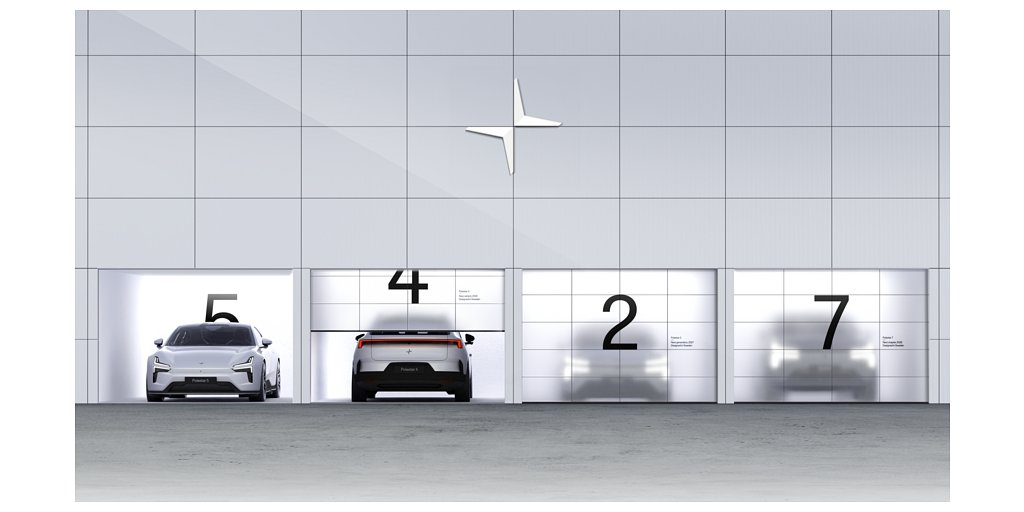
Polestar's High-Stakes Gamble: Four New EVs to Challenge the Market
GOTHENBURG, Sweden – February 18, 2026 – Swedish electric performance brand Polestar today unveiled the most aggressive product offensive in its history, announcing plans to launch four new electric vehicles over the next three years. The move signals a high-stakes bid to transition from a niche premium player into a mainstream contender, targeting the most profitable segments of the global EV market.
In a strategy update, CEO Michael Lohscheller declared the company is “targeting the heart of the EV market, where customer demand and profit pools are high.” The ambitious roadmap, which follows what the company called its “best sales year ever” in 2025, aims to significantly broaden its portfolio and customer base while expanding its retail footprint by 30% by 2026.
An Ambitious Roadmap Amid Financial Headwinds
Polestar’s product blitz is designed to attack multiple market segments simultaneously. The offensive begins with the Polestar 5, a four-door Grand Tourer slated for a 2025 presentation with deliveries starting in summer 2026. Described as the brand's “halo car,” it aims to establish a new benchmark for performance and luxury.
Later this year, the company will launch a new, more versatile variant of its best-selling Polestar 4, which Lohscheller says will combine “the space of an estate and the versatility of an SUV.” A completely new successor to the Polestar 2, the sedan that has sold over 190,000 units and built the brand's foundation, is planned for an early 2027 launch.
Perhaps most critical to its volume ambitions is the Polestar 7, a compact premium SUV scheduled for 2028. This model will be built in Europe and is designed to compete in the continent's largest EV segment, which accounted for roughly a third of all battery-electric vehicle sales in 2025.
However, this aggressive expansion comes as the company navigates significant financial pressures. While Polestar celebrated a 34% increase in retail sales in 2025, reaching approximately 60,119 cars, its financial health remains a point of concern for investors. The company has been operating with negative gross and operating margins and carries a high debt-to-equity ratio. Its Altman Z-Score of -3.89, a metric used to predict bankruptcy risk, indicates a state of financial distress.
To fuel its growth, Polestar has been actively raising capital, securing over $400 million in financing this month and relying on continued financial and technological support from its majority owner, Geely Holding Group. The market is also digesting a revised, more conservative forecast of “low double-digit retail volume growth” for 2026, a significant reduction from previous projections that has disappointed some analysts.
Navigating a Crowded Battlefield
Polestar's new models will not enter a vacuum. Each vehicle is set to face off against established leaders in a fiercely competitive landscape. The Polestar 5 will have to prove its grand touring credentials against formidable rivals like the Porsche Taycan, Audi e-tron GT, and high-end versions of the Tesla Model S.
The new Polestar 4 variant enters the highly popular premium SUV crossover segment, where it will compete with the market-dominant Tesla Model Y, as well as the BMW iX and Mercedes-Benz EQE SUV. The successor to the Polestar 2 will need to innovate significantly to stand out against the next generation of electric sedans, including the perpetually popular Tesla Model 3 and the critically acclaimed BMW i4 and Hyundai Ioniq 6.
With the Polestar 7, the company is diving into the market's most crowded and competitive segment. It will be positioned against a vast array of popular models, including the Volkswagen ID.4, Hyundai Ioniq 5, Kia EV6, and a growing number of premium compact SUVs from Audi, BMW, and Mercedes-Benz. Success in this segment is crucial for Polestar's volume ambitions but will require a compelling combination of price, performance, and features to capture market share.
Scaling Up Production and Retail
To deliver on its promises, Polestar is diversifying its global manufacturing footprint, leveraging its strategic partnerships with Geely and Volvo Cars. Production is already spread across facilities in China, the United States, and South Korea. The plan to manufacture the Polestar 7 in Europe marks a significant step in de-risking its supply chain and localizing production for a key market.
This multi-country strategy is designed to provide resilience against regional disruptions, but successfully ramping up production for four new models in three years will be a monumental logistical challenge. The company's ability to manage its supply chain and execute flawless production launches will be critical to its success.
On the sales front, Polestar is pursuing a significant 30% expansion of its retail network. After growing its sales points from 140 to 210 in 2025, the company is continuing its shift toward a more traditional dealer-led model, particularly in Europe. This strategy aims to increase brand visibility and customer access. A key advantage for the brand is its ability to leverage the extensive Volvo Cars service network, which provides over 1,200 service points for Polestar customers and helps alleviate after-sales support concerns that often plague newer EV brands.
Wall Street's Cautious Reaction
The market's reception to Polestar's grand strategy has been mixed. While the announcement prompted an initial positive reaction in its stock price, the company's shares (Nasdaq: PSNY) have declined nearly 50% over the past year, trading near 52-week lows. This reflects broader investor concerns about the company's path to profitability and the intense competition in the EV sector.
Financial analysts currently hold a consensus “Hold” rating on the stock. Recent downgrades, including a shift to “Underweight” from Cantor Fitzgerald, highlight worries over the company's revised growth projections and unexpected capital requirements. The lowered forecast for 2026 was particularly disappointing to investors, leading to reduced revenue expectations.
Polestar has laid out a bold and comprehensive vision to carve out a significant share of the premium EV market. The strategy is clear, the products are ambitious, and the targeted segments are lucrative. However, the path forward is fraught with challenges, requiring flawless execution in manufacturing, marketing, and financial discipline. All eyes will be on the company's full 2025 financial results, expected on March 15, which will provide a clearer picture of its ability to fund this monumental undertaking.
Topics & Related
Private Placement
Revenue
Gross Margin
Operating Margin
Market Capitalization
Stock Price
Software & SaaS
Related Company Pulse