
- 3x faster decision-making: Glartek 4.0 claims to triple the speed of safety-related decision-making.
- 35% faster decision-making: Energy company Finerge reported this improvement in early testing.
- 3x faster employee onboarding: Manufacturer Sonae Indústria achieved this with the platform.
Experts view Glartek's AI platform as a promising step toward proactive safety, but caution that achieving zero accidents requires a holistic safety culture beyond software solutions.
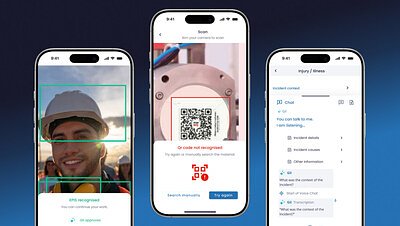
Glartek's AI Platform Aims to Predict Workplace Accidents
LISBON, Portugal – March 11, 2026 – Industrial safety may be on the cusp of a significant transformation, moving from clipboards and incident reports to predictive algorithms and real-time alerts. Glartek, a Lisbon-based technology firm, today unveiled Glartek 4.0, an AI-native platform designed to forecast and prevent workplace accidents in industrial settings before they can occur.
The company claims its new system can triple the speed of safety-related decision-making and dramatically reduce incident rates by embedding artificial intelligence directly into the daily workflows of frontline workers. This launch signals a broader industry push to leverage advanced technology not just to manage safety data, but to actively intervene and create safer work environments.
A New Paradigm for Proactive Safety
Glartek 4.0 seeks to redefine the role of Environmental, Health, Safety, and Quality (EHSQ) software. Traditionally, many digital safety tools have focused on logging incidents after they happen or digitizing paper forms for compliance. Glartek asserts its platform is fundamentally different by being "AI-native."
Instead of using AI as a simple search tool, the system continuously analyzes a stream of data, cross-referencing historical information—such as past work permits, safety audits, and equipment inspection logs—with current, real-time conditions on the factory floor or in the field. This allows the platform to identify high-risk scenarios and generate automated alerts for potential hazards, empowering teams to take preventive action. According to the company, early customer trials suggest the platform can cut the time EHSQ leaders spend on manual administrative tasks in half.
"Our customers are asking for more than digital forms; they want real prevention, more efficiency and intelligence embedded into EHSQ workflows," said Bruno Duarte, CEO of Glartek, in the announcement. "Glartek 4.0 is built for the frontline, turning proactive safety into a reality."
This approach aligns with analyses from firms like Verdantix, which note a growing industry trend toward using leading indicators—predictive data points—rather than lagging indicators like accident reports, to manage operational risk.
Navigating a Competitive Tech Landscape
Glartek enters a bustling and competitive market. The EHSQ software space is populated by established giants like Enablon and Intelex, as well as a growing number of technology startups also focused on AI-driven safety solutions. Companies such as Benchmark Gensuite and Protex AI are similarly leveraging artificial intelligence to help clients predict risks and monitor operations.
In this crowded field, Glartek is positioning its platform as a uniquely integrated, "frontline-first" solution. The company emphasizes the combination of AI with Augmented Reality (AR) and the Internet of Things (IoT) as a key differentiator. In practice, this could mean an engineer wearing AR glasses receives a visual overlay showing step-by-step repair instructions, while an AI in the background confirms the correct safety permit has been issued for the high-voltage equipment they are about to service.
This focus on the "Connected Worker" aims to empower employees directly, providing them with intelligent tools to navigate complex tasks safely and efficiently. Case studies from Glartek's existing customer base, which includes major industrial players like EDP and International Paper, point to tangible results. For example, energy company Finerge reported a 35% faster decision-making process, while manufacturer Sonae Indústria achieved 3x faster employee onboarding using the platform.
The Promise and Challenge of Zero Accidents
The platform's most ambitious claims, stemming from early tests, are its ability to deliver "3x faster decision-making" and drive organizations toward a "zero-accident rate." While a workplace with zero accidents is the ultimate goal for any safety program, achieving it is notoriously complex. Industry experts caution that such goals, while aspirational, depend on a holistic safety culture that extends far beyond any single software solution.
The claims are attributed to internal, early-stage testing with select customers, and independent, large-scale verification has yet to be conducted. However, the underlying principle of using predictive analytics to prevent incidents is well-supported. By automating the analysis of thousands of data points, AI can spot patterns and correlations that a human safety manager might miss, flagging a risky combination of a new technician, a complex maintenance task, and a recently serviced machine before it leads to an incident.
Empowering Workers or Increasing Scrutiny?
The deployment of sophisticated AI on the factory floor raises important questions about the future of industrial work. Proponents, including Glartek, frame the technology as a tool for worker empowerment. The "human-centric" design philosophy aims to augment worker capabilities, improve training, and provide a digital safety net that enhances both autonomy and well-being. By simplifying complex procedures and providing real-time guidance, the technology can reduce cognitive load and allow workers to focus on performing their tasks safely.
However, the same technology that provides a safety net can also be perceived as a tool for surveillance. The extensive data collection required for AI systems to function—from task completion times to worker location—invokes valid concerns about data privacy and employee monitoring. This creates a delicate balance for companies between ensuring safety and respecting worker privacy.
Furthermore, the industry is grappling with the ethical implications of algorithmic decision-making. If an AI system trained on historical data, which may contain hidden biases, incorrectly flags a worker or fails to predict an unusual accident, questions of accountability become complex. As legislators in Europe and elsewhere develop frameworks like the EU AI Act, companies deploying these systems will face increasing scrutiny to ensure their algorithms are fair, transparent, and secure.
The successful integration of platforms like Glartek 4.0 will likely depend on how well organizations manage this human-technology partnership. It requires not just a technological rollout, but a cultural shift built on trust, transparency, and a shared commitment to safety, ensuring that the technology serves to support workers, not just monitor them. The long-term impact will hinge on whether these systems can truly foster a proactive safety culture that permeates every level of an organization.