
- $270M Contract: USAF awards KHA a $270 million deal for K1000ULE drones, marking a strategic shift in Middle East air operations.
- 76-Hour Endurance: The K1000ULE boasts nearly 76 hours of flight time, the longest in its class, powered by solar and AI efficiency.
- Rapid Deployment: The drone can be launched by a two-person team in minutes, even from moving vehicles, with minimal logistics.
Experts agree that this contract validates a critical shift toward cost-effective, resilient drone systems to counter evolving threats in contested airspace, reflecting a broader military doctrine prioritizing adaptability and networked warfare.
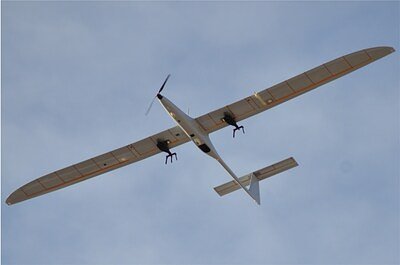
USAF Taps KHA for $270M Drone Deal to Remake Mideast Air Strategy
EMERYVILLE, CA – April 09, 2026 – U.S. Air Forces Central (AFCENT) has awarded Kraus Hamdani Aerospace a pivotal $270 million contract to rapidly deploy its K1000ULE unmanned aerial system, signaling a major strategic pivot in how the United States approaches air operations and intelligence gathering in the increasingly complex Middle East. The single-source award underscores the urgency to adapt to a new era of warfare dominated by swarms of low-cost drones and the growing vulnerability of traditional, high-value military aircraft.
This contract is more than a procurement deal; it represents a validation of a new doctrine. For years, air dominance was defined by sophisticated, multi-million-dollar jets and large surveillance drones like the MQ-9 Reaper. Today, those very assets are becoming high-risk liabilities in contested airspace, targeted by increasingly capable adversaries. The K1000ULE represents the military's high-stakes bet on a different kind of asset: smaller, smarter, more resilient, and vastly more cost-effective.
A New Reality in Contested Skies
The operational landscape for U.S. forces in the Middle East has been fundamentally altered. Unmanned systems are no longer a support tool but a primary weapon, with adversaries deploying them at scale to overwhelm defenses and disrupt operations. This has created a critical challenge: how to maintain persistent surveillance and situational awareness without risking billion-dollar assets or incurring unsustainable losses.
The loss of even a single MQ-9 Reaper is a significant financial and strategic blow. In response, AFCENT's contract with Kraus Hamdani Aerospace (KHA) seeks to fill this emerging capability gap. The military requires a platform that can provide constant eyes in the sky, operate deep within contested or GPS-denied environments, and feed critical data back to commanders in real-time, all while presenting a much smaller and more expendable target.
"Operators need systems that adapt in real time, maintain connectivity in contested environments, and support decisions at speed," stated Stefan Kraus, Co-Founder and CTO of KHA, in the company's announcement. The K1000ULE, he noted, is built precisely to meet that need, particularly with its secure satellite communications capability for beyond-line-of-sight operations.
Endurance and Intelligence Redefined
At the heart of the contract is the K1000ULE, a drone that stands out in a crowded field. Described as the longest-endurance unmanned aerial system (UAS) in its size and weight class, it boasts a proven flight record of nearly 76 hours. This remarkable persistence is achieved through a fully electric design, powered by lithium-ion batteries and a wing-spanning solar cell array, coupled with an AI-controlled flight pattern that maximizes energy efficiency.
Beyond its endurance, the K1000ULE is engineered for the realities of modern deployment. It requires an extremely low logistics footprint, capable of being unpacked and launched by a two-person team in minutes, even from a moving vehicle. This runway-independent capability provides immense tactical flexibility, allowing units to deploy advanced ISR capabilities from austere, forward-operating locations without the need for extensive infrastructure.
Its modular, open-architecture design allows it to be configured with a wide array of payloads, from high-definition electro-optical and infrared cameras to advanced signals intelligence packages. This adaptability ensures it can be tailored for diverse missions, from monitoring enemy movements to acting as a communications relay for ground forces in areas where traditional networks have failed.
A Node in the Networked Battlefield
Perhaps the most significant aspect of the K1000ULE's deployment is not just its hardware but its deep integration into the U.S. Army's burgeoning digital warfighting ecosystem. The drone is fully integrated with Anduril's Lattice platform, the software backbone for the Army's Next Generation Command and Control (NGC2) initiative.
This integration transforms the K1000ULE from a standalone surveillance tool into a dynamic, networked node on the battlefield. Through Lattice, data from the drone's sensors is fused with information from other assets—satellites, ground sensors, and other aircraft—into a single, coherent operational picture for commanders. The AI-driven software can autonomously task the drone, slewing its sensors to track targets of interest or identify emerging threats, drastically compressing the timeline between detection and action.
This move toward a networked battlefield is further accelerated by new procurement models. The K1000ULE is featured on the U.S. Army's recently launched "UAS Marketplace," an Amazon-style digital storefront designed to slash procurement times and get vetted technology into the hands of soldiers quickly. Its inclusion signifies that the platform has been rigorously tested and is trusted for immediate deployment, not just for U.S. forces but for allied nations as well.
"Meeting today's challenges requires a different kind of company, one that moves at speed, builds with the warfighter, and delivers capability that can be used immediately," said Fatema Hamdani, Co-founder and CEO of Kraus Hamdani Aerospace. This ethos appears to be exactly what the Pentagon is now seeking as it races to modernize.
The $270 million contract is a powerful endorsement of KHA, a company founded only in 2016, and a clear indicator that the Department of Defense is increasingly looking beyond traditional defense primes for innovation. By awarding a rapid, single-source contract, AFCENT is signaling that the K1000ULE's unique capabilities are not just desired but are critically needed now. This deployment will serve as a crucial test case for a new generation of unmanned systems designed not just to observe the battlefield, but to actively shape it in an age of persistent, technologically advanced conflict.