
- 90% faster: Microfleur reduces plant pressing time from weeks to minutes, eliminating the 'waiting gap' in lessons. - $64 billion market: The global K-12 STEM Kits market in 2025, highlighting the growth of hands-on learning tools. - STEAM integration: Combines science and art, boosting knowledge retention by engaging both analytical and creative brain functions.
Experts agree that Microfleur's rapid pressing technology enhances student engagement and learning retention by merging STEM and arts, making science more tangible and fostering environmental awareness.
From Lab to Art Studio: How Microwave Tech Redefines Science Class
SUPERIOR, Wis. – February 09, 2026 – In classrooms across the country, a quiet revolution is taking place, transforming the way students engage with the natural world. What was once a slow, often disappointing process of pressing flowers in heavy books has been accelerated into a dynamic, hands-on experience that merges botanical science with immediate artistic creation. At the heart of this shift is the Microfleur, a microwave flower press that is helping educators bridge the long-standing gap between STEM and the arts.
For generations, the classroom herbarium project has been a rite of passage in biology class. Students would collect local flora, carefully place them between sheets of newspaper, and slide them into a heavy textbook, waiting weeks for the specimens to dry. The result was often a faded, brittle remnant of the original plant, the lesson's momentum long lost. Now, educators are leveraging technology to capture both the vibrant color of the flower and the fleeting attention of young learners.
The Need for Speed in Modern Education
The challenge for modern educators is maintaining engagement in a world of instant feedback. The traditional method of plant pressing, which can take anywhere from two to seven weeks, creates a significant “waiting gap” that can derail a lesson plan. Microfleur's patented microwave technology addresses this directly by reducing the preservation process to mere minutes. By sandwiching flowers between specialized pads and liners and microwaving them in short bursts, the device rapidly removes moisture while locking in the plant's natural pigments.
This immediacy is more than just a convenience; it is a powerful pedagogical tool. It allows a teacher to guide a class from a nature walk for specimen collection, to a scientific discussion on plant anatomy, and finally to an art project using the preserved flowers—all within a single class period. The rapid turnaround sustains student curiosity and allows for a seamless flow between different modes of learning.
Research into hands-on education consistently demonstrates that active participation leads to greater retention and a deeper understanding of complex concepts. By eliminating the delay, this technology makes the connection between a living plant and a preserved scientific specimen tangible and immediate. “Watching a child's face light up when they see a flower transformed into a permanent piece of art in just a minute is magical,” the team at Microfleur noted in a recent statement. “It takes biology off the chalkboard and puts it directly into their hands.”
Bridging the STEAM Divide
The educational philosophy of transforming STEM (Science, Technology, Engineering, and Math) into STEAM by integrating Arts is gaining widespread traction. Proponents argue that creativity and design are not just peripheral to scientific innovation but are integral components of it. The Microfleur press serves as an effective, practical tool for implementing this philosophy in the classroom.
First, students engage in a scientific process. The press preserves the intricate details of a flower—the delicate veins of a petal, the structure of the stamen, the texture of a leaf—with remarkable clarity and color fidelity. This stands in stark contrast to traditional air-drying methods, which often result in browning and loss of detail. The vibrant, true-to-life specimens become high-quality data points for botanical study.
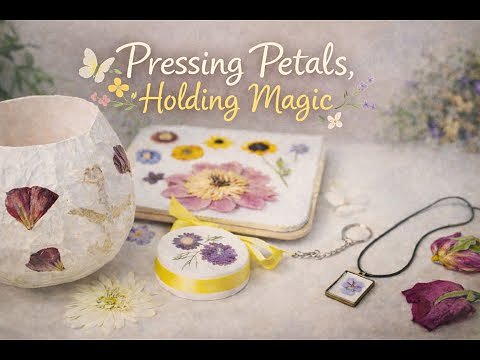
Once the scientific samples are prepared, the classroom shifts from a laboratory to an art studio. Students use their pressed flora to create bookmarks, greeting cards, framed botanical art, and other crafts. This dual-purpose activity reinforces learning by engaging both the analytical and creative hemispheres of the brain. Studies on arts integration have shown that students who learn scientific concepts through creative methods often demonstrate higher levels of knowledge retention compared to those taught through conventional instruction alone.
This approach fosters a holistic understanding, where students don't just memorize the parts of a plant but also develop an appreciation for its aesthetic qualities, its role in the ecosystem, and its potential as a medium for creative expression.
A Tool for Tangible Science and Environmentalism
Beyond its role in the STEAM curriculum, the rapid pressing technology fosters a more profound connection between students and their environment. The process encourages direct observation and exploration of local ecosystems, turning a simple walk around the schoolyard into a scientific expedition. By learning to identify and collect local plant life, students develop a greater awareness of the biodiversity in their own backyards.
Experiential learning is particularly crucial in the plant sciences, which can feel abstract when confined to textbooks. Making science tangible helps students build stronger mental models of biological processes. The ability to quickly create a permanent, beautiful artifact from a living plant provides a powerful sense of accomplishment and a concrete link to the natural world. This hands-on connection is shown to foster not only scientific curiosity but also a long-term appreciation for environmental stewardship.
The quality of the preserved specimen is key. While other rapid methods like silica gel can preserve shape, and traditional pressing has its own merits, microwave pressing is widely praised for its superior color retention. This ensures that students, regardless of their artistic skill level, can produce professional-looking results that accurately reflect the plant's natural beauty, further boosting their confidence and engagement.
Positioning in a Growing Ed-Tech Market
Microfleur's innovation arrives at a time of significant growth in the educational supply market. The global K-12 STEM Kits market was estimated at over $64 billion in 2025 and is on a steady growth trajectory, fueled by an increasing emphasis on hands-on, inquiry-based learning. Furthermore, the broader K-12 instructional material market is projected to expand significantly by 2029, driven by the demand for adaptive and experiential learning solutions.
Within this competitive landscape, which includes large suppliers like Carolina Biological Supply offering traditional wooden presses and a myriad of companies providing general STEAM kits, Microfleur has carved out a distinct niche. Its unique value proposition lies in its patented technology that solves a specific, long-standing problem in botany education. It is not just another craft kit but a specialized scientific tool that directly facilitates an integrated curriculum.
By targeting the intersection of life sciences, art education, and environmental awareness, the company is well-positioned to capitalize on the macro trends driving the ed-tech industry. As school districts and educators continue to seek out tools that promote interdisciplinary skills and prepare students for a future that demands both critical thinking and creativity, solutions that seamlessly merge these domains are becoming increasingly vital.