
- 3% of U.S. school-age children lack home internet, exacerbating the digital divide.
- CTL Chromebook PX112C Series integrates 5G, 4G LTE, and CBRS for seamless connectivity.
- Device meets MIL-STD-810H durability standards, with spill-resistant keyboard and drop protection from 75 cm.
Experts agree that CTL's 5G Chromebook represents a significant step toward closing the digital divide by providing reliable, integrated connectivity for students, particularly in underserved communities.
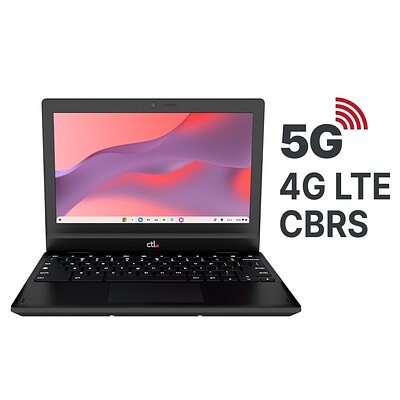
CTL's 5G Chromebook Aims to Erase the Digital Divide for Students
BEAVERTON, Ore. – April 15, 2026 – EdTech provider CTL today unveiled a new student-focused laptop that aims to render the clumsy and unreliable Wi-Fi hotspot obsolete. The CTL Chromebook PX112C Series, announced this morning, comes with fully integrated 5G, 4G LTE, and CBRS connectivity, providing students with instant, high-speed internet access directly from their device, a move aimed squarely at closing the persistent digital divide in American education.
Confronting the Homework Gap
The challenge of ensuring every student has reliable internet access—a problem thrown into sharp relief by the pandemic—remains a critical barrier to educational equity. According to recent data, as many as 3% of school-age children in the U.S. still lack home internet. This "homework gap" disproportionately affects students in rural and low-income households, where high-speed broadband is either unavailable or unaffordable.
For years, school districts have tried to bridge this gap with a patchwork solution: pairing standard Chromebooks with external cellular hotspots. However, this approach has created a logistical nightmare for IT departments, who must manage, track, and secure two separate devices per student. Hotspots are easily lost or damaged, their batteries die at inconvenient times, and they introduce significant cybersecurity risks, making it difficult for districts to ensure CIPA compliance.
"Our partnership with CTL began through Verizon, which has long supported our mission to bridge the digital divide," explained Eric Hanst, Technology Director for Baker Charter Schools, a virtual learning institution. "By transitioning from external hotspots—which are easily misplaced and often strained by household use—to CTL's integrated LTE-enabled Chromebooks, we have fundamentally changed the learning experience and ensured the internet connection is dedicated to their education. We are excited to deploy the next generation of these devices with 5G performance."
A New Era of Connectivity
The CTL Chromebook PX112C Series represents a significant technological leap by embedding the modem directly into the laptop. This design choice provides what CTL calls "instant-on" education; students simply open the lid and are connected, whether at home, on a bus, or in a temporary living situation.
"CTL pioneered the first LTE-enabled Chromebook, and our next-gen CTL Chromebook PX112C Series represents the next leap into a new era of educational equity," stated CTL CEO Jason Mendenhall in the announcement. "By integrating a 5G modem, we aren't just providing a backup connection; we are ensuring that every student, regardless of their internet situation, enjoys access to the high-bandwidth infrastructure needed for real-time collaboration, AI-driven learning, and daily coursework."
Beyond standard 5G and 4G LTE, the device's inclusion of Citizens Broadband Radio Service (CBRS) support is a key differentiator. CBRS allows school districts to build and operate their own private wireless networks. This emerging technology is already being deployed by districts like Jackson Public Schools in Mississippi and Tukwila School District in Washington to provide secure, controlled, and cost-effective internet access directly to student homes within a defined geographic area, extending the school's digital infrastructure far beyond the campus walls.
From Hotspot Hassles to Streamlined IT
For school technology leaders, the move from external hotspots to integrated connectivity promises a dramatic reduction in administrative burden. Managing a single, secure device per student simplifies deployment, tracking, and maintenance. All device management can be handled through the Google Admin console, eliminating the need for separate systems to manage hotspot hardware and security policies.
This integrated approach also enhances cybersecurity. By removing the external hotspot, a common vulnerability point, districts can more effectively enforce content filtering and safety protocols required by the Children's Internet Protection Act (CIPA).
Bringing such a device to market is no small feat. It requires rigorous certification from the FCC, the cellular standards body PTCRB, and each individual carrier. The CTL Chromebook PX112C is currently pending certification on the Verizon network, with approvals for AT&T and T-Mobile planned to follow. This multi-layered process ensures the device meets strict performance and interoperability standards before it can be deployed on a mass scale. While competitors like Acer and HP offer some models with cellular options, CTL's combination of 5G, LTE, and CBRS in a rugged, student-focused package positions it as a comprehensive solution for the unique challenges of K-12 education.
Built for the Classroom and the Planet
Designed for the rigors of daily student use, the PX112C Series is tested to MIL-STD-810H military standards for durability, with a spill-resistant keyboard and drop protection from a height of 75 cm. The device is powered by an Intel N150 processor with 8 GB of RAM and 64 GB of storage, and is available in both touchscreen and non-touchscreen models.
In addition to its technical specifications, CTL is highlighting the product's environmental credentials. As a certified B Corporation, the company is legally committed to balancing profit with social and environmental performance. The new Chromebooks are built with at least 30% post-consumer recycled plastics, and they ship in Forest Service Council (FSC)-certified bulk packaging to reduce waste and streamline deployment for IT staff.
This commitment to sustainability, combined with a full suite of lifecycle services including device buybacks and certified recycling, reflects a growing demand from educational institutions for technology partners that align with their broader community and environmental values. The PX112C Series is slated for release in the second quarter of 2026, offering school districts a new tool to not only connect their students but also to do so more efficiently, securely, and sustainably.