
- 100,000 new skilled workers needed over the next decade to meet U.S. submarine production goals.
- 25% below required staffing levels as of late 2022, with critical trades like welding facing 30% attrition rates.
Experts agree that the U.S. submarine industrial base faces a critical workforce shortage that threatens national security and production timelines, requiring urgent, scalable training initiatives like ATDM to bridge the gap.
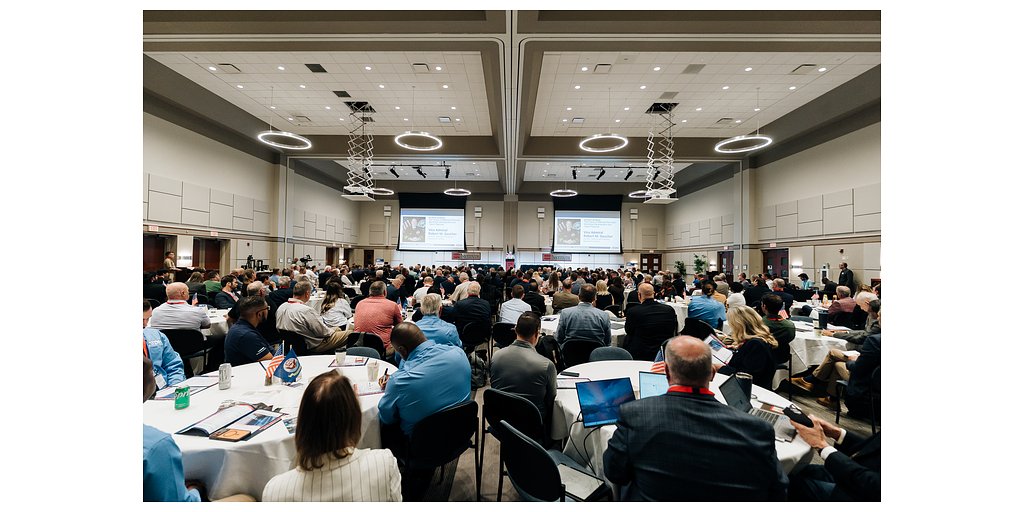
From Job Shortage to Shipyard: The Race to Build America's Submarine Workforce
DANVILLE, VA – June 03, 2026
In a state-of-the-art training facility in Southern Virginia, far from the coastal shipyards of Connecticut and Newport News, a critical battle for U.S. national security is being waged. It’s not fought with sonar or torpedoes, but with welding torches, CNC machines, and advanced metrology tools. Here, leaders from the U.S. Navy and the defense industry recently convened not to launch a vessel, but to confront a threat that could undermine the nation's undersea dominance: a severe and growing workforce crisis.
The U.S. submarine industrial base, the complex network of over 16,000 suppliers responsible for building and maintaining the world's most advanced submarines, is facing a monumental challenge. To meet the strategic imperative of producing one Columbia-class and two Virginia-class submarines per year by 2028, the industry needs to hire an estimated 100,000 new skilled workers over the next decade. Yet, as of late 2022, the sector was already operating at 25% below the staffing levels required just to meet existing schedules. This gap between demand and supply is the central focus of initiatives like the Accelerated Training in Defense Manufacturing (ATDM) program, hosted at the Institute for Advanced Learning and Research (IALR).
A National Security Imperative on the Factory Floor
The gravity of the situation was not lost on the officials gathered in Danville. Vice Admiral Robert Gaucher, the Navy's director of submarine programs, framed the issue in stark terms. "A foundation of our maritime superiority is our skilled workforce within the submarine industrial base,” he stated. “By accelerating training, we are forging the future readiness of the United States Navy."
This isn't hyperbole. The production delays caused by labor shortages have tangible strategic consequences. The industrial base has historically delivered an average of 1.2 submarines annually, a pace that must more than double to meet the Navy's goals. The challenge is compounded by demographics; with 27% of the maritime workforce over the age of 55, a wave of retirements is draining decades of institutional knowledge from the factory floor. Furthermore, high attrition rates, sometimes peaking at 30% in critical trades like welding and pipefitting, mean that shipyards are constantly struggling to replace talent almost as fast as they can hire it.
The skills in shortest supply—welders, machinists, electricians, and quality control inspectors—are the very bedrock of submarine construction. Without a surge in these trades, the timelines for both the Virginia-class fast-attack submarines and the nation’s next-generation Columbia-class ballistic missile submarines, the cornerstone of America's nuclear deterrent, are at risk. “We are counting on ATDM, local leadership and our industry partners to continue to press so we grow the capacity and skillsets we need to deter, and if necessary, defeat any adversaries,” Vice Adm. Gaucher emphasized.
The Danville Blueprint: Forging a New Generation of Shipbuilders
IALR and its flagship ATDM program represent a direct, tactical response to this strategic crisis. Launched in 2021, ATDM has pioneered a rapid, industry-aligned training model designed to turn students with little to no manufacturing experience into shipyard-ready technicians in just four months. The results are a compelling proof of concept. Since its inception, the program has graduated over 1,400 students, with a remarkable 80% finding employment within the submarine industrial base within two months of graduation.
The curriculum is reverse-engineered from the needs of major defense contractors like General Dynamics Electric Boat and Huntington Ingalls Industries. Students train in welding, CNC machining, additive manufacturing, non-destructive testing, and quality control inspection. The program's new 100,000-square-foot Maritime Training Center isn't a typical academic lab; it’s a high-fidelity replica of a modern production environment, complete with industry-grade equipment that graduates will encounter on their first day on the job.
“Meeting the mission of training more than 10,000 workers annually to support the defense industrial base requires coordination across federal agencies, state government and industry partners,” said Telly Tucker, President of IALR. “This is a national challenge.” The ATDM model is built on this very collaboration, seeking to partner with more than 300 defense manufacturing employers to ensure its training remains relevant and its graduates have a direct path to employment.
A Scalable Model for a National Challenge
With a goal of graduating 1,000 defense workers annually, ATDM is a significant contributor to the larger national effort, but its true value may lie in its scalability and replicability. In a landscape where traditional apprenticeships can take years, ATDM’s accelerated, hands-on approach offers a new paradigm for workforce development in critical sectors.
Defense industry employers who have partnered with the program are seeing the benefits. “The graduates we hire from this program arrive with a foundational skill set that typically takes months to develop on-site,” noted a senior recruiting manager for a major naval supplier. “They understand the culture of quality and precision from day one, which dramatically shortens their integration time and accelerates their productivity.” This efficiency is crucial for contractors like General Dynamics Electric Boat, which plans to hire up to 5,000 workers annually to meet production demands.
By focusing on a core set of transferable skills, ATDM provides a flexible talent pipeline that can adapt to the evolving needs of the defense sector. The inclusion of additive manufacturing, for instance, anticipates the Navy’s push for greater operational efficiencies through its Additive Manufacturing Center of Excellence (AM CoE), also highlighted at the Danville forum. This forward-looking curriculum ensures that the workforce being built today is prepared for the manufacturing technologies of tomorrow.
From Tobacco Town to Tech Hub: The Economic Ripple Effect
The impact of IALR and ATDM extends far beyond the gates of the nation’s shipyards. For Danville and the surrounding Southern Virginia region, this initiative is a powerful engine for economic transformation. Once a hub for tobacco and textiles, the area is reinventing itself as a center for advanced manufacturing and defense technology. The program is not just filling jobs; it is creating careers with competitive wages and upward mobility, attracting new talent to the region and providing local residents with pathways to prosperity.
This investment in human capital creates a virtuous cycle. A skilled local workforce makes the region more attractive to other high-tech industries, fostering a diverse economic ecosystem. The success of ATDM demonstrates how targeted public-private partnerships can address a pressing national security need while simultaneously catalyzing regional economic revival. This ambitious initiative in Southern Virginia is not just building components for submarines; it is building a resilient economic future and a more secure nation.