
- 12-hour payload processing: Firefly completed satellite payload operations in under 12 hours, a process traditionally taking weeks or months.
- 36-hour rapid launch simulation: A full launch sequence was simulated within 36 hours, demonstrating emergency protocol readiness.
- 5-day satellite deployment: The 2023 VICTUS NOX mission achieved warehouse-to-orbit operations in just five days, with launch within 27 hours of final approval.
Experts agree that the successful VICTUS DIEM exercises demonstrate a critical advancement in tactically responsive space capabilities, reinforcing the necessity of rapid launch readiness for national security in an increasingly contested space domain.
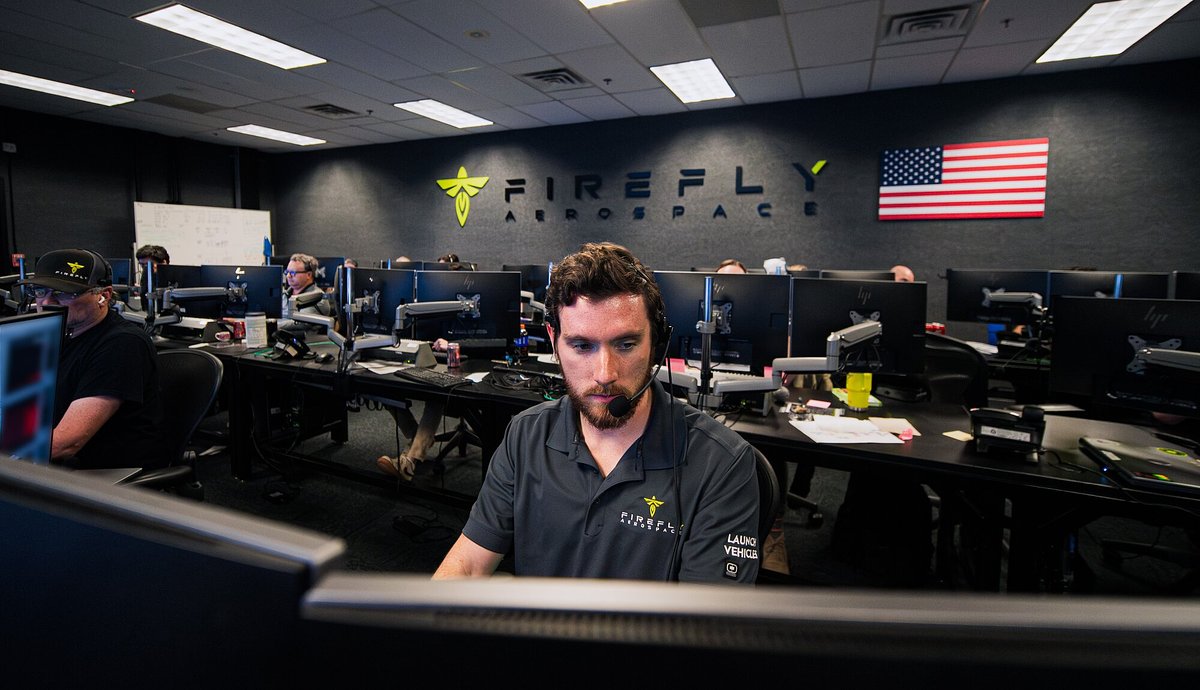
Firefly & Space Force Drill Rapid Launch for Future Conflicts
LOMPOC, Calif. – March 25, 2026 – In a powerful demonstration of the United States’ growing capacity for agile space operations, Firefly Aerospace has successfully supported two critical responsive space exercises for the U.S. Space Force. The drills, part of the VICTUS DIEM mission, underscore a strategic shift towards leveraging commercial speed and innovation to ensure national security on the high frontier.
Working in collaboration with defense giant Lockheed Martin, Firefly participated in exercises designed to dramatically compress the timeline for deploying assets into orbit. The first demonstration saw a satellite payload undergo arrival operations, system checkouts, mating to the launch vehicle, and final encapsulation in under 12 hours—a process that has traditionally taken weeks or months. A second, more comprehensive exercise simulated a full 36-hour rapid launch sequence, practicing the emergency protocols required to execute a tactically responsive mission in a real-world threat scenario.
The Need for Speed: Securing the High Frontier
The VICTUS DIEM exercises are not isolated events but a crucial part of the U.S. Space Force’s broader Tactically Responsive Space (TacRS) program. This initiative is a direct response to a rapidly evolving geopolitical landscape where access to space is no longer guaranteed. With adversaries like China and Russia actively developing capabilities to disrupt, disable, or destroy American satellites, the ability to rapidly replace or augment orbital assets has become a paramount national security imperative.
The TacRS program, managed by Space Systems Command’s (SSC) "Space Safari" office, aims to shrink the satellite launch cycle from years or months to a matter of days or even hours. This capability would provide combatant commanders with unprecedented flexibility, allowing them to quickly replenish a damaged satellite constellation, deploy new sensors to monitor an emerging crisis, or characterize an unknown threat on orbit.
VICTUS DIEM builds on the successes of previous missions in the series. In September 2023, the VICTUS NOX ("conquer the night") mission, also launched by Firefly, set a new standard by getting a satellite from a warehouse to on-orbit operations in just five days, with the launch itself occurring within 27 hours of receiving the final "go" order. Future missions like VICTUS HAZE, planned for 2025, will introduce even greater complexity, testing the ability to maneuver satellites in response to simulated in-space threats. The ultimate goal is to establish an initial operational capability for TacRS, with the Space Force aiming to conduct its first operational missions as early as 2026.
Firefly's Role in a New Era of Agile Launch
Firefly Aerospace’s performance in the VICTUS DIEM exercises solidifies its position as a key enabler of this new military doctrine. The company’s ability to execute complex pre-launch procedures under extreme time pressure is central to the TacRS concept. The sub-12-hour payload processing demonstration involved the intricate choreography of receiving the spacecraft, performing vital health checks, physically mating it to the launch adapter, and enclosing it within the protective payload fairing—all tasks where precision and speed are critical.
The 36-hour rapid launch simulation was an even more rigorous test of the company's operational readiness. Within this tight window, the joint team, collaborating with SSC’s Space Launch Delta 30, completed the entire pre-flight workflow. This included initial mission design, calculating the precise flight trajectory, conducting launch collision avoidance (COLA) analysis to ensure the rocket would not endanger other satellites, securing range safety approvals, and completing all final launch operations checklists.
These achievements are built upon a foundation of technology and infrastructure designed for responsiveness. Firefly’s small-to-medium-lift Alpha rocket utilizes common, flight-proven components to enhance reliability and speed up manufacturing. The company’s co-located engineering, manufacturing, and test facilities in central Texas are structured to enable rapid innovation and a high operational tempo, supporting a stated goal of a repeatable seven-day launch cadence from established sites.
The Power of Partnership: Commercial Innovation Meets Military Needs
The VICTUS DIEM mission highlights a fundamental evolution in the relationship between the Pentagon and the private sector. The collaboration between Firefly, an agile commercial launch provider, and Lockheed Martin, a legacy prime defense contractor, showcases a powerful new model for national security space. This synergy allows the Space Force to harness the rapid development cycles and cost efficiencies of the commercial industry while integrating them into the robust, mission-assured frameworks required for military operations.
This public-private partnership model is being formalized through initiatives like the Space Force’s Commercial Space Strategy and the planned Commercial Augmentation Space Reserve (CASR). The strategy aims to deeply embed commercial solutions across all Space Force missions, moving beyond traditional, slow-moving procurement contracts. The CASR, meanwhile, will create a pre-vetted pool of commercial companies that can be called upon to provide critical capabilities during peacetime or conflict, much like the Civil Reserve Air Fleet for airlift capacity.
The Space Safari program office serves as the vanguard for this new approach, acting as an acquisition and execution cell dedicated to rapidly responding to urgent warfighter needs by leveraging commercial partnerships. The successful VICTUS DIEM exercises provide invaluable data and lessons learned, helping to codify a repeatable, reliable process for tactically responsive launch that can be activated on demand.
Charting the Competitive Cosmos of Responsive Space
While Firefly has established a strong track record, it operates within a dynamic and increasingly competitive market for responsive launch. The Space Force is deliberately fostering this competition to drive innovation and ensure it has multiple options for assured access to space.
Other key players are also making significant strides. Rocket Lab, a major competitor in the small-satellite launch sector, is slated to participate in the upcoming VICTUS HAZE mission. Even industry titan SpaceX is involved, with its rockets scheduled to launch future VICTUS missions carrying payloads from partners like Impulse Space. Meanwhile, companies like Astra are developing mobile launch systems designed for deployment from austere locations with minimal infrastructure.
This burgeoning ecosystem of launch providers is a critical asset for U.S. space strategy. By cultivating a diverse industrial base, the Space Force not only gains access to a variety of technical solutions and payload capacities but also enhances the overall resilience of its launch enterprise. If one provider or launch site is unavailable, others can be activated to fulfill the mission, ensuring that the nation's ability to place assets in orbit remains robust and dependable, even under pressure. The continued success of exercises like VICTUS DIEM is a clear signal that the era of responsive space is no longer a future concept but an emerging operational reality.
Topics & Related
AI & Machine Learning
Generative AI
Geopolitics & Trade
Acquisition
Regulatory & Legal
ChatGPT
Revenue
Related Company Pulse