
- 350 kW: The electrical output from the MGU-K in 2026 F1 cars, creating a near 50/50 split between electric and combustion power.
- Sub-micron precision: Hexagon's metrology tools measure engine components with tolerances smaller than the width of a human hair.
- 30,000 design changes per season: The number of modifications Red Bull makes annually, requiring rapid verification.
Experts agree that Hexagon's precision metrology tools are critical to Red Bull's success in meeting the stringent 2026 F1 regulations, ensuring sub-micron accuracy in manufacturing and development.
The Invisible Edge: How Hexagon Powers Red Bull's 2026 F1 Revolution
LONDON – February 11, 2026 – As the world of Formula 1 stands on the cusp of its most significant technical overhaul in a decade, the race for 2026 has already begun, not on the track, but in the sterile, climate-controlled metrology labs of Milton Keynes. Here, Oracle Red Bull Racing and its new power unit division, Red Bull Ford Powertrains, are undertaking one of the most ambitious projects in modern motorsport: building a brand-new F1 power unit from the ground up. Central to this monumental effort is a long-standing technical partner, Hexagon, whose advanced measurement technologies are providing the invisible, yet indispensable, edge in the quest for sub-micron perfection.
The first-ever powertrain produced by the team, codenamed DM-01, is a direct response to the FIA's radical 2026 regulations. These rules are designed to create a more sustainable, competitive, and thrilling sport, demanding a complete reinvention of the cars. In this high-stakes game of engineering chess, precision is not just an advantage; it is the fundamental price of entry.
A New Era of F1 Engineering
The 2026 regulations represent a seismic shift. The power units, while retaining a 1.6-litre V6 internal combustion engine, will see a dramatic rebalancing of power. The electrical output from the MGU-K will surge to 350 kW, creating a near 50/50 split between electric and combustion power. This, combined with the mandated use of 100% sustainable fuels and the removal of the complex Motor Generator Unit – Heat (MGU-H), presents an immense challenge for engine manufacturers.
Simultaneously, the chassis and aerodynamics are being completely transformed. The cars will be shorter, narrower, and lighter, designed to be more 'nimble'. The most significant change is the introduction of active aerodynamics, with movable front and rear wings allowing drivers to switch between high-downforce and low-drag modes. This replaces the simpler DRS system and is paired with the elimination of the powerful ground-effect Venturi tunnels, fundamentally altering how the cars generate grip.
For engineers, this translates to a complex puzzle. A less powerful combustion engine must work in perfect harmony with a more potent, and heavier, electrical system. New aerodynamic concepts must be validated with absolute certainty. Every component, from the tiniest gear to the largest crankcase, must be lighter, stronger, and manufactured to tolerances that are fractions of the width of a human hair. This is where Hexagon's role transitions from a supplier to a foundational partner.
The Measure of a Champion
To conquer the 2026 challenge, Red Bull Ford Powertrains has embedded Hexagon's metrology technologies deep within its development and production processes. The team leverages a suite of ultra-high accuracy tools to inspect, validate, and perfect the thousands of components that constitute the new power unit and the RB22 chassis.
At the heart of the operation are Hexagon's Leitz PMM-C Coordinate Measuring Machines (CMMs). These granite-based machines are the ultimate arbiters of accuracy, capable of measuring complex internal engine components like gears and blades with sub-micron precision. Paired with QUINDOS software, they provide the detailed, reliable data needed to ensure that every part conforms exactly to its digital design. As the team iterates through countless prototypes, the CMMs provide the rapid feedback essential for development at F1 speed.
For larger surfaces and aerodynamic components, the portable Leica Absolute Scanner AS1 is deployed. This 3D laser scanner allows engineers to quickly capture millions of data points, creating a high-fidelity digital twin of physical parts. This is critical for quality control on powertrain crankcases and for verifying the intricate surfaces of the new active aerodynamic elements. In a sport where the team makes an estimated 30,000 design changes a season, the ability to rapidly scan and verify a new wing or floor section is invaluable.
The data from these systems flows into Hexagon's Q-DAS software, a powerful tool for statistical process control. This allows the team to monitor manufacturing trends, identify potential deviations before they become defects, and provide corrective feedback to CNC machines. This creates a 'right-first-time' manufacturing philosophy, which is not only crucial for performance but also for financial efficiency.
A Strategic Gamble Built on Precision
Red Bull's decision in 2021 to create its own powertrain division was a bold declaration of independence, a move to control its own destiny rather than rely on an external engine supplier. The subsequent partnership with Ford brought invaluable expertise in battery technology and combustion development, but the core challenge of building a competitive F1 engine from scratch remained. The RB22 is now the only car on the grid to have its chassis and power unit designed and manufactured on the same campus, a strategic advantage that relies on seamless integration.
This is a high-risk, high-reward strategy, and the 19-year partnership with Hexagon provides a crucial layer of security. The precision and reliability of Hexagon's tools de-risk the manufacturing process, giving the team confidence in every part that goes into the engine and onto the car.
"Hexagon's shared passion for extreme accuracy and performance has been vital to this ambitious project," stated Ben Hodgkinson, Technical Director at Red Bull Ford Powertrains. "With every element built from scratch, Hexagon's metrology expertise has enabled us to achieve the tolerances and the levels of quality we require in a cutting-edge piece of engineering to perform at the top level of motorsport."
Efficiency Under Pressure
The introduction of a stringent F1 cost cap, which now includes a separate cap for power unit manufacturers set at $130 million from 2026, has fundamentally changed the sport's financial landscape. Unlimited spending is a relic of the past; today, efficiency is king. Every dollar must be maximized, and every mistake is doubly costly.
In this environment, investing in advanced metrology is a strategic imperative. The ability to prevent the production of faulty parts, reduce material waste, and accelerate development cycles without costly trial-and-error provides a significant return on investment. By ensuring components are made correctly the first time, Hexagon's integrated solutions help Red Bull Ford Powertrains stay within the tight confines of the cost cap while pushing the absolute limits of performance.
"Working with Red Bull Ford Powertrains this season is incredibly exciting for all of us at Hexagon," commented Emanuel Viklund, President of Hexagon's Portable Metrology Division. "But nothing in F1 stands still - there is always a new challenge to tackle, a fraction of a second to gain and an opportunity to refine the car to push the limits of precision and performance. We are proud to support them every step of the way."
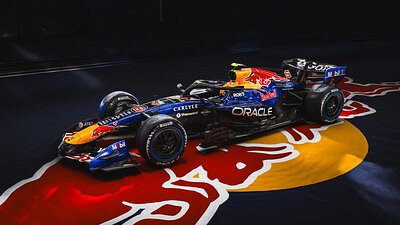
As the RB22, with its newly revealed livery, prepares to hit the track for the season opener in Australia, its performance will be the result of thousands of hours of design, simulation, and manufacturing. Behind the visible spectacle of speed and strategy lies the invisible world of metrology, where the race is won and lost by the thousandth of a millimeter.
Topics & Related
IPO
Acquisition
Machine Learning
Generative AI
Sustainability & Climate
Digital Transformation
Revenue
AI & Machine Learning
Venture Capital
Related Company Pulse