
- 62% renewable electricity usage across operations in 2025, targeting 100% by 2030.
- 50% reduction in recordable accidents compared to 2024.
- 90% sustainable content in circular material grades like Durethan® M-XB PA6.
Experts would likely conclude that Envalior is strategically positioning itself as a critical enabler of sustainability through data-driven material innovation and circular economy initiatives.
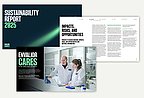
Envalior's Data-Driven Detour: Materials as the New ESG Infrastructure
DÜSSELDORF, Germany – June 15, 2026
In the global race toward sustainability, the spotlight often falls on electric vehicles, smart grids, and gleaming solar farms. Yet, the foundational elements enabling this transition are frequently overlooked. Engineering materials company Envalior, in its second annual Sustainability Report released today, makes a compelling case that the future of sustainability isn't just in the final product, but in the very molecules that form it—and the data that proves its worth.
The report, covering the 2025 calendar year, details significant progress on the company's ESG targets. But beneath the headline figures lies a deeper strategy: positioning high-performance materials as a critical, data-verified node in the global sustainability network. As CEO Calum MacLean stated, "Sustainability is not a separate agenda for us – it is how we run our business and is becoming a key driver of competitiveness and innovation." This philosophy signals a shift where material suppliers are no longer just vendors, but essential architects of their customers' environmental roadmaps.
Building a Greener Foundation
Envalior, formed in 2023 from the merger of DSM and Lanxess's materials divisions, has laid out an aggressive environmental agenda. The report highlights a jump to 62% renewable electricity usage across its operations in 2025, a significant step toward its goal of 100% by 2030. This move is crucial in a chemical industry under immense pressure to decarbonize its energy-intensive processes. The company also reports tangible progress on its target to slash Scope 1 and 2 greenhouse gas emissions by 35% by 2030, from a 2024 baseline.
While these metrics are impressive, the company’s commitment to operational discipline offers a more granular view of its environmental stewardship. Envalior achieved full Operation Clean Sweep (OCS) Europe certification across all six of its European sites. This voluntary industry initiative is designed to prevent the loss of plastic pellets—a major source of microplastic pollution—into waterways. By embedding best practices for material handling directly into its production infrastructure, the company is tackling an invisible but pervasive environmental threat at its source. This focus on the minutiae of production demonstrates a holistic approach that extends beyond simple carbon accounting.
The report also underscores a dramatic improvement in workplace safety, with a 50% reduction in recordable accidents compared to 2024. This achievement is particularly noteworthy against a backdrop of rising injury frequency across many industries, according to a recent EHS benchmarking report. It suggests that Envalior’s internal systems for social responsibility are as robust as its external environmental targets.
The Data Backbone of Sustainable Products
Perhaps the most significant strategic move detailed in the report is Envalior's push for radical transparency through externally validated Life Cycle Assessments (LCAs). The company now provides LCAs for a majority of its key materials, with the underlying calculations for its base polymers recently receiving a critical review from the independent certification body TÜV SÜD, confirming compliance with ISO standards.
This is more than just a box-ticking exercise in corporate reporting. By providing this validated data, Envalior is creating a verifiable data backbone for the entire value chain. For its customers in mobility, electronics, and consumer goods, this information is gold. It allows them to accurately calculate the carbon footprint of their own products (their Scope 3 emissions), make informed eco-design choices, and prepare their own mandatory disclosures under stringent regulations like the EU’s Corporate Sustainability Reporting Directive (CSRD).
In essence, Envalior is transitioning from a material supplier to a data provider. This shift directly addresses the "greenwashing" critique that has plagued many corporate sustainability claims. By offering third-party-validated proof of its materials' environmental impact, the company provides its partners with the decision-useful, credible data needed to navigate a complex regulatory and consumer landscape. This approach transforms a simple polymer from a commodity into an integral part of a customer's compliance and sustainability strategy.
Engineering a Circular Future
The report also charts a clear path toward a circular economy, a cornerstone of the company’s "Envalior CARES" strategy. The long-term ambition is to offer a complete portfolio of bio- and/or recycled-based alternatives for all its products by 2030. This isn't a distant goal; the company is already delivering tangible results.
Circular grades like Durethan® M-XB PA6 now achieve up to 90% sustainable content, offering a near drop-in solution for manufacturers seeking to lower their environmental impact without compromising performance. Furthermore, Envalior is expanding its feedstock streams to include diverse recycled inputs, from mechanically recycled plastics to chemically recycled pyrolysis oil derived from post-consumer tires. This diversification is key to building a resilient supply chain for recycled materials and scaling the circular economy beyond niche applications.
By engineering materials that are both high-performance and sustainable, Envalior is helping to resolve a long-standing tension in product design. This innovation is critical for industries like automotive, where lightweight, durable materials are essential for improving the efficiency of electric vehicles, and in electronics, where circularity is becoming a core design principle. As the world moves to decarbonize, the very DNA of the products we use must change, and this report outlines a clear blueprint for how that transformation can be achieved at the material level.
This systematic integration of sustainability, from renewable energy powering its plants to validated data empowering its customers and circular materials defining its products, paints a picture of a company building resilience from the inside out. By treating sustainability as a driver of innovation rather than a compliance burden, Envalior is not only future-proofing its own business but also providing the foundational infrastructure for its partners to build a more sustainable world.