
- 3.1 MW rooftop solar installation generating 3.8 million kWh annually, cutting 1,787 tons of CO2 emissions per year.
- 111 invention patents secured by 2025, reinforcing CHANDO's intellectual property moat.
- RMB 29.2 million invested in Himalayan fund, restoring 6.66 million square meters of land.
Experts would likely conclude that CHANDO’s deep investment in sustainable science, intellectual property, and social capital positions it as a leader in China’s competitive beauty market, turning ESG principles into a strategy for long-term growth and market differentiation.
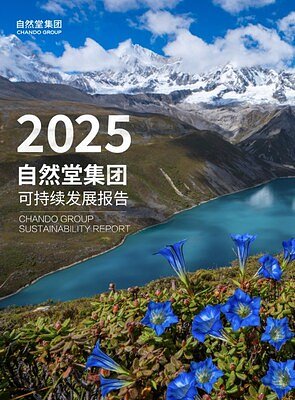
CHANDO’s Blueprint: How Sustainable Science is Forging a Chinese Beauty Giant
SHANGHAI, China – June 02, 2026 – When Chinese cosmetics firm CHANDO Group released its 15th consecutive sustainability report, it did more than just check a corporate social responsibility box. The detailed disclosure, launched at its newly inaugurated CHANDO Future Beauty City, serves as a strategic blueprint for navigating the complexities of the modern global economy. By committing to Science Based Targets initiative (SBTi)-aligned emissions goals and vertically integrating everything from Himalayan bio-research to automated manufacturing, the company is making a calculated wager that deep, long-term investment in sustainability is the most potent driver of competitive advantage in China’s fiercely contested beauty market.
For 25 years, CHANDO has built its brand around the mystique of the Himalayas. But its latest moves signal a strategy that is far more grounded in hard science, intellectual property, and operational excellence. The company’s 2025 report is less a retrospective and more a declaration of how it plans to win the future: not by simply marketing “green beauty,” but by engineering it from the molecule up.
The Factory as a Strategic Statement
Nowhere is this strategy more tangible than at the CHANDO Future Beauty City. Opened in October 2025 in Shanghai's Oriental Beauty Valley, the facility is a masterclass in industrial synergy. It's a factory, a tourist destination, and a massive solar farm rolled into one. A 3.1 MW rooftop solar installation is projected to generate 3.8 million kWh of renewable electricity annually, meeting nearly a quarter of the site’s demand and cutting carbon emissions by an estimated 1,787 tons per year.
But the hardware tells only part of the story. The facility operates with a “lights-out” automated logistics system and employs digital twin technology to optimize energy and material flows. This isn't just about reducing the carbon footprint; it's about driving down operational costs and increasing efficiency in a market where margins are under constant pressure. By opening the factory to the public for “industrial tourism,” CHANDO is also transforming its manufacturing base into a powerful marketing asset, offering consumers a transparent look into its processes. This move directly addresses the growing consumer demand for transparency and authenticity, turning a cost center into a brand-building experience.
The Himalayan IP Moat
While the factory showcases operational prowess, CHANDO's most formidable competitive advantage may be cultivated in its labs. The company has successfully secured approval from China's National Medical Products Administration (NMPA) for new cosmetic ingredients derived from rare Himalayan plants, including Gentiana veitchiorum and, most recently, cell clusters of the endangered Saussurea laniceps (Snow Lotus).
This is a critical development. By using advanced plant tissue culture techniques, CHANDO can mass-produce the active compounds of these rare botanicals without harvesting them from the wild. This sidesteps ecological damage and supply chain volatility while creating a proprietary pipeline of high-performance ingredients. As Dr. Ren Hui, head of raw materials at CHANDO's R&D Center, stated, “True competitiveness is built on mastery of core ingredient technologies.”
This strategy accomplishes several goals at once. It insulates the company from reliance on foreign ingredient suppliers, a key vulnerability for many Chinese brands. It establishes a powerful intellectual property moat, with the company holding 111 invention patents by the end of 2025. And it provides a compelling, science-backed narrative that resonates with the sophisticated “clean beauty” consumer. The development of its proprietary HiMurchaSin ingredient, produced via a bio-fermentation process that boosts efficiency by 300% while achieving zero waste, further illustrates this focus on turning sustainable science into commercial product.
A Calculated Investment in Social Capital
CHANDO's deep engagement in the Himalayas extends beyond bio-prospecting. The company has invested over RMB 29.2 million into its Himalayan fund, supporting initiatives that deliver tangible economic and social benefits. Its “Planting Grass in the Himalayas” program has restored 6.66 million square meters of land while generating RMB 950,000 in net income for local village cooperatives in 2024 alone.
Simultaneously, its Spring Bud program has provided RMB 5.6 million in aid to 860 female students in Tibet, complemented by career workshops and training opportunities. This holistic approach, which combines environmental restoration with economic empowerment and educational support, is not philanthropy as an afterthought. It is a strategic investment in securing a social license to operate. By creating shared value, CHANDO builds deep, resilient relationships with the communities that are stewards of the very biodiversity its brand is built on, de-risking its most unique source of innovation.
“In the end, corporate sustainability is not only about growth figures, but also about the kind of growth a company creates,” noted Dr. Chen Juanling, the Group’s General Manager of Public Affairs. This philosophy is evident in their actions, from earthquake relief efforts to funding initiatives that help female researchers return to their careers.
Charting a Course in a Crowded Market
CHANDO’s multifaceted strategy appears custom-built for the current market environment. As Chairman and President Zheng Chunying observed, the Chinese beauty industry is facing consolidation and a flight to quality. In this landscape, CHANDO's commitment to reduce absolute Scope 1 and 2 emissions by 42% by 2030—a target aligned with the rigorous standards of SBTi and comparable to global giants like L'Oréal—is not just an environmental pledge. It is a signal to investors, partners, and consumers that the company is built for the long term.
By systematically integrating advanced R&D, sustainable manufacturing, social investment, and robust intellectual property protection—highlighted by a key legal victory against trademark infringement—CHANDO is constructing a business model that is difficult to replicate. While competitors are caught in price wars, CHANDO is investing in the foundational pillars of a next-generation enterprise, turning the principles of ESG into a comprehensive strategy for durable growth and market leadership.