
- 50 years of activism since 1976
- $3.34 million injected into 65 grassroots organizations in 2021
- $19 million total grantmaking portfolio in 2021
Experts agree that Liberty Hill Foundation's strategic, grassroots-focused philanthropy has been instrumental in driving systemic social change in Los Angeles, and its model of collaborative, equity-centered funding remains a national leader in the field.
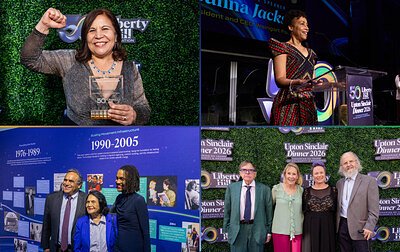
Liberty Hill at 50: A Legacy of Justice and a Call to Action for LA
LOS ANGELES, CA – May 20, 2026 – The atmosphere at the Skirball Cultural Center on May 12 was electric, a mix of joyful reunion and sober resolve. Liberty Hill Foundation, a cornerstone of Los Angeles’s social justice landscape, celebrated its 50th anniversary at the annual Upton Sinclair Dinner. The event was more than a milestone; it was a powerful call to action, bringing together generations of activists, philanthropists, and community leaders to reflect on a half-century of struggle and steel themselves for the fights ahead.
Amidst celebratory performances by The Shambles and The Freedom Singers, the evening’s core message was unambiguous: as Los Angeles confronts deepening inequality and attacks on fundamental rights, the work of building community power is more critical than ever. The gathering honored the foundation's visionary co-founders—Sarah Pillsbury, Larry Janss, Win McCormack, and Anne Mendel—while turning a determined eye toward the next 50 years.
A Legacy Forged in Activism
To understand Liberty Hill is to understand its motto: "Change, Not Charity." Founded in 1976, the organization was named for a historic 1923 incident in San Pedro where author and activist Upton Sinclair was arrested for reading the Bill of Rights to striking longshoremen. This act of defiance against the suppression of free speech became the bedrock of the foundation's mission to fund grassroots organizing and address the root causes of injustice.
Over five decades, Liberty Hill has been a laboratory for social change, seeding movements that have reshaped Los Angeles. Following the 1992 civil unrest, it played a pivotal role in convening leaders to address racial and economic inequity. Its support has been instrumental in landmark victories across numerous fronts. The foundation has backed environmental justice groups fighting to phase out urban oil drilling in a city home to the nation's largest urban oil field, where toxic emissions disproportionately harm communities of color. It has championed immigrant rights, contributing to statewide campaigns that secured in-state tuition and driver's licenses for undocumented residents. Today, its "Agenda for a Just Future" continues to drive systemic change in housing justice, LGBTQ+ rights, and the fight to end youth incarceration in a county that supervises more young people than any other jurisdiction in the nation.
This commitment to bold, strategic investment was powerfully demonstrated in 2021 when the foundation made the unprecedented decision to withdraw 14% of its endowment—far exceeding the standard 5%—to inject over $3.34 million into 65 grassroots organizations, expanding its total grantmaking portfolio to over $19 million that year.
Confronting a Divided Los Angeles
The celebration was held against a backdrop of stark realities. The evening's speakers did not shy away from the immense challenges facing the city, from the nation's largest unsheltered homeless population to the persistent racial disparities in wealth and health, exacerbated by the COVID-19 pandemic. The theme of "funding uncertainty" mentioned in the press release is underscored by data showing that BIPOC-led nonprofits in Los Angeles report fewer financial surpluses and lower reserves than their White-led counterparts, revealing a systemic disadvantage for the very organizations on the front lines.
In her keynote remarks, Joanna Jackson, President & CEO of the Weingart Foundation and an evening honoree, captured the gravity of the moment. "Tonight is more than an anniversary—it is a reunion, a celebration, and an affirmation of the power of people to drive change," she stated. "I can feel the power and energy in this room, and I am reminded, not only of the change we've made, but the change that is possible."
Her words echoed the urgency expressed by Liberty Hill President & CEO Shane Murphy Goldsmith. Reflecting on the foundation's enduring role, she posed a challenge to the audience: "Fifty years from now, what Los Angeles do you want to see? And what will you do today to plant the seeds of that future? It will be here before we know it. Let's grow something magnificent."
The Power of Collaborative Philanthropy
The dinner was a testament to the power of solidarity, showcasing the collaborative ecosystem Liberty Hill has cultivated. The evening honored two leaders who embody this spirit: Joanna Jackson and Angélica Salas, the Executive Director of the Coalition for Humane Immigrant Rights Los Angeles (CHIRLA).
Under Salas's leadership since 1999, CHIRLA has become a national force, and her tribute to the foundation highlighted a decades-long partnership. "Liberty Hill Foundation has been a cornerstone partner for CHIRLA and helped us win significant advancements for immigrants, for their families and for all of Los Angeles," Salas said. She reminded the attendees of their shared purpose, stating, "we are the people who have always stood up in America to make our civil and constitutional rights real in people's lives."
The event also highlighted a broader shift in the philanthropic sector, one that Liberty Hill has helped pioneer. While funding disparities persist, Los Angeles foundations are increasingly recognized as national leaders in their commitment to equity, moving toward trust-based philanthropy with more unrestricted, multi-year grants. This trend, coupled with collaborative funding models like the L.A. Justice Fund—a partnership between the city, county, and foundations like Weingart—demonstrates a new paradigm for resourcing social movements.
Emcee Eric Garcetti, the city's former mayor, represents the bridge between grassroots activism and public policy. During his tenure, he championed a $15 minimum wage, a local Green New Deal, and a "justice budget" aimed at racial equity, reflecting the very policy goals long advocated by Liberty Hill and its partners.
As guests explored an immersive "Past is Prologue" Museum and watched the creation of a live "Vision for the Future Mural," the event was not just a look back, but a collective recommitment. It served as a powerful reminder that for 50 years, Liberty Hill has provided the fertile ground where the seeds of a more just Los Angeles are planted, nurtured, and given the chance to grow.