
- First U.S. Health Sciences Institution: CNU is the first to deploy agentic AI in health sciences education.
- AI Education Market Growth: Projected to expand from $7.57 billion in 2025 to $112 billion by 2034.
Experts agree that CNU's proactive adoption of agentic AI sets a new standard for health sciences education, emphasizing the necessity of AI fluency for future professionals in an increasingly automated healthcare landscape.
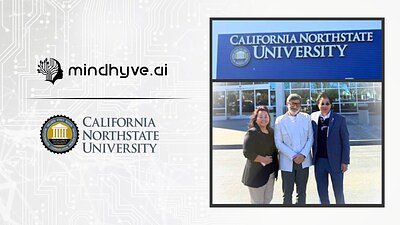
CNU First to Deploy Agentic AI for U.S. Health Sciences Education
ELK GROVE, CA – March 11, 2026 – While many of the world's top universities continue to debate policies around the use of artificial intelligence, a California health sciences university has moved decisively from regulation to implementation. California Northstate University (CNU) has become the first U.S. health sciences institution to deploy a reasoning-first agentic AI learning platform, integrating the advanced system directly into its College of Pharmacy curriculum.
The partnership with Newport Beach-based MindHYVE.ai™ aims to fundamentally reshape how future pharmacists and clinicians are trained. Instead of treating AI as a simple content-generation tool to be restricted, CNU is embracing it as an autonomous, adaptive teaching system designed to prepare students for a profession already being transformed by machine intelligence.
“Every health sciences institution will face a decision: adapt to AI or fall behind. CNU is not waiting,” said Dr. Alvin Cheung, President and CEO of California Northstate University, in a statement. “We partnered with MindHYVE.ai™ because the pharmacists and clinicians we graduate must be as fluent in artificial intelligence as they are in pharmacology. This isn't an experiment—it's the future of health sciences education, and we intend to define it.”
The AI-Powered Pharmacist
The collaboration centers on the deployment of ArthurAI™, MindHYVE’s Agentic Learning OS. The system will initially be rolled out in high-cognitive-load pharmacy courses that require deep conceptual mastery. The platform’s core function is to move beyond rote memorization, focusing instead on developing the advanced reasoning skills students will need in an AI-augmented workplace.
Bill Faruki, Founder and CEO of MindHYVE.ai™, argues that the traditional role of the pharmacist is already being automated. “The real challenge facing pharmacy education isn't access to information—anyone can look that up,” Faruki stated. “It's that AI is already doing what we've traditionally trained pharmacists to do. Drug interaction checks, dosing calculations, formulary management—machines handle that now.”
According to Faruki, the industry no longer needs more pharmacists trained in the old paradigm. Instead, it requires “AI-powered pharmacists” who can lead the profession’s transformation. ArthurAI™ is designed not just to teach pharmacy content, but to produce this new type of professional.
One of the platform's key features is its AI-powered curriculum design. ArthurAI™ ingests an institution's existing course materials and autonomously generates modernized, refreshed content. This process aims to “future-proof” graduates by ensuring their education is aligned with the realities of a profession increasingly reliant on artificial intelligence.
Beyond Generative AI: A ‘Reasoning-First’ Approach
The technology driving the CNU deployment represents a significant leap beyond the generative AI tools, like ChatGPT, that have dominated public conversation. ArthurAI™ is described as an “agentic” and “reasoning-first” system, a distinction with profound implications for education.
Agentic AI refers to systems that can autonomously pursue complex goals with minimal human supervision. Rather than passively waiting for a prompt, ArthurAI™ acts as an autonomous tutor. It learns each student's unique cognitive profile—how they think, learn, and struggle—and adapts its instructional delivery in real time. It can proactively identify knowledge gaps, provide personalized explanations, and guide a student through complex reasoning paths to ensure true mastery of a concept.
This is powered by MindHYVE’s proprietary Eve-Fusion™ multi-model consensus reasoning engine. The “reasoning-first” methodology prioritizes logical problem-solving over simple pattern recognition. In a field like pharmacology, this means the AI focuses on ensuring a student understands the why behind a drug interaction, not just memorizing the fact that it occurs.
Crucially, the system is designed with the stringent privacy requirements of education and healthcare in mind. The platform maintains full compliance with the Family Educational Rights and Privacy Act (FERPA) and provides transparent audit trails. Furthermore, MindHYVE.ai™ states that it does not use any client or student data for training its AI models. Instead, it relies exclusively on synthetically generated data from its proprietary Eve-Genesis™ framework, a critical feature that addresses one of the most significant ethical concerns surrounding AI in regulated industries.
From Classroom to Clinic: An Integrated AI Pipeline
The partnership between CNU and MindHYVE.ai™ extends far beyond a single software deployment. It represents a long-term strategic vision for an integrated AI pipeline that stretches from the classroom to the clinical point of care.
The initial pharmacy rollout is a pilot, with a clear pathway for broader adoption across CNU's other programs in medicine, dentistry, psychology, and nursing. The collaboration also includes a structured AI upskilling program for faculty and staff, delivered in partnership with the California Institute of Artificial Intelligence (CIAI). This initiative, known as The Dawn Directive™, is a comprehensive certification program designed to build organization-wide AI fluency and literacy, ensuring that educators are as prepared for the AI transition as their students.
Looking further ahead, the two organizations are also collaborating on ChironAI™, MindHYVE’s clinical decision support platform. They plan to explore its applications in pharmacogenomics within the College of Pharmacy. With CNU currently constructing a new teaching hospital, this partnership strategically positions both organizations to create a seamless link between AI-powered learning in the classroom and AI-assisted decision-making in a live clinical setting.
This initiative places CNU at the vanguard of a burgeoning global AI education market, projected to grow from $7.57 billion in 2025 to over $112 billion by 2034. By moving directly to deployment, the university is setting a bold precedent, challenging other institutions to move beyond policy debates and begin the practical work of integrating AI into the core of professional education.