
- 16.2 km: Length of the Jintang undersea tunnel, set to be the world's third-longest undersea railway tunnel.
- 116 meters: Depth of the Shenzhen-Jiangmen Deep River undersea tunnel, the world's deepest high-speed rail tunnel.
- 15-20%: Projected GDP growth in connected districts due to enhanced connectivity.
Experts view China's undersea tunnel projects as a significant leap in engineering technology, demonstrating technological self-sufficiency and strategic economic integration, while acknowledging the immense challenges and environmental considerations involved.
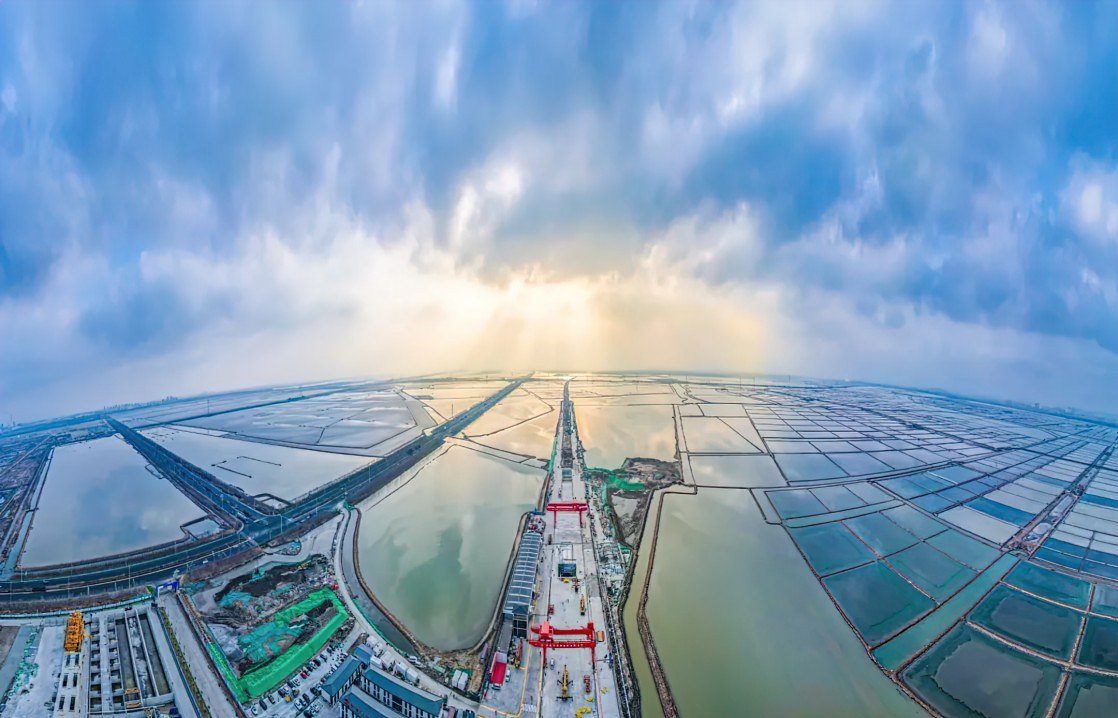
China's Undersea Tunnels Redefine Engineering Frontiers
BEIJING, China – January 30, 2026 – Beneath the bustling waters of the Bohai, Yellow, East, and South Seas, a monumental infrastructure transformation is taking shape. State-owned giant China Railway Construction Corporation (CRCC) is simultaneously advancing a series of ambitious undersea tunnel projects, deploying a new generation of domestically developed technology to conquer unprecedented engineering challenges. These massive undertakings are set to create new economic arteries, redraw transportation maps, and cement China's position as a leader in complex infrastructure.
From the frigid north to the tropical south, CRCC is orchestrating a coast-wide effort to enhance regional connectivity. The projects are not merely about laying concrete and steel; they represent a strategic push towards technological self-sufficiency and a demonstration of national engineering prowess. The successful completion of these tunnels is expected to significantly improve transportation efficiency, foster greater regional integration, and stimulate economic growth all along China's 18,000-kilometer coastline.
Engineering a New Era with Homegrown Tech
At the heart of this subsea revolution is a suite of homegrown technologies designed to operate in some of the world's most hostile construction environments. A key innovation is China's first integrated shield tunneling system with pressurized face operations. This system allows enormous tunnel boring machines (TBMs) to maintain pressure at the excavation face, preventing collapse under the immense weight of water and earth above. Crucially, it also enables remote-controlled maintenance and cutter replacement, a critical safety and efficiency feature that minimizes human intervention in high-risk zones.
This technology is being put to the test in the East China Sea at the Yongzhou Railway’s Jintang undersea tunnel. Boring to a maximum depth of 78 meters, the 16.2-kilometer tunnel is one of the project's crown jewels. Upon completion, it will rank as the world's third-longest undersea railway tunnel, trailing only Japan's Seikan Tunnel and the Channel Tunnel. The TBMs here must navigate 28 different geological strata, shifting between soft mud and hard rock, a challenge met with custom-built machines equipped with advanced sensors and 5G connectivity for real-time adjustments.
Further south, the Shenzhen-Jiangmen Deep River undersea tunnel is pushing the boundaries of what is possible. Reaching a staggering depth of 116 meters below the Pearl River Estuary, it has already set a new record for the world's deepest high-speed rail tunnel. The massive TBM, with a diameter of 13.42 meters, was engineered to withstand water and soil pressures of up to 10.6 bar—equivalent to the pressure at more than 100 meters underwater. Its successful navigation through multiple fault zones and complex rock formations marks a significant milestone in ultra-deep tunneling.
Forging Economic Arteries Beneath the Sea
The strategic value of these tunnels extends far beyond their engineering superlatives. They are designed to function as powerful catalysts for economic development by drastically reducing travel times and integrating disparate economic zones. The Jintang tunnel, for example, will cut the journey between the port city of Ningbo and the Zhoushan archipelago from a 1.5-hour ferry ride to a 30-minute train trip, unlocking new opportunities for tourism and logistics.
In the powerhouse Guangdong-Hong Kong-Macao Greater Bay Area, the Shenzhen-Jiangmen railway, anchored by its record-depth tunnel, is poised to create a “half-hour life circle” between major economic hubs like Shenzhen’s Qianhai and Guangzhou’s Nansha. This enhanced connectivity is expected to accelerate the flow of talent, capital, and goods, with some analysts projecting a 15-20% GDP growth in the connected districts.
These projects are foundational to China’s national development strategies, which emphasize regional integration and efficient economic circulation. The tunnels act as high-capacity conduits, linking industrial centers, port cities, and free-trade zones into a more cohesive and dynamic economic network. This vision is perhaps best exemplified by the long-term plan for a 120-kilometer Bohai Strait tunnel, which would slash travel time between Dalian and Yantai from eight hours to under an hour, fundamentally reshaping logistics in northern China.
Navigating the Immense Challenges of the Deep
Constructing these subsea corridors involves a constant battle against immense natural forces. Beyond the crushing water pressure, engineers face a host of geological and environmental hurdles. The recently completed Jinpu Sea River Tunnel, part of the Jinan-Qingdao high-speed line, had to overcome highly corrosive saline soil and complex river-sea intersection zones. This required specialized anti-corrosion materials for the tunnel segments and precise engineering controls to ensure the long-term stability of the structure.
In Qingdao, the 17.48-kilometer Jiaozhou Bay Second Tunnel—currently the world's longest underwater road tunnel under construction—is being built through a treacherous mix of solid hard rock and fractured, water-filled zones. To tackle this, CRCC is employing a hybrid approach, combining the brute force of shield tunneling with the precision of conventional mining methods to ensure safe passage through the unpredictable geology.
Safety is the paramount concern. The advanced TBMs are more than just digging machines; they are mobile factories and life-support systems. Equipped with automated systems, they continuously monitor geological conditions to prevent collapses. Cross-passages are built at regular intervals between twin tunnels to serve as emergency evacuation routes. While project leaders acknowledge that zero environmental impact is impossible, efforts are made to mitigate damage through measures like noise reduction and the reuse of excavated soil, with a growing call for public transparency on project impacts.
With a comprehensive system covering everything from survey and design to digital operations and equipment manufacturing, CRCC has demonstrated a holistic mastery of the field. As these colossal projects progress steadily beneath the waves, they are not only improving transportation along China's coast but are also charting a new course for what is achievable in modern infrastructure engineering.