
- $3 billion: The projected size of Japan's eSIM market by 2034, reflecting a 15%+ CAGR from 2025.
- 50+ countries: TGT's global sales footprint, supported by regulatory certifications in key markets including Japan.
- 10,000+ mobile data plans: TGT's connectivity services library, offering worldwide coverage.
Experts view TGT's AI-powered 'cardless' connectivity solutions as a strategic enabler for Japan's digital transformation, aligning with national initiatives like 'Society 5.0' and 'Connected Industries' while addressing regulatory and operational challenges in the market.
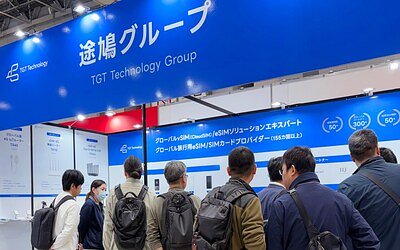
TGT Deepens Japan Push with AI-Powered 'Cardless' Connectivity
TOKYO, JAPAN – April 15, 2026 – As Japan accelerates its nationwide digital transformation, global tech firms are vying for a strategic foothold. At the recent Japan IT Week Spring 2026, TGT Technology Group made a significant statement about its ambitions, showcasing a suite of advanced connectivity solutions aimed squarely at the nation's enterprises. Under the banner of "AI-Powered Global Connectivity," the cloud communications platform demonstrated how its virtual SIM (vSIM) and embedded SIM (eSIM) technologies are poised to eliminate physical SIM cards and redefine how Japanese businesses connect to the world.
The company's prominent presence at Tokyo Big Sight signals a deepening commitment to a market known for its technological sophistication and rigorous standards. By focusing on seamless, intelligent, and compliant connectivity, TGT is positioning itself not merely as a vendor, but as an infrastructure partner for Japan's next wave of innovation in travel, IoT, and industrial automation.
The Shift to 'Cardless' Global Connectivity
The core of TGT's offering is the move away from traditional, plastic SIM cards toward a more flexible, digital-first approach. The company, which describes itself as a global expert in vSIM and eSIM solutions, presented an extensive portfolio of its independently developed smart devices. This lineup, which includes MiFi hotspots, Customer Premises Equipment (CPE), dongles, and specialized industrial gateways, is designed to provide what the company calls true "plug-and-play" global connectivity.
Powered by a proprietary cloud communication platform, these devices can connect to cellular networks in different countries without the need to physically swap SIM cards. For businesses with global operations, employees who travel frequently, or manufacturers embedding connectivity into their products, this technology promises to solve significant logistical headaches. The process of procuring, managing, and distributing physical SIMs for different regions is replaced by a centralized, software-defined system.
TGT emphasized that its product portfolio has already achieved regulatory certifications in key international markets, including Europe, the United States, and Japan. This has reportedly fueled strong sales momentum across more than 50 countries, giving the company a foundation of global experience to support its intensified focus on the Japanese market. The technology is not just about convenience; it represents a fundamental shift in how connectivity is managed, scaled, and deployed on a global scale.
A Strategic Play in a Booming Market
TGT's focus on Japan is a calculated move that aligns with powerful domestic trends. The Japanese eSIM market is on a steep growth trajectory, projected by industry analysts to expand from approximately $817 million in 2025 to over $3 billion by 2034, reflecting a compound annual growth rate of over 15%. This expansion is fueled by government-led initiatives designed to future-proof the nation's economy.
Programs like the "Digital Garden City Nation Initiative" are channeling public funds into 5G and IoT deployments, while the overarching "Society 5.0" vision seeks to integrate cyberspace and physical space to address societal challenges. These efforts create a fertile ground for advanced connectivity solutions like those offered by TGT. The company's strategy appears to be one of deep integration, aiming to provide the foundational connectivity that underpins these national goals.
However, succeeding in Japan requires more than just advanced technology. The market is characterized by a complex regulatory landscape, particularly concerning telecommunications and data privacy under the Act on the Protection of Personal Information (APPI). Recognizing this, TGT has been vocal about its "unwavering commitment to compliance." In its communications, the company stresses that it approaches Japanese regulations with "the utmost sincerity and diligence," positioning adherence as a core operational principle. This dual approach of "global expansion and localized operations" is crucial for earning the trust of Japanese clients, who place a high premium on reliability, security, and regulatory discipline.
Powering Japan's Industrial and IoT Future
While seamless connectivity for travelers and business professionals is a significant market, TGT is looking far beyond smartphones and mobile hotspots. The company is heavily promoting the application of its eSIM solutions for the Internet of Things (IoT), a sector where Japan is a global leader, particularly in manufacturing and automotive industries.
The press release highlights that its eSIM IoT solutions have seen wide adoption in smart wearables, connected vehicles, and the industrial internet. For Japan's world-renowned manufacturing sector, this technology offers a path to building smarter factories. By embedding eSIMs into machinery and industrial gateways, companies can enable predictive maintenance, optimize production lines with AI, and manage global supply chains with greater efficiency. This aligns perfectly with Japan's "Connected Industries" strategy, which promotes the use of IoT and AI to enhance industrial competitiveness.
Similarly, in the automotive sector, eSIMs are a critical component for the next generation of connected vehicles, enabling everything from over-the-air software updates to advanced telematics and in-car infotainment services. TGT's offerings promise to deliver these capabilities with tangible reductions in network access costs and improved operational efficiency.
To serve this diverse enterprise market, TGT has structured its services into three core pillars:
- Connectivity Services: Access to a vast library of over 10,000 mobile data plans with worldwide coverage, which can be customized for specific business needs.
- Platform Services: Platform-as-a-Service (PaaS) and Software-as-a-Service (SaaS) solutions that allow businesses to efficiently deploy and manage their connected devices.
- Value-Added Services: AI-driven data solutions designed to help businesses innovate and uncover new growth opportunities from their connectivity data.
This comprehensive model suggests a strategy aimed at embedding TGT's technology deep within the operational fabric of its enterprise clients, fostering long-term partnerships rather than simple transactional sales. As Japanese industries continue their push towards greater digitalization, this integrated approach to intelligent connectivity could prove to be a powerful enabler.