
- 349 nm Q-switched Nd:YLF UV laser: Uses cold ablation for precise, non-thermal cleaning.
- 120 µJ pulse energy: Delivers consistent cleaning performance with exceptional stability.
- Class 1 laser safety enclosure: Ensures safe operation without specialized PPE.
Experts in advanced manufacturing and precision cleaning would likely conclude that the LPCl1820UV Laser Precision Cleaning System represents a significant advancement in non-contact, non-thermal cleaning for delicate components, particularly in regulated industries like medical devices and semiconductors.
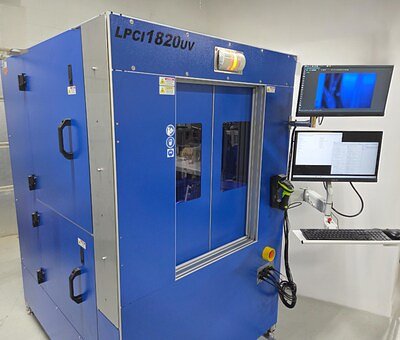
Bold Laser Unveils UV System for Flawless Component Cleaning
BEDFORD, N.H. – March 25, 2026 – As manufacturing pushes the boundaries of miniaturization and complexity, the challenge of cleaning delicate, high-value components without causing damage has become a critical bottleneck. Addressing this, Bold Laser Automation, Inc. today introduced its LPCl1820UV Laser Precision Cleaning System, a platform engineered to deliver microscopic-level cleaning for the most sensitive parts in industries from medical devices to semiconductors.
The new system moves beyond traditional abrasive or chemical cleaning methods, which can leave residue or cause surface damage. Instead, it harnesses the power of ultraviolet (UV) laser light to offer a non-contact, highly precise, and repeatable solution for thin-film removal and surface preparation.
A New Standard in Precision Cleaning
At the heart of the LPCl1820UV is a 349 nm Q-switched Nd:YLF UV laser. Unlike more common infrared or visible light lasers that rely on heat to ablate material, this UV laser operates on a principle often called “cold ablation.” The high-energy photons of the UV light break molecular bonds directly, vaporizing contaminants with minimal thermal transfer to the underlying substrate. This process is essential when working with heat-sensitive polymers, delicate electronic circuits, or precisely engineered medical components where even the slightest thermal distortion is unacceptable.
The system delivers up to 120 µJ of pulse energy with exceptional pulse-to-pulse stability and beam quality, ensuring that every laser pulse performs its cleaning function identically. This level of consistency is paramount for achieving the repeatable results required in high-volume, regulated manufacturing environments.
"This UV laser cleaning system was designed for manufacturers who need absolute control over laser energy delivery and positioning, especially when working with delicate or high-value parts," said Todd E. Lizotte, co-Founder and CEO of Bold Laser Automation, in the company's announcement. "This platform gives process engineers the tools to fine-tune cleaning performance without compromising repeatability or substrate integrity."
Targeting High-Value Industries
The capabilities of the LPCl1820UV are poised to make a significant impact across several advanced manufacturing sectors where surface integrity is non-negotiable.
In the medical device industry, the system offers a solution for cleaning and sterilizing components like catheters, stents, and fluidic devices without compromising biocompatibility or structural integrity. The chemical-free nature of laser cleaning also eliminates the risk of residual solvents that could be harmful to patients. For microelectronics and semiconductor packaging, the technology provides a method for removing organic contaminants, oxides, and thin films from printed circuit boards and wafers. As chip features shrink, the risk of damage from traditional cleaning methods increases, making the non-contact, non-thermal nature of UV laser cleaning a compelling alternative.
Other key applications include the manufacturing of precision optics and glass components, where surface purity is critical for performance, as well as in research and development labs and pilot-line production environments where process flexibility and precision are essential for innovation.
Designed for the Smart Factory
Beyond its core laser technology, the LPCl1820UV is engineered for integration into modern, automated production lines. The system is powered by Bold's OptixOS™, a CAD/CAM-based control environment that simplifies the entire workflow. Engineers can import standard design files like DXF or DWG, visually define the specific zones to be cleaned, and assign pre-configured laser recipes without needing to write complex G-code. This user-friendly interface significantly reduces setup time and the potential for human error.
Integrated machine vision further enhances the system’s precision and automation potential. The vision system can be used for part identification, precise alignment before processing, and post-process quality inspection, ensuring every component meets exacting standards. Crucially, the system supports comprehensive data logging and event tracking, providing the traceability required for stringent quality control and continuous process improvement initiatives—a cornerstone of the Industry 4.0 philosophy.
The physical design also anticipates future automation needs. While it features front-load access for manual operation, side access panels are designed to allow for future integration with robotic loading systems or inline conveyor-based manufacturing workflows, enabling companies to scale their automation as production demands grow.
Navigating a Regulated Landscape
Operating in highly regulated fields like medical and electronics manufacturing requires strict adherence to safety and environmental standards. The LPCl1820UV is housed in a fully enclosed Class 1 laser safety enclosure, which contains all laser radiation. This is a critical feature for factory floor integration, as Class 1 systems are considered safe for operation under normal conditions without requiring specialized laser safety personal protective equipment (PPE) for operators, simplifying compliance with OSHA and ANSI Z136.1 standards.
Furthermore, the system is offered with cleanroom-compatible configurations. Options include HEPA filtration to control airborne particulates, inert gas purging to create a controlled processing environment, and advanced debris extraction with multi-stage filtration. These features ensure the system can be deployed in environments compliant with stringent cleanroom standards, such as ISO 14644, which are mandatory for semiconductor fabrication and many medical device assembly lines. This combination of inherent safety and cleanroom readiness makes the platform a production-ready solution for manufacturers navigating complex regulatory requirements.