
- Vertical Integration: VITAL MedTech aims to control every step of production from raw semiconductor materials to finished medical imaging systems, breaking long-standing supply chain dependencies.
- Technological Breakthroughs: Developed Cadmium Zinc Telluride (CZT) detectors for superior energy resolution and Silicon Carbide (SiC) gradient amplifiers for potential helium-free MRI systems.
- Market Impact: Targets a multi-billion dollar medical imaging industry dominated by giants like Siemens Healthineers and GE Healthcare.
Experts likely conclude that VITAL MedTech's vertical integration strategy and semiconductor advancements could revolutionize medical imaging, but success hinges on overcoming regulatory hurdles and competing with established industry leaders.
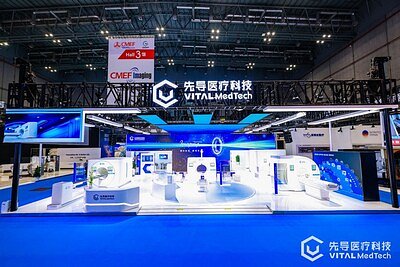
VITAL MedTech's Radical Plan to Remake Medical Imaging from the Chip Up
SHANGHAI, CHINA – April 13, 2026 – In a move that could send shockwaves through the multi-billion dollar medical imaging industry, VITAL MedTech today unveiled a bold strategy to shatter long-standing supply chain dependencies. At the CMEF 2026 conference, the healthcare unit of materials science giant VITAL MATERIALS announced it is pursuing full vertical integration—controlling every step of production from raw semiconductor materials to finished, high-end medical imaging systems.
This ambitious initiative directly confronts what industry insiders describe as a critical bottleneck: the medical imaging sector's heavy reliance on a fragmented network of external suppliers for the core components that power its most advanced equipment. By bringing the entire process in-house, VITAL MedTech is betting it can accelerate innovation, enhance performance, and redefine the economics of diagnostic technology.
A Strategic Pivot from Materials to Medicine
For years, manufacturers of MRI, CT, and other advanced imaging systems have operated like high-tech assemblers, dependent on a complex global supply chain for critical parts like detectors and power electronics. This model, while standard, can stifle innovation, slow down development cycles, and create vulnerabilities, as seen in other technology sectors. VITAL MedTech's plan represents a fundamental departure from this norm.
The company is leveraging the formidable expertise of its parent, VITAL MATERIALS, a global leader in first- to fourth-generation semiconductor materials. VITAL MATERIALS is a powerhouse in the extraction and refinement of rare metals like gallium, indium, and germanium, and a core supplier of the advanced compounds and substrates that form the foundation of the entire microelectronics industry. This deep-rooted expertise in materials science is the lynchpin of the new strategy.
By controlling the process from the elemental level, VITAL MedTech aims to break what it calls the "efficiency bottleneck of traditional R&D." The goal is to create a seamless pipeline from scientific discovery in materials to tangible clinical value in a hospital setting. This strategic independence could not only insulate the company from supply chain disruptions but also allow it to custom-engineer components that are perfectly optimized for its imaging systems, a level of synergy that is difficult to achieve when sourcing parts from third parties.
The Semiconductor Advantage: Powering a New Generation of Scanners
The promise of this vertical integration is most evident in the specific technological breakthroughs VITAL MedTech showcased. Rather than incremental improvements, the company is targeting fundamental advances in imaging capabilities, all rooted in its control over next-generation semiconductor technologies.
For precision diagnosis, the company has developed its own Cadmium Zinc Telluride (CZT) detectors. Unlike traditional scintillator detectors that convert X-rays to light and then to an electrical signal, CZT enables direct conversion of X-ray photons. This process, according to the company, delivers superior energy resolution, allowing the system to capture clearer data from every single photon. In clinical terms, this could mean more accurate diagnoses, the ability to detect disease earlier, and potentially lower radiation doses.
Perhaps the most significant innovation lies in the realm of Magnetic Resonance Imaging (MRI). VITAL MedTech has developed a new gradient amplifier—a critical component that controls the magnetic fields for imaging—using Silicon Carbide (SiC) semiconductor units. SiC offers vastly superior performance over traditional silicon, enabling extremely low switching losses and nanosecond-level response times. The company claims this dramatically improves the slew rate and thermal efficiency of the MRI system. The groundbreaking implication of this technology is its potential to enable low-helium or helium-free MRI systems. Given that liquid helium is a finite, expensive, and logistically complex resource, a shift away from it would represent a monumental cost and operational advantage for hospitals and imaging centers worldwide, while also increasing scanning speed.
Furthermore, as imaging resolution increases, the sheer volume of data generated becomes a major challenge. A single high-resolution scan can produce petabytes of raw data. To address this, VITAL MedTech is employing Indium Phosphide (InP) optoelectronic co-packaging. This technology, borrowed from the high-speed telecom industry, creates an ultra-fast data transmission pathway directly within the imaging system. This solves data congestion, enabling real-time processing and analysis of massive datasets, which is essential for the effective use of AI-driven diagnostic tools.
From Lab to Clinic: Overcoming Hurdles to Adoption
While the technological vision is compelling, VITAL MedTech's path from announcement to widespread clinical adoption is paved with significant challenges. The medical device industry is highly regulated, and any new high-end imaging system, particularly one built on novel components, will face intense scrutiny from bodies like the U.S. Food and Drug Administration (FDA) and European authorities under the Medical Device Regulation (MDR). This will require extensive and costly clinical trials to prove both safety and efficacy.
Beyond regulatory approval, the company must contend with a market dominated by established giants like Siemens Healthineers, GE Healthcare, and Philips. These incumbents have massive installed bases, deep relationships with healthcare providers, and extensive global service networks. To compete, VITAL MedTech will need to offer more than just superior technology; it must provide a compelling value proposition that includes seamless integration with existing hospital IT infrastructures like PACS and EHR systems, robust cybersecurity, and a responsive maintenance network.
Adoption will ultimately hinge on convincing hospital administrators and radiologists of a clear return on investment, whether through improved diagnostic accuracy, faster patient throughput, or lower operational costs—such as the savings promised by helium-free MRI. The competitive reaction from incumbents could range from accelerating their own vertical integration efforts to focusing on software and AI as key differentiators.
At the launch event, Mr. Zhu Shihui, Founder and Chairman of VITAL MATERIALS, framed the initiative in broader terms. "Semiconductors are the bedrock of high-end medical equipment," he stated. "Our goal is not just to manufacture equipment, but to deliver more precise clinical tools through innovation in materials science, contributing our strength to healthcare." This statement underscores a vision where the future of medical technology is driven not just by system design, but by a fundamental mastery over the very materials that make it possible.