
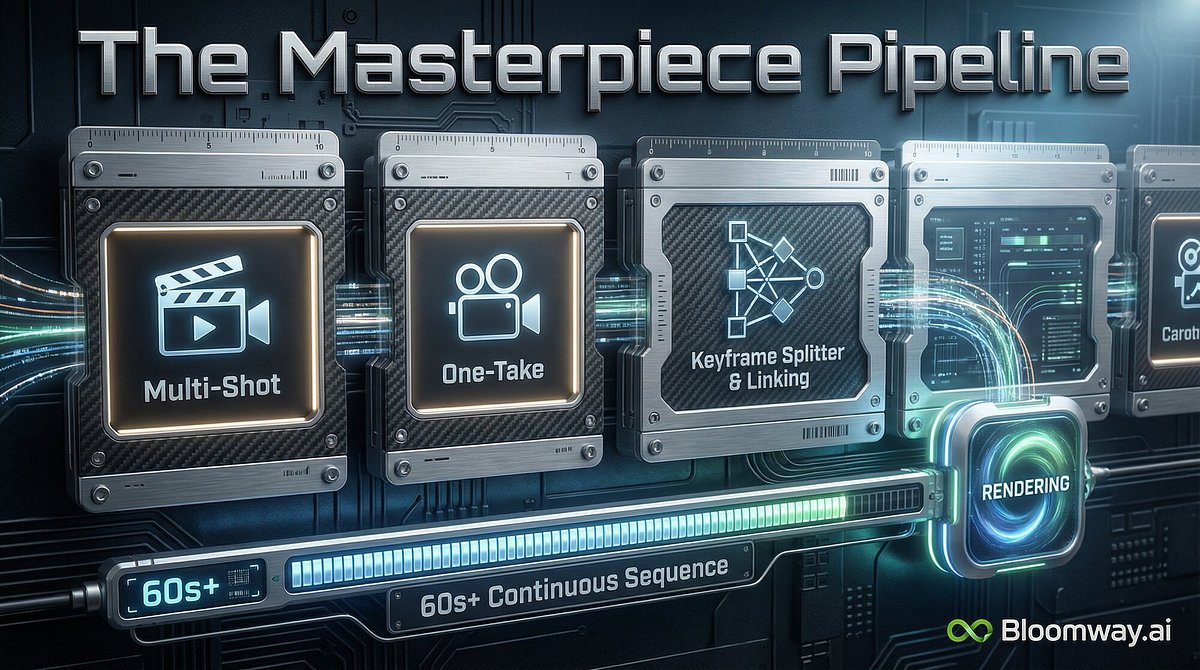
- 60+ seconds: CinePro claims the ability to generate continuous, coherent video sequences exceeding 60 seconds, addressing a major limitation of existing platforms.
- 700+ camera movements: The platform utilizes a library of over 700 cinema-grade camera movements for precise editing and seamless long shots.
- Iterative flexibility: Allows creators to modify individual shots or elements even after rendering, reducing post-production friction.
Experts view CinePro as a significant step toward democratizing high-quality filmmaking, though they caution that its success will depend on overcoming technical challenges and navigating ethical concerns surrounding AI creativity and job displacement.
Bloomway AI's CinePro: An AI Director to Remake Filmmaking?
ATLANTA, GA – March 16, 2026 – Atlanta-based startup Bloomway AI today launched the public beta of CinePro, a new video generation platform designed to infuse professional cinematic knowledge into artificial intelligence. The company aims to redefine the concept of "Lean Cinema," empowering creators of all skill levels to produce studio-grade visual narratives by providing an AI that "thinks like a director."
The AI Co-Director and the 'Lean Cinema' Workflow
At the core of CinePro is the promise of bridging the gap between complex AI technology and intuitive creative control. The platform's "Creative Studio" features an AI Assistant that acts as a creative partner, guiding users through the storytelling process much like a seasoned Hollywood screenwriter. This approach is central to Bloomway AI's vision of a "Lean Cinema" workflow, where technical barriers are dismantled, allowing creators to focus on narrative and artistic expression.
"We believe the digitization of industry expertise is just as critical as model scale in delivering truly usable creative output,” said Guojun Zhou, Founder of Bloomway AI, in the company's announcement. This philosophy is reflected in the platform's design, which aims to embed the decision-making processes of a professional film crew directly into its algorithms.
CinePro offers users granular control over key cinematic elements, including maintaining character consistency across scenes, precisely positioning virtual cameras, and manipulating lighting. According to the company, the system intelligently analyzes scenes to determine the most effective camera movements and actor blocking to convey the story's emotional arc. This level of control is intended to provide the professional rigor necessary for high-end storytelling, moving beyond the often unpredictable nature of earlier generative AI tools.
Pushing the Technical Boundaries of AI Video
Bloomway AI is entering a fiercely competitive market, with tech giants like OpenAI, Google, and ByteDance continuously advancing their own powerful video generation models like Sora, Veo, and Kling. However, CinePro is making a bold bid for differentiation with several key technical claims, most notably the ability to generate continuous, coherent video sequences exceeding 60 seconds. This capability directly addresses a major limitation of many existing platforms, which are often restricted to much shorter clips, making the creation of longer-form narrative content a fragmented and challenging process.
Beyond duration, the platform introduces a versatile workflow that mimics a professional multi-camera film set. It utilizes an advanced "Keyframe Splitter & Linking" technology, which, combined with a library of over 700 cinema-grade camera movements, allows for both precise, shot-by-shot editing and the creation of seamless "one-take" long shots.
Perhaps one of its most significant workflow innovations is the ability for creators to revisit and modify individual shots, character designs, or other visual elements even after a sequence has been rendered. This iterative flexibility could drastically reduce post-production friction, allowing filmmakers to fine-tune their vision without having to regenerate entire scenes from scratch, a common pain point with current AI video tools.
Reshaping the Economics of Film Production
The emergence of sophisticated tools like CinePro signals a potential paradigm shift for the entire film and video production industry. By automating complex tasks and lowering the cost of entry, AI is accelerating the democratization of high-quality filmmaking. Independent creators and small studios, previously constrained by budget and access to expensive equipment and large crews, may soon find themselves able to execute ambitious creative visions that were once unattainable.
This technology directly supports the "Lean Cinema" model by streamlining every stage of the creative pipeline. In pre-production, AI assistants can help refine scripts and generate dynamic storyboards. During production, the need for physical sets, extensive crews, and complex lighting rigs could be significantly reduced for certain types of projects. In post-production, tasks that once took teams of artists weeks or months—such as visual effects, color grading, and editing—can be iterated upon in a matter of hours or minutes.
This efficiency is poised to have its most profound impact on the corporate video market, a sector already projected for substantial growth. The ability to rapidly generate high-quality marketing materials, training videos, and product visualizations could fundamentally reset the economic model for commercial content creation. For larger studios, these tools promise significant productivity gains, potentially freeing up resources and allowing creative teams to focus on higher-level conceptual work.
Navigating the Uncharted Waters of AI Creativity
While the creative and economic potential of platforms like CinePro is immense, their arrival is accompanied by a host of complex technical challenges and profound ethical questions that the industry is only beginning to confront. While newer models are rapidly improving, issues with maintaining perfect visual consistency, generating nuanced human expressions, and avoiding biases baked into training data persist across the field.
More significantly, the rise of powerful AI tools has ignited a fierce debate about the future of creative professions. There are widespread concerns about job displacement, with studies predicting that tens of thousands of roles in animation, visual effects, sound design, and other crafts could be disrupted or eliminated in the coming years. The very definition of artistry and authorship is being called into question as the line between a human-created and AI-assisted work continues to blur.
Furthermore, the industry is grappling with a legal and ethical minefield. The use of copyrighted material to train AI models without consent or compensation remains a contentious issue, leading to ongoing legal battles. The ability to create photorealistic "deepfakes" with ease raises alarms about the unauthorized use of an actor's likeness, the potential for misinformation, and the erosion of public trust. While Bloomway AI positions its product as a tool to enhance human creativity rather than replace it, the broader implications of this technological wave will require careful navigation, robust regulation, and a collective reevaluation of the relationship between art, technology, and labor.