
- 130+ patents held by Darwin Hu, forming the core of the new ventures' technology. - 200-inch color screen projected into the user's field of view via AR glasses. - 2030 as the expected year for widespread commercial deployment of 6G.
Experts would likely conclude that while the vision of 6G-powered AR glasses is ambitious and technologically groundbreaking, its success hinges on overcoming significant engineering challenges and competing against well-established tech giants.
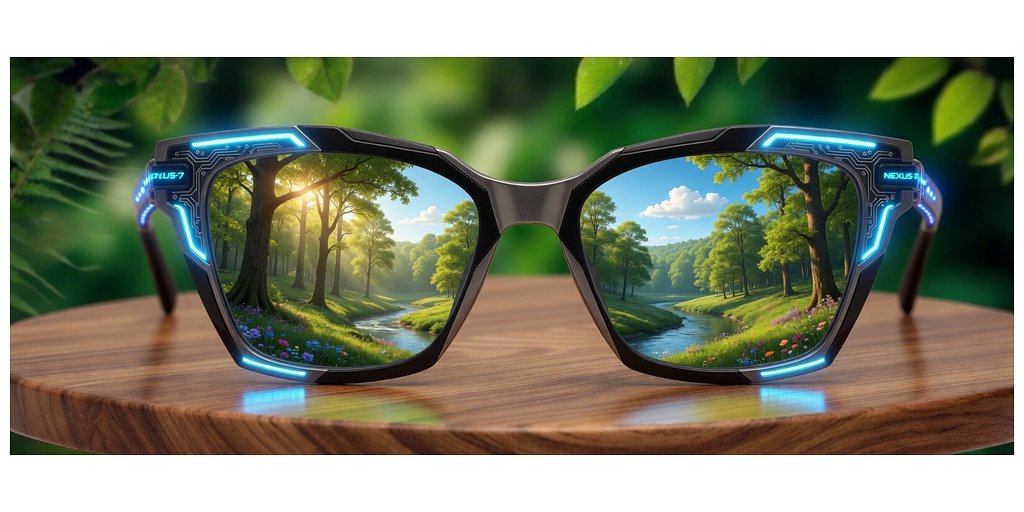
Beyond the Smartphone: A High-Stakes Bet on 6G-Powered AR Glasses
SAN JOSE, CA – April 29, 2026 – In a bold move that pits a new venture against the titans of Silicon Valley, investment bank MAS Capital is teaming up with veteran inventor Darwin Hu to commercialize what they hope will be the successor to the smartphone: lightweight augmented reality glasses powered by next-generation 6G technology.
The partnership is spawning two new companies, MAS AVR Inc. and MASCom Corp., with an audacious goal to render the mobile phone screen obsolete. This initiative represents a significant wager on the convergence of two of the most challenging frontiers in technology—consumer-grade AR and the nascent world of Terahertz communications.
An Ambitious Post-Smartphone Vision
The plan outlined by the new ventures is nothing short of transformative. The goal is to replace the handheld screens that dominate our lives with a pair of lightweight, low-cost AR eyeglasses capable of projecting a high-definition 200-inch color screen into the user's field of view.
This vision extends far beyond simply being a new type of display. Darwin Hu, the innovator at the heart of the venture, described a fully integrated ecosystem. “After we commercialize MASCom’s 6G miniature transceivers to replace the bulky WiFi boxes and low-speed Bluetooth devices, our AR eyeglasses working with a wearable computer in form of a watch or a belt buckle can enable ultra-high speed data transmission,” Hu stated.
He envisions this system connecting seamlessly with satellite networks like SpaceX’s Starlink and terrestrial 6G infrastructure. This high-bandwidth, low-latency connection would unlock a host of futuristic applications, including real-time local AI processing, immersive 3D video, and the ability to control everything from electric vehicles and companion robots to smart home appliances through visual and verbal commands.
The Patent Powerhouse Driving the Technology
Central to this ambitious endeavor is Darwin Hu, a Silicon Valley-based scientist and entrepreneur with a formidable track record. With over three decades of experience in product development for a roster of tech companies including Xerox, Olivetti, and Grundig, Hu is a prolific inventor.
His intellectual property, comprising more than 130 patents worldwide, forms the bedrock of the new ventures. These patents are not peripheral but are core to the mission, covering critical areas such as LCoS microdisplays, Meta-surface planar lenses, holographic displays, and, crucially, Terahertz (THz) transceivers. Specific patents under his name, such as "Apparatus embedded with terahertz transceivers using Gunn diodes" and "Display glasses in wireless Terahertz communication," directly map to the products MAS AVR and MASCom aim to build. This deep well of proprietary technology is what MAS Capital is banking on to give its new companies a competitive edge.
“We are devoting extensive resources to incubate MAS AVR and MASCom, as we believe in Hu’s patented technologies both in the US and China,” said Aaron Tsai, Founder and Chief Capitalist of MAS Capital, underscoring the firm’s confidence in the inventor's portfolio.
Navigating a Field of Giants and Technical Hurdles
While the vision is compelling and backed by significant IP, the path to commercialization is fraught with immense challenges. MAS AVR is entering an AR market that is already a battleground for the world's wealthiest tech corporations.
Companies like Meta, with its Ray-Ban smart glasses, and Apple, with its high-end Vision Pro and rumored future AR glasses, have invested billions in pursuit of the same goal. The fundamental challenges of creating a truly consumer-friendly AR device remain unsolved across the industry. Engineers are still grappling with the difficulties of achieving a lightweight, all-day-wearable design; providing sufficient battery life; developing high-quality, wide-field-of-view displays; and managing the heat generated by powerful onboard processors—all at a price point attractive to the mass market.
Furthermore, the 6G component of the plan pushes the venture into even more speculative territory. While Terahertz frequencies promise unprecedented data speeds—up to 100 times faster than 5G—the technology is still in its infancy. Widespread commercial deployment of 6G isn't expected until 2030. THz waves suffer from extremely short range and are easily blocked by obstacles, including walls and even atmospheric conditions like rain, posing significant engineering problems for a reliable consumer device. Miniaturizing the necessary transceivers and antennas into a device as small as a pair of glasses is a monumental task that the entire industry is still working to solve.
A Calculated Financial Strategy for Global Expansion
Despite the technical risks, MAS Capital is moving forward with a clear and aggressive financial strategy. The investment bank, founded in 1995 by Aaron Tsai, has built its reputation on incubating deep tech companies and guiding them to the public markets.
The plan for the new ventures follows this playbook precisely. MAS Capital intends to take MAS AVR Inc. public on the Nasdaq, tapping into the U.S. appetite for high-growth tech stocks. Simultaneously, it plans to list MASCom Corp. on the Hong Kong Stock Exchange (HKEX), aiming to raise capital for global expansion from Asia's dynamic financial hub.
“Our plan is to take MAS AVR public on Nasdaq and MASCom on HKEX to raise capital for global expansion,” Tsai confirmed. This dual-listing strategy aims to maximize capital infusion and establish a global footprint from the outset. For MAS Capital, this is a high-stakes, high-reward play that leverages its expertise in cross-border finance and deep tech incubation. The success of this venture will depend not only on overcoming immense technological hurdles but also on convincing public market investors that its vision of a post-smartphone world is a future worth funding.