
- $1.1B valuation: Starcloud becomes the fastest Y Combinator company to reach unicorn status, valued at $1.1 billion after a $170 million Series A funding round.
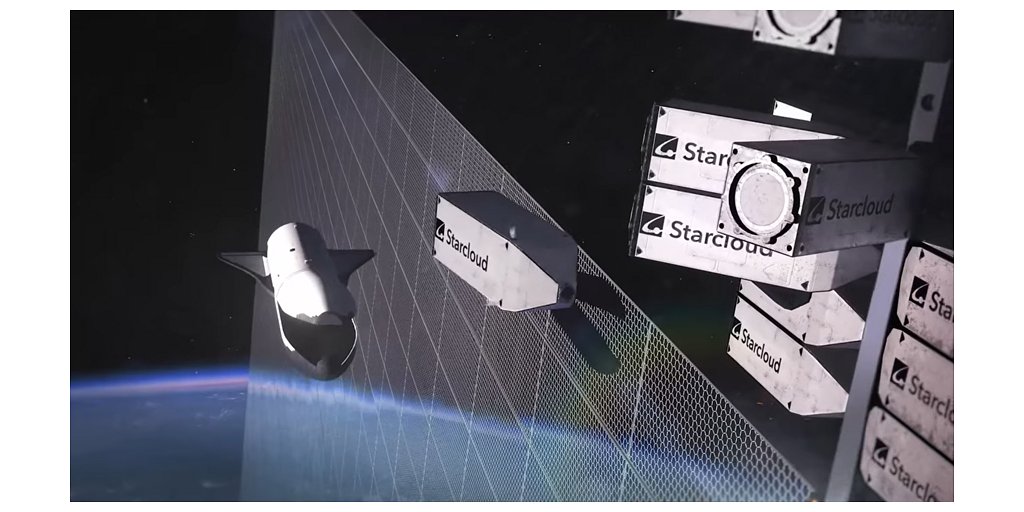
- 100x compute power: Starcloud-2 satellite will generate 100 times the power of its predecessor, featuring the largest commercial deployable radiator ever sent to space.
- $200M total capital: The company has raised $200 million in total, with plans to accelerate satellite design, manufacturing, and launch contracts.
Experts view Starcloud's space-based AI infrastructure as a high-risk, high-reward solution to AI's energy constraints, with significant potential to revolutionize computing but requiring further technological and regulatory advancements to scale successfully.
Unicorn in Orbit: Starcloud's $1.1B Bet on Space-Based AI
REDMOND, WA – March 30, 2026 – In a move that catapults the concept of cloud computing into the cosmos, Starcloud has secured a staggering $170 million Series A funding round, valuing the company at $1.1 billion. The announcement makes the two-year-old startup the fastest company in Y Combinator history to achieve unicorn status, doing so just 17 months after its demo day. The Redmond-based firm is pioneering a radical solution to artificial intelligence's ballooning energy needs: building massive data centers in low Earth orbit.
The funding round, more than double the size of the next largest Series A for a YC alum, brings Starcloud's total capital raised to $200 million. It signals a powerful vote of confidence from elite investors in a high-risk, high-reward venture that aims to fundamentally rewire the physical infrastructure of artificial intelligence.
A Meteoric Rise Fueled by Top-Tier Investors
The heavily oversubscribed round was led by two giants of the investment world: Benchmark, the storied venture capital fund behind titans like eBay and Uber, and EQT Ventures, the venture arm of the world's second-largest private equity fund. As part of the deal, Benchmark General Partner Chetan Puttagunta will join Starcloud's board, lending his significant experience to the ambitious startup.
“We believe that we are in the early innings of a decades-long buildout of AI infrastructure,” said Puttagunta in a statement. “Starcloud is pioneering a solution to the challenges of scaling AI infrastructure on Earth with orbital data centers. Their extraordinary engineering team has achieved significant technical breakthroughs in power and cooling, as well as innovative advancements in manufacturing processes.”
The investor syndicate underscores the global and strategic interest in Starcloud's mission. Participants include Macquarie Capital, the world's largest infrastructure fund, alongside NFX, Y Combinator, and 776 Ventures. A notable roster of angel investors, including former Boeing CEO Dennis Muilenburg and retired four-star U.S. Air Force General Stephen Wilson, further validates the company's dual appeal to both the tech and aerospace sectors.
This fresh capital injection is earmarked for rapid expansion. Starcloud plans to accelerate the design of its next-generation Starcloud-3 satellites, establish a dedicated manufacturing facility, expand its engineering team, and secure future launch contracts to deploy its orbital infrastructure at scale.
The Final Frontier for AI Compute
Starcloud’s core premise directly confronts one of the most significant constraints facing the AI revolution: energy. The exponential growth in computing power required to train and run advanced AI models is placing an unsustainable strain on terrestrial power grids and data center infrastructure. Permitting and constructing new power plants and data centers on Earth is a slow, capital-intensive process fraught with regulatory and environmental hurdles.
“The AI revolution is colliding with the physical limits of our terrestrial energy grid,” explained Philip Johnston, Starcloud’s Co-Founder and CEO. “By moving AI compute to space, we unlock access to unlimited solar power and completely remove the energy bottleneck.”
This vision is not just theoretical. With only $3 million in pre-seed funding, the company demonstrated a blistering pace of execution. In just 21 months, it designed, built, and launched its first satellite, Starcloud-1, in November 2025. The mission achieved several historic firsts, including deploying the first NVIDIA H100 GPU in orbit—delivering a 100-fold increase in space-based AI compute power—and successfully training an AI model entirely in space.
Later this year, the company will launch Starcloud-2, a satellite designed to be its first commercial platform. It will feature what the company claims is the largest commercial deployable radiator ever sent to space, a critical component for cooling, and will generate 100 times the power of its predecessor. Early customers, including Crusoe, AWS, and Google Cloud, are slated to run workloads on the new platform.
The Audacious Engineering of Orbital Data Centers
Placing high-performance servers in the vacuum of space presents a formidable set of engineering challenges that Starcloud and its competitors are racing to solve. Chief among them is thermal management. Without air or water for conventional cooling, the immense heat generated by GPUs like the H100 must be radiated away. This requires large, sophisticated radiator panels, a technology Starcloud is betting on with its upcoming Starcloud-2 mission. Success here is non-negotiable for scaling up to true data center capacity.
Power, the very reason for going to space, is another complex variable. By placing satellites in a sun-synchronous orbit, they can be exposed to nearly continuous sunlight, maximizing solar power generation and minimizing reliance on battery storage. This provides a stable, powerful energy source unavailable on Earth.
However, the orbital environment is relentlessly hostile. Constant bombardment from solar and cosmic radiation can degrade and destroy commercial-grade electronics. While expensive, radiation-hardened components are an option, companies like Starcloud are developing proprietary shielding techniques to protect more cost-effective hardware, aiming to extend operational lifespans in low Earth orbit.
Finally, there is the issue of data latency. For processing data generated in space—such as Earth observation imagery—orbital edge computing offers a massive advantage, cutting down analysis time from hours to minutes by avoiding the need to downlink terabytes of raw data. For Earth-based applications, however, the round-trip time for data remains a hurdle that the industry hopes to overcome with the adoption of high-speed, high-throughput laser communication links.
A New Space Race for Data Dominance
Starcloud is a clear frontrunner, but it is not alone in its ambition. A new space race is heating up, with several major players vying to build the next generation of computing infrastructure among the stars. Google has announced its own “Project Suncatcher,” a research initiative to put its custom TPU hardware into orbit, with prototype launches planned by 2027.
SpaceX, with its unrivaled launch capabilities, has also signaled its intent to develop orbital data centers. Meanwhile, a collaboration between Orbit AI and Power Bank has already placed its Genesis-1 satellite in orbit and successfully run an AI model, with plans for a larger constellation. This burgeoning competition validates the market's potential, transforming the idea from science fiction into a tangible and highly competitive new industry vertical.
These orbital ambitions stand in contrast to ongoing efforts to make terrestrial data centers more sustainable through improved liquid cooling and on-site renewable energy. While many experts believe Earth-based solutions remain more practical in the near term, the sheer scalability and energy potential of space are proving too compelling for investors to ignore.
Navigating Cosmic Hurdles and Earthly Regulations
As this new industry takes flight, it faces significant challenges beyond engineering. The regulatory framework for commercial space operations is still evolving, with complex questions surrounding data jurisdiction, security, and licensing under bodies like the Federal Communications Commission. Operating data centers in the legal void of space creates novel governance issues that have yet to be resolved.
Perhaps most critically, the rapid expansion of satellite constellations raises serious environmental concerns. The threat of space debris is paramount; a single collision can create thousands of pieces of shrapnel, endangering all active satellites and threatening the long-term sustainability of low Earth orbit. The management of this orbital resource, along with mitigating light pollution for astronomers and ensuring the responsible de-orbiting of defunct satellites, poses a collective challenge for the entire industry.
Starcloud's billion-dollar valuation is a testament to a bold vision for a future where the constraints of Earth's resources no longer limit the growth of artificial intelligence. As capital and talent flood into this new arena, the race is on not only to build the infrastructure for the next generation of AI but also to establish the rules of the road for a sustainable and stable orbital environment.