
- 20+ athletes featured, including Olympic medalists and NBA stars.
- Exhibition runs until September 2027 in Vancouver.
- Museum opened in 2023, marking 100 years since the Chinese Exclusion Act.
Experts would likely conclude that this exhibition is a groundbreaking effort to correct historical omissions by highlighting the overlooked contributions of Chinese Canadian athletes in Canadian sports history.
Beyond the Scoreboard: A Museum Rewrites Canadian Sports History
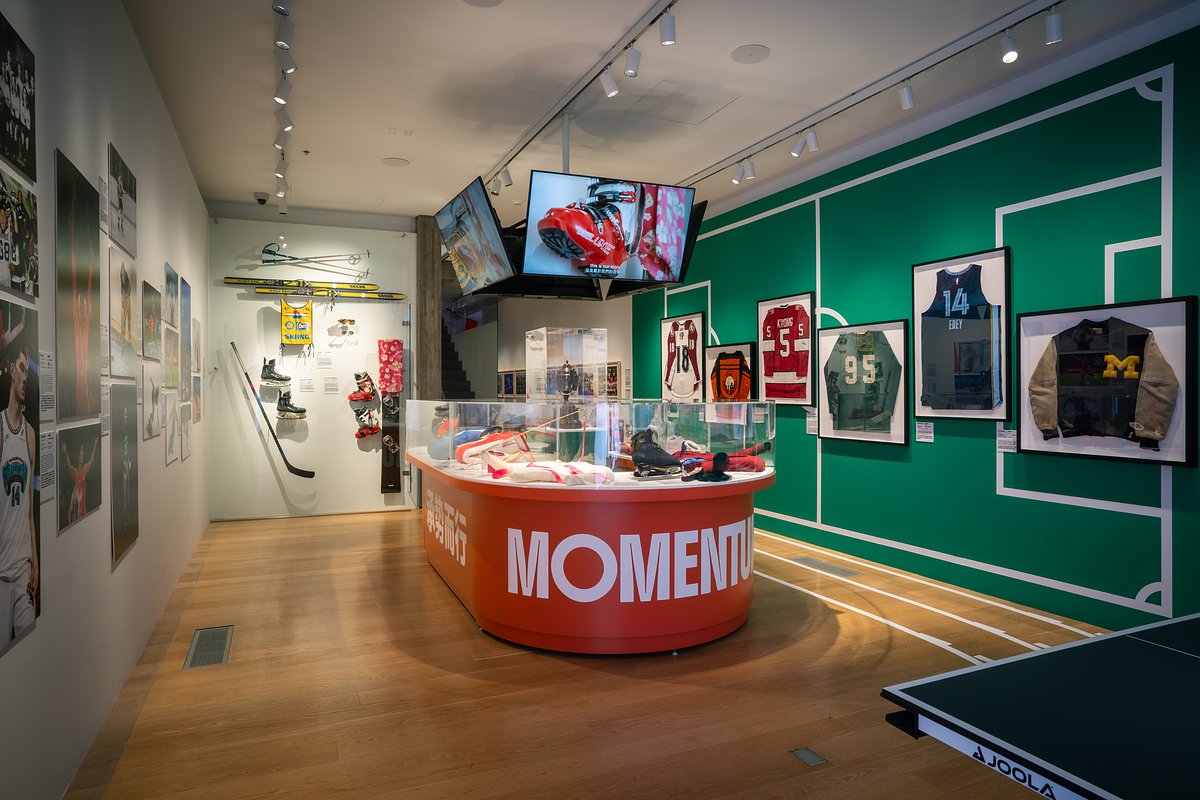
VANCOUVER, British Columbia – June 11, 2026 – In a move that is both culturally resonant and strategically brilliant, the Chinese Canadian Museum has opened its latest major exhibition, "Momentum: Power and Identity in Sports." Timed to coincide with the global fervor of the World Cup, the exhibition, on view until September 2027, is far more than a collection of memorabilia. It is a powerful and necessary intervention in the Canadian narrative, using the familiar arena of sport to tell the unfamiliar stories of Chinese Canadian athletes who have fought for their place in a nation that hasn't always recognized them.
"Chinese Canadians have always been part of the game, but rarely part of the story," said Dr. Melissa Karmen Lee, CEO of the Chinese Canadian Museum. Her words cut to the heart of the exhibition's purpose. Staged within an inventive sports bar-inspired setting, "Momentum" reframes the rink, the court, and the field as sites of struggle and belonging, where identity is forged and recognition is won.
A Museum with a Mission
To understand the significance of "Momentum," one must first understand the institution behind it. The Chinese Canadian Museum, which opened its doors on July 1, 2023, is Canada’s first and only museum dedicated to the history and heritage of Chinese Canadians. Its opening date was no accident, marking the 100th anniversary of the Chinese Exclusion Act—a piece of legislation that effectively barred Chinese immigration for nearly a quarter-century. Located in Vancouver's historic Wing Sang Building, the oldest in Chinatown, the museum is built on a foundation of reclaiming narratives and correcting historical omissions.
This mission is palpable in "Momentum." The exhibition is not a quiet, reverent display of artifacts behind glass. It's an immersive experience designed to provoke thought and dialogue. By presenting sports history through the lens of identity and power, the museum continues its vital work of weaving the threads of Chinese Canadian experience back into the national tapestry. It challenges visitors to reconsider who gets to be a Canadian hero and whose stories are deemed worthy of telling.
Grit, Greatness, and Overlooked Icons
For over a century, Chinese Canadian athletes have demonstrated remarkable grit and achieved greatness, often against a backdrop of societal prejudice. "Momentum" brings these stories out of the margins and into the spotlight. The exhibition spotlights more than 20 athletes, including three-time Olympic medal-winning figure skater Patrick Chan, whose elegance on the ice made him a global superstar, and Lori Fung, who captured Canada's first-ever Olympic gold in rhythmic gymnastics at the 1984 Los Angeles Games. The inclusion of contemporary stars like 7-foot-4 NBA powerhouse Zach Edey, whose mother is Chinese Canadian, bridges the past with the present, showing a continuing legacy of excellence.
The exhibition also reaches back into history to honor pioneers who broke formidable barriers. Figures like Norman Kwong, the legendary "China Clipper," exemplify the struggles and triumphs the exhibition seeks to illuminate. As the first Chinese Canadian to play in the Canadian Football League in 1948, Kwong faced intense racism. He not only dominated the sport, winning four Grey Cups, but went on to serve as the Lieutenant Governor of Alberta, proving that his impact extended far beyond the football field. These are not just sports stories; they are Canadian stories of resilience, ambition, and the relentless pursuit of one's rightful place.
Where Art Meets Athletics
What elevates "Momentum" from a historical retrospective to a cutting-edge cultural experience is its bold integration of contemporary art. The museum treats sport as "conceptual terrain," commissioning and featuring works that use the language of athletics to explore complex societal themes. This interdisciplinary approach provides layers of meaning that a simple display of trophies and jerseys could not.
A participatory ping pong table by Thai artist Rirkrit Tiravanija transforms passive viewing into active engagement, using collective play as a metaphor for a shared future built on collaboration. A newly commissioned LED work by the Seoul-based art collective YOUNG-HAE CHANG HEAVY INDUSTRIES uses AI-generated imagery to deconstruct hockey's role as a secular religion in Canada, viewed through the eyes of an Asian Canadian female player. Meanwhile, Hong Kong artist Wong Ping’s surreal animated installation, set on a golf course, employs dark humor to dissect themes of wealth, access, and desire. And photographs by Felicia Chang capture the raw camaraderie and ambition of young female field hockey players, documenting their journey in high-level competition. These artistic interventions ensure the exhibition is not just about looking back at history, but about critically engaging with the power structures that shape our present.
A 'Yellow Card' to Injustice
Perhaps the most pointed element of the exhibition is a new documentary titled "Yellow Card: Reclaiming Our Story in Canadian Sports," screening on the museum's third floor. The title itself is a powerful statement. In sports, a yellow card is a formal caution, a warning that a line has been crossed. Here, it is issued to the historical record itself, calling out the fouls of discrimination, stereotyping, and exclusion that Chinese Canadian athletes have faced.
The film promises to provide a deeper, more personal dive into the themes of the exhibition, using firsthand accounts and expert commentary to explore the emotional and social toll of fighting for recognition. By giving voice to the athletes themselves, the documentary serves as a powerful act of "reclaiming the story." It moves beyond celebrating victories to examining the cost of those wins, ensuring that the challenges and injustices are not forgotten in the celebration of success. This critical perspective reinforces the museum's role as not just a keeper of memory, but a catalyst for ongoing conversation about what it means to achieve a truly inclusive society.