
- Awards Won: Gold Telly Award and 'Radical History Makers' Award from Harlem's People's Film Festival.
- Distribution Model: Entirely community-driven with sold-out screenings across universities, cultural hubs, and advocacy groups.
- Strategic Reach: Upcoming screening at Netroots Nation 2026, the largest progressive activist conference.
Experts would likely conclude that 'Seeds for Liberation' exemplifies how grassroots distribution and authentic storytelling can disrupt traditional media, amplifying marginalized voices and fostering cross-movement solidarity.
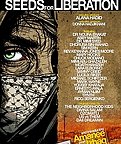
The 'Seeds for Liberation' Playbook: Disrupting Media with a Grassroots Engine
LOS ANGELES, CA – June 04, 2026
In a media landscape dominated by established players and high-cost distribution networks, a small documentary is demonstrating how to build significant momentum from the ground up. 'Seeds for Liberation,' a film focused on Palestinian narratives, is rapidly accumulating accolades, including a prestigious Gold Telly Award and the “Radical History Makers” Award from Harlem's People's Film Festival. With a string of sold-out community screenings and a strategic upcoming appearance at the Netroots Nation conference in Philadelphia, the film offers a compelling case study in how innovative distribution strategies can disrupt traditional operations and bring marginalized stories to the forefront.
This isn't just a film; it's a system designed for impact. By bypassing conventional channels and building a decentralized, community-powered network, the filmmakers are proving that a compelling story, when paired with a smart grassroots strategy, can compete for attention and influence in a crowded market. The project's success provides actionable intelligence for any leader seeking to understand how to build influence outside of legacy structures.
Recalibrating the Narrative Supply Chain
At its core, 'Seeds for Liberation' addresses a fundamental market question: who controls the supply of information? The film's central thesis, as articulated by its creators, is that mainstream conversations have historically failed to incorporate authentic Palestinian voices. The project operates as a direct intervention in this narrative supply chain.
Directed by Matthew Solomon, the documentary eschews polished, high-budget production in favor of authenticity. It integrates footage shot on iPhones with B-roll from on-the-ground activists and journalists, creating a raw and immediate connection to the subject matter. This approach not only lowers production barriers but also imbues the final product with a level of credibility that is difficult for larger, more detached media entities to replicate. The film's content is further bolstered by interviews with highly credible figures, including human rights attorney and Rutgers University professor Dr. Noura Erakat and veteran investigative journalist Abby Martin, lending it significant intellectual and academic weight.
"Seeds for Liberation reminds us that Palestinians are not waiting to be spoken for," said executive producer Alana Hadid in a recent statement. "We will liberate ourselves, with our own voices, our own history, and our own truth—alongside our allies. This film preserves our collective memory told by us, in our own words." This statement encapsulates the project's strategy: to replace the mediated, often-filtered narratives with a direct-from-source account.
Engineering Empathy Across Divides
While the film's content is revolutionary, its operational framework is equally innovative. The project is a deliberate exercise in bridge-building, a fact embodied by its director. Matthew Solomon is not only a filmmaker but also a conflict resolution facilitator and a PhD candidate in Transformative Social Change. As a Jewish filmmaker, his involvement is a conscious, strategic decision to model the very dialogue the film hopes to inspire.
"As a filmmaker and conflict resolution practitioner, I've always believed meaningful change begins with listening," Solomon stated. "This film brings together voices that are too often ignored and invites audiences to engage with stories that challenge assumptions, deepen understanding, and remind us of our shared humanity."
This approach can be viewed as a form of social engineering—a system designed to create space for understanding and accountability. By placing the act of listening at the center of the project, Solomon and his team are creating a process, not just a product. The film itself becomes a tool for conflict resolution, a platform where disparate groups can engage with a shared set of facts and emotional truths. The documentary's narrative explicitly connects the Palestinian struggle to Black, Chicano, and other global movements for justice, strategically widening its aperture to build a broader coalition of allies and create multiple entry points for audience engagement.
The Community-Powered Distribution Network
Perhaps the most disruptive aspect of 'Seeds for Liberation' is its distribution model. While a traditional film would rely on securing a deal with a major distributor for theatrical release, a process that is costly and often risk-averse, this team has built its own network from scratch. The film's success has been fueled almost entirely by community screenings, grassroots organizing, independent media, and word-of-mouth.
This model effectively transforms the audience from passive consumers into active partners. Screenings are hosted not just in independent cinemas but in universities like De Anza College, cultural hubs like the Esperanza Peace and Justice Center in San Antonio, and by advocacy groups like The Rachel Corrie Foundation for Peace and Justice. Each screening, often followed by a panel discussion with the filmmakers, becomes a node in a growing, decentralized network. This strategy minimizes traditional marketing and distribution costs while maximizing deep engagement and community buy-in.
Executive producer Donna Hadjikhani highlighted the strategic thinking behind this choice. "Stories have the power to open hearts in ways statistics and headlines often cannot," she said. "My hope is that Seeds for Liberation encourages people to listen, learn, and engage with experiences they may not otherwise encounter." The enthusiastic response, evidenced by sold-out screenings across the country, validates this community-centric approach. It demonstrates a significant, untapped demand for content that legacy distribution systems may deem too niche or controversial.
A Strategic Injection into the Activist Ecosystem
The upcoming screening at Netroots Nation 2026 in Philadelphia is the next logical step in this meticulously planned rollout. Netroots Nation is not merely a film festival; it is the largest annual conference for American progressive activists, organizers, and independent media. Placing the film here is a strategic injection into a highly influential ecosystem.
By presenting 'Seeds for Liberation' to this specific audience, the filmmakers are ensuring it reaches a critical mass of individuals who are positioned to amplify its message through their own networks, policy work, and media platforms. The panel submitted by the director's team, titled "'Seeds for Liberation' Solidarity from Gaza to ICE - Documentary," explicitly frames the film within the broader progressive agenda, making its relevance clear to attendees. It's a move that guarantees the film's themes of interconnected struggle and social justice will not just be watched, but activated. This demonstrates a sophisticated understanding of how to leverage strategic partnerships to move a message from the screen into the real world, where it can effect tangible change.