
- $699–$999 price range for Apolosign's 24-inch and 32-inch portable TVs, targeting a premium-but-accessible market.
- 15,000mAh battery in the 32-inch model, enabling up to 6 hours of cordless viewing—enough for two full matches.
- 1 million households claim to use Apolosign products, per the company.
Experts would likely conclude that Apolosign's portable TVs capitalize on a growing trend of flexible, multi-location viewing, though success hinges on competing with established brands like LG and Samsung in a niche but expanding market.
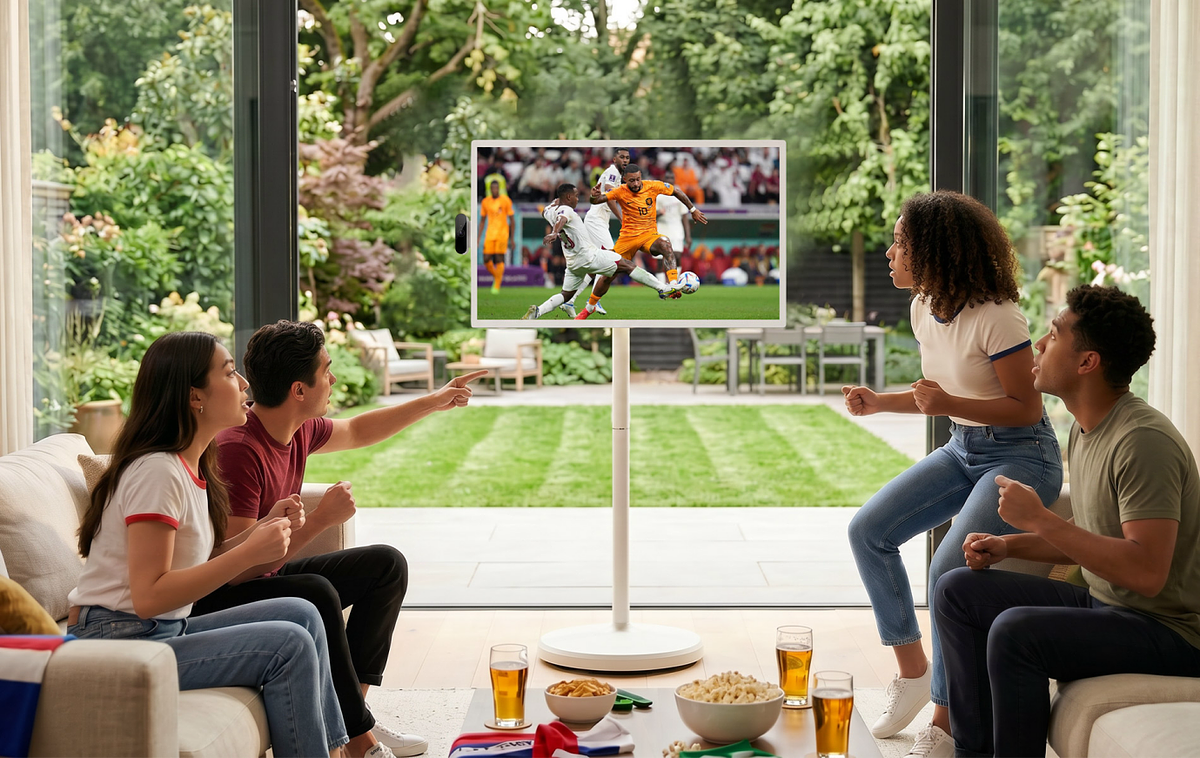
Beyond the Living Room: The Portable TV Push for the World Cup
NEW YORK, NY – June 09, 2026 – As football fans worldwide gear up for the 2026 FIFA World Cup, a subtle but significant shift is happening not on the pitch, but in our living rooms—or rather, outside of them. The long-held tradition of gathering around a single, stationary television is being challenged by a new class of device, and consumer electronics brand Apolosign is making a strategic play to lead the charge.
With a timely marketing push centered on the global tournament, Apolosign is promoting its lineup of portable, battery-powered smart TVs as the definitive way to experience the games. The company's premise is simple yet potent: in an age of flexible lifestyles and on-demand streaming, our screens should follow us, not tether us to a single spot. This isn't just about a new gadget; it's a bet on a fundamental restructuring of home entertainment.
The End of the TV Room?
For decades, the television has been the immovable anchor of the family room. Apolosign's vision, echoed by CEO Fyhack He, is to sever that anchor. “A television should adapt to how people live, not confine them to a single room,” He stated in the company's announcement. The World Cup, with its sprawling schedule of matches at all hours, presents the perfect test case for this philosophy.
The scenarios Apolosign paints are instantly recognizable to modern families. Imagine catching an early-morning match on a 24-inch screen wheeled into the kitchen during breakfast, then moving the game to the living room, and finally rolling a larger 32-inch 4K model out to the patio for a backyard barbecue without missing a single goal. This is the promise of "distributed viewing"—a continuous experience that flows through the spaces of daily life.
Market data strongly supports this narrative. Reports from industry analysts consistently point to a decline in appointment-based viewing and a surge in consumption across multiple devices and locations. The red flag for traditional manufacturers is that consumers, conditioned by smartphones and tablets, now expect media to be fluid and accessible everywhere. Apolosign is tapping directly into this expectation, transforming the TV from a piece of furniture into a personal, mobile entertainment hub. The concept extends beyond the home with products like the Apolosign PackGo, a 27-inch "briefcase" TV designed for tailgates and camping, aiming to capture the growing market for outdoor social entertainment.
A Crowded Field: Apolosign's Strategic Play
Apolosign is not entering an empty arena. The flexible display market is an increasingly competitive space, with established giants like LG and Samsung already fielding their own contenders. LG's StanbyME offers a similar proposition of a movable, battery-powered touchscreen, while Samsung’s Freestyle projector delivers a large-screen experience in a highly portable format. So, where does Apolosign fit in, and can it compete?
The company's strategy appears to be one of aggressive feature integration and value positioning. While competitors often use proprietary operating systems, like LG's webOS, Apolosign’s devices run on a full, certified version of Android OS. This is a critical differentiator, giving users unrestricted access to the Google Play Store and its vast library of apps without the need for an external streaming stick. It effectively combines the user experience of a high-end Android tablet with the screen real estate of a television.
Further analysis of the product line reveals a calculated approach. The 24-inch and 32-inch models are priced between approximately $699 and $999, placing them in a premium-but-accessible category. Key specifications provide compelling selling points: the 32-inch model’s 4K resolution and 300-nit brightness are tailored for sports, while its 15000mAh battery promises up to six hours of cordless viewing—enough for two full matches and extra time. In contrast to projectors which require a dark environment and a separate surface, Apolosign offers a bright, self-contained screen that works anywhere, day or night. This focus on practical, all-in-one functionality is a clear attempt to carve out a defensible market niche.
Under the Hood: More Than Just a Mobile Screen
A forensic look at Apolosign's offerings reveals a product that aims to be more than just a portable television. The company is positioning these devices as versatile hubs for the modern, connected family. The inclusion of an 8MP camera and dual microphones transforms the TV into a large-format video conferencing station for remote work or family calls. The touchscreen interface, a feature often missing from competitors, provides an intuitive, smartphone-like experience that eliminates the dependency on a remote.
The specifications are robust for a device in this category. The latest models feature octa-core processors, a generous 16GB of RAM, and up to 256GB of internal storage, ensuring smooth performance for streaming and multitasking. Connectivity is state-of-the-art, with Wi-Fi 6, Bluetooth 5.3, and essential ports like HDMI and USB-C. This allows the screen to function not only as a smart TV but also as a portable external monitor for laptops or a large display for gaming consoles.
Perhaps most telling of Apolosign's long-term vision is the integration of productivity and smart home features. The devices come with a customizable digital dashboard that syncs with Google and Outlook calendars, acting as a family organization center. The addition of Google Assistant and Gemini AI for voice control further embeds the screen into the smart home ecosystem. This multi-functionality is a deliberate strategy to increase the device's daily utility and justify its price point, moving it from a luxury entertainment gadget to an essential home appliance.
The Company Behind the Screen
For investors and discerning consumers, a product is only as reliable as the company that builds it. So, who is Apolosign? Research indicates the company is not a newcomer, having reportedly been founded in 2008. It operates primarily on a direct-to-consumer model, selling through its own website and major online retailers like Walmart. This strategy allows it to control pricing and maintain a direct relationship with its customer base, which it claims exceeds one million households.
The brand has been steadily building credibility, with its products earning mentions in several mainstream tech publications. By focusing on a specific niche—smart, portable displays—and iterating on its products with second-generation models and features like AI integration, Apolosign is demonstrating a focused, long-term vision.
As Fyhack He noted, football is about "shared moments." Apolosign's bet is that in 2026, those moments will be shared in more places than ever before. While the market will ultimately decide if a portable TV can become a mainstream category, the company has built a compelling product that perfectly captures a major shift in consumer behavior, positioning itself to score big during this World Cup season.