
- 678 million monthly active devices for WPS Office, reflecting its global reach.
- Fewer than 4.5% of Microsoft 365 customers pay for Copilot, highlighting adoption challenges.
- Supports over 100 languages for real-time translation within documents.
Experts would likely conclude that WPS Office is strategically positioning itself as a seamless, cost-effective alternative to competitors by prioritizing workflow integration and AI-driven productivity enhancements.
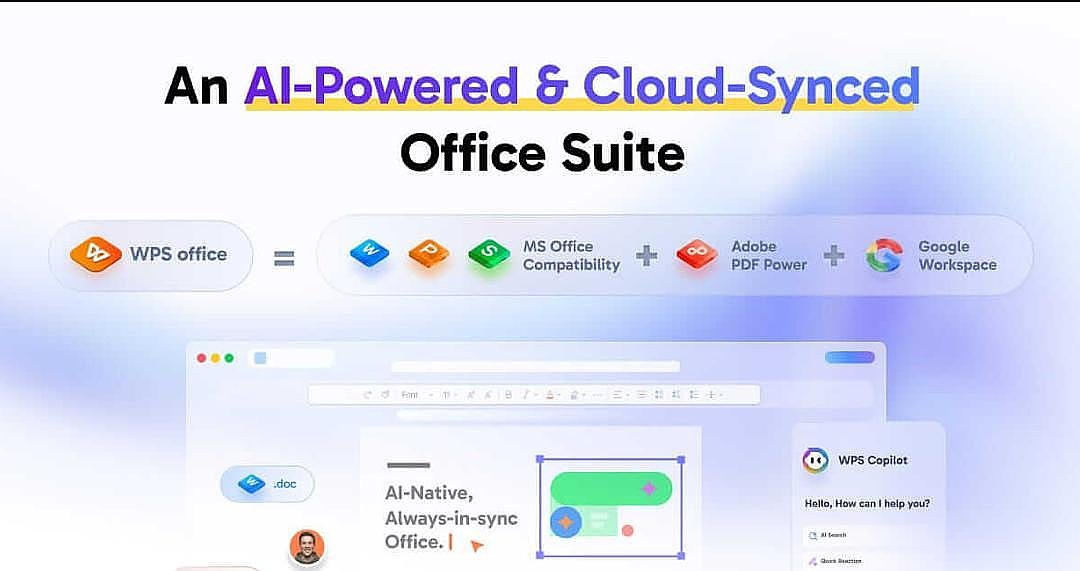
Beyond the Feature List: WPS Office Redefines Productivity with Integration
KUALA LUMPUR, Malaysia – May 15, 2026 – On a recent afternoon, a trade consultant in a Kuala Lumpur cab opened a contract on her phone, flagged key clauses, and seamlessly picked up her work on an office laptop an hour later. This scenario, once the domain of a patchwork of apps and frustrating file transfers, is becoming the expected baseline in a new, quieter revolution in productivity software.
Driving this shift is a growing recognition that the next frontier in office software isn't about bragging rights over AI capabilities, but how invisibly those capabilities integrate into a user's existing workflow. Kingsoft’s WPS Office, a platform with a staggering 678 million monthly active devices, has firmly planted its flag in this new territory. Its major global update, rolled out on April 30, is a meticulously engineered bet that the future belongs to the company that can best eliminate friction, not the one with the longest feature list.
The Seamless Revolution
The core of the update is a two-pronged attack on the small but cumulative interruptions that plague modern knowledge work. The first is cross-device continuity. The new version ensures that a document, spreadsheet, or presentation reflects the same editing state in real-time, whether opened on a phone, tablet, or desktop. This “File Roaming” feature, which automatically syncs documents to WPS Cloud, removes a persistent source of friction for a mobile workforce navigating multiple devices throughout the day.
Second, and more significantly, is the deep embedding of AI tools directly within the document. Instead of toggling between a document and separate applications for translation, grammar checks, or stylistic rewrites, users can now perform these tasks without ever leaving the page. The suite's AI can translate text into over 100 languages, displaying the original and translated versions side-by-side for comparison—a powerful tool for the multilingual environments prevalent across Southeast Asia and other global business hubs. This in-document approach is designed to combat digital fatigue and the 'productivity paradox,' where more tools paradoxically lead to less focus and more distraction.
This philosophy is further reflected in the software’s design, which consolidates its Writer, Spreadsheet, Presentation, and PDF tools into a single, tabbed interface. Combined with its reputation for being a lightweight and resource-efficient alternative to its heavier competitors, the entire package signals a clear focus on workflow continuity and user concentration.
A New Front in the AI Arms Race
WPS Office's strategy places it in stark contrast to the approaches of its largest rivals. While Microsoft 365’s Copilot and Google Workspace’s Gemini tools are powerful, their integration has not always been seamless. Users have noted that Microsoft's Copilot can be resource-intensive, and its adoption remains surprisingly low, with reports indicating fewer than 4.5% of Microsoft 365 customers are currently paying for the feature. Google, meanwhile, often reserves its most advanced AI proofreading and editing tools for higher-tier enterprise customers or requires third-party add-ons for full functionality.
WPS Office is leveraging this landscape to position itself as a nimble, integrated, and cost-effective alternative. Its cloud-based AI processing results in a lighter footprint on local machines. Furthermore, it offers unique, deeply integrated features not directly matched by competitors, such as “Chat with PDF,” which allows users to have a conversational query with their documents, and the aforementioned “Parallel Translate,” which leverages advanced OpenAI models. By providing a robust free version and a premium plan at a significantly lower price point, the company is making a compelling case to a global user base that is increasingly budget-conscious but still demands powerful tools.
Global Ambitions and the Language of Growth
This update is not merely a technical upgrade; it is a clear signal of WPS Office's global ambitions. The deliberate addition of support for Malay, Vietnamese, Korean, and Italian is a strategic move to conquer markets where language-switching is a daily operational reality, not an edge case. With over 200 million of its active devices already outside of China, the company is clearly focused on serving the needs of a diverse, international audience often underserved by US-centric tech giants.
By addressing the critical pain point of language barriers with context-aware AI, WPS Office is building a significant competitive moat in these rapidly growing regions. This focus on localization is complemented by a structural expansion of its international product. The suite now includes online documents, spreadsheets, forms, and AI-generated slides—a comprehensive ecosystem for collaboration that was previously unavailable to its international users. This expansion transforms WPS Office from a collection of desktop applications into a full-fledged digital workspace, strengthening its appeal for both professional and personal use worldwide.
The Trust Equation: Balancing Innovation and Privacy
Of course, the promise of cloud-based AI that can read and rewrite your documents inevitably raises questions about data privacy. Like its competitors, WPS Office's AI features process document content on its servers, a necessary step to provide these services without bogging down the user's device. This architecture places immense responsibility on the company to be a trustworthy steward of user data.
The company has taken steps to address these concerns head-on. Following criticism of its privacy policy in the past, WPS Office issued a public clarification in late 2023, affirming that user documents would not be used for AI training without explicit consent. Its current policy states that data is collected solely for providing the service and improving functionality, with personal information and document data encrypted during storage and transmission. While files stored in its cloud are not end-to-end encrypted, users retain the option to disable cloud sync and keep all files strictly local.
This transparent approach acknowledges the inherent trade-offs of the modern software landscape. For WPS Office, and indeed for all players in this new arena, proving that convenience does not come at the cost of confidentiality will be the ultimate test of their long-term growth.