
- 62% of U.S. grocery shoppers purchased a product directly after seeing it advertised on an in-store screen.
- 95% of shoppers make at least half of their purchase decisions in-store.
- 23-point increase in shopper acceptance of ads at the front-end and checkout since 2023.
Experts agree that in-store advertising has reached a critical inflection point, transforming physical retail spaces into high-impact revenue streams through data-driven, contextually relevant ad strategies.
Beyond the Digital Shelf: In-Store Advertising Hits a Tipping Point
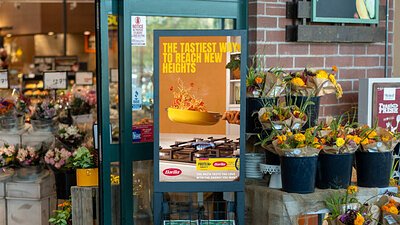
NEW YORK, NY – June 02, 2026 – The familiar hum of refrigerators and the squeak of cart wheels in the grocery aisle are now being punctuated by a new, increasingly influential sound: the subtle sizzle of digital advertising. For years, the retail media boom has been overwhelmingly focused online, but a new report signals that the industry has reached a critical inflection point, with the physical store emerging as its most potent frontier. A comprehensive study released today by Grocery TV, a leading in-store retail media platform, reveals that shopper receptivity to in-store advertising has hit an all-time high, fundamentally altering the economic landscape for grocers and the brands on their shelves.
The 2026 In-Store Shopper Perception Report, co-published with respected independent analyst Andrew Lipsman of Media, Ads + Commerce, found that nearly two-thirds (62%) of U.S. grocery shoppers have purchased a product directly after seeing it advertised on an in-store screen. This isn't just a passive acceptance; it's a direct line from impression to purchase, happening at the most critical moment in the consumer journey. "With national and regional grocers launching and expanding digital screen networks, in-store retail media is finally reaching a long-awaited inflection point," said Lipsman. This shift suggests that the final frontier of advertising is not in the metaverse, but right in the middle of the cereal aisle.
A New Revenue Frontier in the Grocery Aisle
The implications of this growing acceptance are profound, particularly for the grocery industry, which operates on notoriously thin margins. The report underscores a powerful, underleveraged asset: the physical store itself. With 95% of shoppers making at least half of their purchase decisions in-store, retailers are sitting on a goldmine of consumer attention. The ability to monetize this attention through a sophisticated, data-driven advertising network represents a substantial new revenue stream that goes directly to the bottom line.
This trend is contextualized by the explosive growth of the wider retail media market, which some forecasts project will surge by 29% by 2025. While giants like Amazon have dominated the online retail media space, the physical store remains the main event, accounting for 85% of retail sales and boasting an audience 70% larger than retailer websites. The findings from Grocery TV suggest that retailers are now successfully beginning to bridge that gap. The report notes a dramatic 23-point increase in shopper acceptance of ads at the front-end and checkout since 2023, turning previously passive wait times into active engagement opportunities.
Retailers are moving quickly to capitalize on this. Grocery TV, which reaches one in four Americans across over 6,700 stores, has recently expanded its network through partnerships with major players like The Raley's Companies and ShopRite. This allows retailers to modernize their stores and generate incremental revenue, while the platform handles the operational complexities. For brands, this opens up a powerful channel to influence decisions at the point of sale, a moment that separate eMarketer research shows converts at nearly twice the rate of online product discovery.
Decoding the Shopper Psyche: Why In-Store Ads Now Resonate
The success of this new wave of in-store media isn't accidental; it's rooted in a sophisticated understanding of shopper psychology and behavior. The era of jarring, intrusive advertising is being replaced by a more integrated and context-aware approach. The report reveals that shoppers are 2.5 times more likely to consider a brand when an ad fits the surrounding environment and the products they are shopping for. Furthermore, 86% of shoppers say contextually relevant ads on endcaps are important to their experience, suggesting they see these screens less as an intrusion and more as a helpful guide.
"The most effective in-store media strategies are built around the realities of how people actually shop," said Marlow Nickell, co-founder and CEO of Grocery TV. "The formats shoppers respond to best deliver value in moments where shoppers are already engaged. When done thoughtfully, in-store media becomes part of the shopping experience rather than an interruption to it." This philosophy is borne out in the data. While zones like the entrance, checkout, deli, and pharmacy scored favorability ratings of 84% or higher, formats that blocked products or crowded aisles were received poorly. The message is clear: enhance the journey, don't obstruct it.
This positive reception is remarkably consistent across demographics. While Millennials (81% acceptance) and Gen X (80%) are the most receptive, Gen Z (74%) and Baby Boomers (72%) are not far behind. The narrow 8-point gap between the most and least receptive age groups indicates a broad-based acceptance, making in-store media a viable strategy for brands targeting a wide range of consumers.
The Data-Driven Evolution of Physical Media
Underpinning this entire shift is a rigorous, data-driven approach that elevates in-store screens from simple digital posters to measurable, high-impact marketing tools. The credibility of the report's findings is bolstered by its robust methodology—a survey of over 1,000 U.S. shoppers using before-and-after visuals to gauge the direct impact of screens—and the involvement of Andrew Lipsman, who has been at the forefront of analyzing what he calls "digital advertising's third big wave."
However, the industry's rapid growth has created significant challenges, chief among them a lack of standardization in measurement. Brands have struggled to compare campaign performance across different retail media networks, each with its own proprietary metrics. This fragmentation has been a major hurdle to investment and strategic planning. In response, industry bodies like the IAB and MRC are working to establish common standards for everything from audience measurement to in-store attribution models.
Simultaneously, platform providers are moving to address these concerns head-on. In a sign of the market's maturation, Grocery TV recently announced a partnership with ABCS Insights to provide independent, third-party sales lift reporting. This move towards transparent, verifiable ROI is critical for brands that need to justify their ad spend and prove the incremental value of their campaigns. As one analyst noted, the future of retail media depends on leveraging high-fidelity transaction data to prove its impact not just on sales, but on long-term brand building.
Beyond Today's Screens: The Future of In-Store Engagement
The current success of in-store media is just the beginning. The next phase will be defined by the integration of advanced technologies like Artificial Intelligence and the Internet of Things (IoT), which promise to create even more personalized and effective "phygital" experiences. Future in-store screens will likely move beyond looping content to display dynamic ads triggered by real-time data, such as foot traffic patterns, inventory levels, or even anonymous demographic analytics.
This technological evolution will enable hyper-contextual advertising that is not just relevant to a store zone, but potentially to a shopper's immediate needs, further blurring the line between helpful information and advertising. For retailers and brands, this unlocks more sophisticated and measurable opportunities. For shoppers, it promises an environment where digital interactions seamlessly augment the physical journey, making the trip to the grocery store more efficient and engaging. The key to long-term success will be harnessing this technology to deliver demonstrable value while respecting the customer experience and privacy, ensuring the aisle remains a place of discovery, not disruption.