
- Agentic Media: Pixi Garden introduces AI-powered interactive characters ('pixis') that react to users' environments and conversation context.
- Privacy Focus: On-device AI ensures no user data leaves the device, addressing modern privacy concerns.
- Marketplace Vision: Long-term plan to create a platform for creators to design and monetize interactive characters.
Experts would likely conclude that Pixi Garden represents a significant innovation in digital communication, blending AI, AR, and privacy in a way that could redefine social interaction if the technology scales successfully.
Beyond the Bubble: Can AI Companions in Our Texts Forge Deeper Connections?
BEND, Ore. – June 18, 2026 – For decades, the fundamental unit of our digital social lives has been the text in a bubble. We have augmented it with photos, embellished it with emojis, and punctuated it with looping GIFs, but the core experience has remained stubbornly static. Today, a startup emerging from the quiet of Bend, Oregon, is proposing a radical departure from this paradigm.
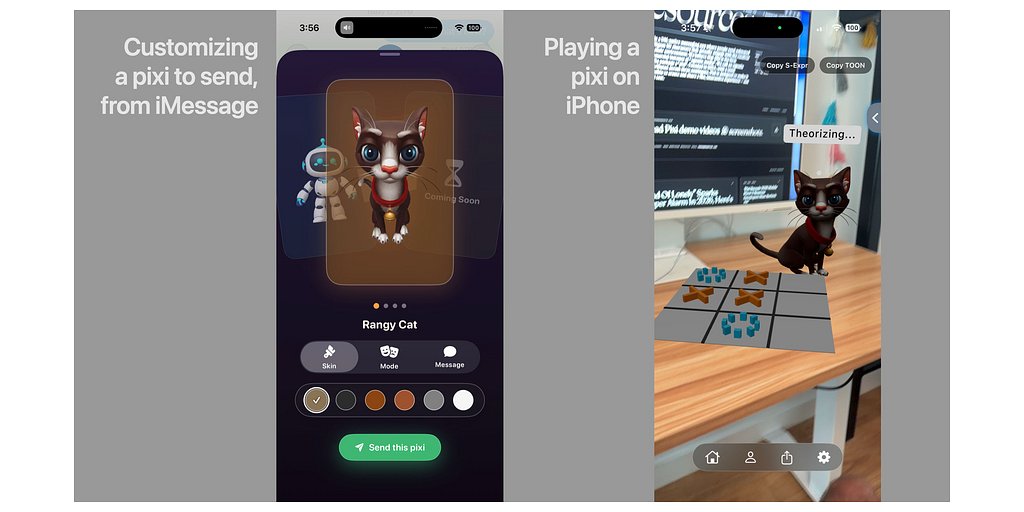
Pixi Platforms, a company co-founded by Siri architect Mark Drummond, has launched Pixi Garden, an app that doesn't just add flair to your messages—it embeds intelligent, interactive characters directly into them. These "pixis" are not passive animations; they are AI-powered augmented reality agents designed to react to your world, understand the context of your conversation, and turn a simple "thinking of you" into a memorable, shared experience. It’s a technology the company calls "agentic media," and it represents a high-stakes bet that what we truly crave is not more information, but more meaningful interaction.
The Dawn of Agentic Media
At first glance, the idea of sending a digital character might evoke comparisons to existing technologies. We have Snapchat’s playful AR lenses and Bitmoji’s customizable avatars. But Pixi Platforms insists this is a categorical leap. “Most communication today is still just text in a bubble,” said Roger Weber, co-founder and a veteran of large-scale game development. “With Pixi, we turn sending a message into a rich interactive experience.”
What sets a pixi apart is its "AI brain." This isn't a simple script. It's a complex system of on-device machine learning models that grants the character a form of digital consciousness. A pixi can use a phone's sensors to perceive the environment—noticing light, sound, and movement—and react accordingly. Send a digital cat to a friend, and it might playfully bat at their finger on the screen, curiously explore their desk, or curl up for a nap in a patch of sunlight on the floor.
This convergence of messaging, gaming, AR, and AI is what Drummond and his team have termed "agentic media." The goal is to create communication that is adaptive, retains context, and understands intent. It’s a vision born from deep expertise; Drummond’s work on Siri helped pioneer conversational AI, while Weber’s background in gaming brings an understanding of how to craft engaging, real-time interactive systems. The result is an attempt to build the next layer of social expression, moving beyond the screen you watch to an experience you live, even for a moment.
A New Marketplace for Digital Life
While the initial experience is novel, Pixi Platforms' ambitions extend far beyond being a fun new iMessage feature. The company's long-term vision is to build the foundational platform for agentic media—a system that could do for interactive characters what the App Store did for mobile software or what Roblox did for user-generated games.
The plan involves a marketplace where studios, brands, and independent creators can design, distribute, and monetize their own pixis. Imagine a Hollywood studio releasing a beloved movie character not just as a toy, but as an interactive agent that fans can send to each other. Or a brand mascot that can tell jokes and play games. The proposed "per-send economics" model is particularly intriguing. Instead of relying on advertising impressions or subscriptions, creators could earn a small fee each time their character is shared, creating a direct link between engagement and revenue.
“Pixi turns everyday messages into moments your friends and family will actually remember,” said CEO Mark Drummond. “And for IP holders, we want to give them the power to have the world's most beloved characters show up in a new way.”
This model hinges on creating a vibrant creator economy. For it to succeed, the tools for authoring pixis must be accessible, and the "brand-safe guardrails" the company promises must be robust enough to attract major IP holders. It’s a delicate balance: fostering creative freedom while ensuring that a character from a children’s movie doesn’t find itself in an inappropriate context. If successful, it could unlock a new frontier for digital artists and storytellers, where the value of their creation is measured not in static views, but in the frequency and duration of interaction.
The Quiet Revolution of On-Device AI
Perhaps the most significant, and reassuring, aspect of Pixi's architecture is its deep commitment to privacy. In an era where our personal data is the default currency for "free" services, Pixi’s approach is a stark outlier. The "AI brain" of each pixi runs entirely on the user's device.
According to the company, no user information, conversations, or environmental data ever leaves the iPhone. Nothing is uploaded to a server, and nothing is used to train larger AI models. All services are provided through on-device machine learning, a design choice that ensures both performance and, crucially, end-user privacy. You, and only you, own your data.
This "privacy by design" philosophy is not just a talking point; it's a core technological and ethical stance. It's a choice validated by key partners like Framestore, the creative studio behind visual effects for blockbuster films and a co-development partner with Pixi. “AI is heading to the edge where privacy and personalization can be maximized,” noted Lincoln Wallen, Framestore's Chief Technology Officer, highlighting their work with Pixi to explore this "on-device AI" frontier.
This approach directly addresses one of the central tensions of the modern technology landscape: the trade-off between personalization and privacy. Pixi is betting that it can deliver a deeply personal, context-aware experience without requiring access to your private life. It's a quiet revolution against the data-extractive models that have become the norm. By keeping intelligence local, the company hopes to build trust, creating a safe space for a new, more intimate form of digital expression to flourish. As these intelligent agents begin to inhabit our most personal communication channels, this commitment to privacy may prove to be their most important feature.