
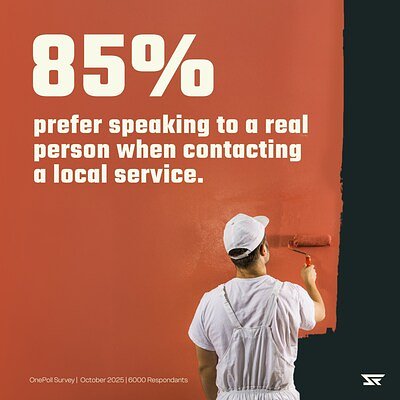
- 85% of consumers prefer to speak with a real human when contracting a local service business. - 54% of consumers describe AI-powered customer service as “frustrating.” - 83% of surveyed consumers have actively requested to speak with a human representative after first encountering an AI.
Experts agree that while AI has a role in automating routine tasks, human interaction remains essential for empathy, problem-solving, and building trust, particularly in high-stakes situations.
Beyond the Bot: Why Consumers Still Crave the Human Touch
PORTLAND, Ore. – January 29, 2026 – In an era defined by rapid technological advancement, a new report suggests the relentless march toward AI-powered customer service may be alienating the very customers it aims to serve. Research released today by ServiceForge, a provider of customer service software, reveals an overwhelming consumer preference for human interaction, challenging the prevailing narrative that automation is the ultimate solution for customer support.
The report, titled "Keep Service Human," indicates a significant disconnect between the tech industry's push for efficiency and the deep-seated consumer need for empathy and effective problem-solving. While businesses adopt AI to cut costs and speed up response times, customers are signaling that for issues that matter, a machine is no substitute for a person.
A Growing Frustration with Automation
According to the new research, the pushback against automated systems is substantial. The survey data shows that 85% of consumers prefer to speak with a real human when contracting a local service business. The frustration is so pronounced that one in three respondents say they would hang up immediately if they reached an AI bot, translating directly to lost leads and abandoned sales for service-based companies.
This sentiment is fueled by poor experiences, with 54% of consumers describing AI-powered customer service as “frustrating.” The report highlights a fundamental misalignment in priorities: while companies may focus on speed, 73% of respondents say that getting their issue resolved is what matters most, not how quickly the call is answered. Furthermore, 83% of those surveyed have actively requested to speak with a human representative after first encountering an AI.
“AI has a role to play in automating back-office tasks and improving efficiency,” said Jane Blanchard, head of brand and marketing for ServiceForge, in the company's press release. “But when a customer is calling because their heat is out or their basement is flooding, they want things AI can't deliver: empathy, understanding and reassurance.”
A Sentiment Echoed Across Industries
The desire for human connection is not confined to home services. ServiceForge’s findings show the preference extends to other critical, high-stakes sectors, with 89% of consumers preferring human agents in healthcare, 87% in legal services, and 82% in real estate. This data points to a universal truth: when people are vulnerable, stressed, or making significant decisions, they seek human judgment and compassion.
This report is not an outlier. It aligns with a growing body of industry analysis showing widespread consumer skepticism toward AI-fronted service. A separate January 2026 survey found that over 93% of consumers prefer interacting with a human over a bot. Another 2023 study by Forrester Consulting revealed that half of all consumers often feel frustrated with chatbots, with nearly 40% of their interactions being negative. The core issue, as much of the research suggests, is that current AI technology, while conversationally adept, consistently fails when faced with complex or emotionally charged problems.
Industry experts note that while AI excels at handling routine, repetitive tasks like providing order updates or answering simple FAQs, it lacks the nuanced understanding and creative problem-solving abilities of a human agent. This limitation often leads to conversational dead ends, forcing customers to repeat themselves and escalating their frustration.
The AI Paradox: Efficiency vs. Experience
This consumer sentiment creates a paradox for businesses. On one hand, AI promises significant cost savings and 24/7 availability. On the other, its clumsy implementation in customer-facing roles can damage brand reputation and drive customers away. The market is now grappling with what Gartner’s Hype Cycle for AI suggests is a move away from pure hype and toward a more pragmatic understanding of where AI can deliver sustainable value.
Leading customer service platforms like Salesforce and Zendesk, while heavily invested in AI, are increasingly marketing their technology as a tool for augmentation, not replacement. Their strategy focuses on using AI to empower human agents by automating back-office workflows, providing real-time data, and handling initial queries. This frees up human agents to focus on what they do best: building rapport, de-escalating conflict, and solving complex problems that require a human touch.
The most effective models emerging are hybrid, blending AI's efficiency for simple tasks with a seamless, easy-to-access pathway to a human agent for more substantive issues. Experts warn that companies deploying AI as a complete replacement for human support, particularly without a smooth handoff process, risk eroding customer trust and loyalty.
Human Touch as the New Competitive Edge
For many businesses, especially small and local service providers, the findings present a clear opportunity. In a market where larger competitors may lean heavily on impersonal, automated systems, offering accessible, human-led customer service can become a powerful competitive differentiator. The ServiceForge report notes that customers are significantly more likely to leave positive online reviews and express trust in companies that provide a human connection.
This “local advantage” is particularly potent in the skilled trades, where calls are often prompted by urgent, stressful situations. A reassuring human voice can build immediate trust and secure a job that an impersonal bot might lose. This principle extends to any “high-stakes” conversation, whether it involves a complex medical question, a major financial transaction, or a sensitive legal matter. Even as customers use AI for initial research, they consistently turn to human experts for the final, critical stages of decision-making.
Ultimately, the data suggests that the future of excellent customer service is not a choice between people and machines, but a thoughtful integration of both. As technology continues to evolve, the most successful companies will be those that use it to enhance, rather than eliminate, the irreplaceable value of human connection.