
- $1.2 billion: The U.S. pressure washing services industry was valued at over $1.2 billion in 2023.
- 5.7%: The industry has been expanding at an average annual rate of 5.7% over the past several years.
- 28,000 businesses: Over 28,000 pressure washing businesses operate nationwide.
Experts would likely conclude that while AI disrupts many white-collar professions, essential blue-collar services like pressure washing remain resilient due to their physical, site-specific, and unpredictable nature, offering a stable path to entrepreneurship.
Beyond the Algorithm: The Blue-Collar Boom AI Can't Touch
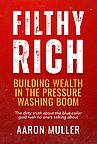
LAS VEGAS, NV – April 28, 2026 – In a business world captivated by artificial intelligence and the promise of automated fortunes, a different kind of boom is happening—one powered by high-pressure water, not complex algorithms. Entrepreneur Aaron Muller is making the case that while many chase digital trends, true, durable wealth is still being built by those willing to get their hands dirty. His new book, Filthy Rich: Building Wealth in the Pressure Washing Boom, serves as a contrarian manifesto for a generation anxious about their place in an increasingly automated economy.
Muller’s message is straightforward: some problems can't be solved by a chatbot. "You can't automate a man with a pressure washer," he writes. "You can't outsource clean." While headlines are dominated by AI's disruption of white-collar professions, Muller argues that the essential, physical services that keep the economy running represent a more stable and accessible path to entrepreneurship.
The "AI-Proof" Business Model
The timing of Muller's argument is potent. Widespread "AI anxiety" is no longer theoretical, as research from institutions like the McKinsey Global Institute suggests that generative AI could automate tasks equivalent to millions of full-time jobs, with cognitive, non-routine work in fields like finance, law, and administration being particularly exposed. The Brookings Institution has noted that millions of U.S. workers, especially in office and administrative support roles, face high vulnerability to AI-driven changes.
In this environment, Muller’s focus on pressure washing highlights a sector that remains largely insulated from such disruption. The work is inherently physical, site-specific, and unpredictable. Cleaning a graffiti-covered wall, degreasing a commercial kitchen hood, or washing a fleet of muddy construction vehicles requires human adaptability, mobility, and problem-solving skills that current robotics and AI cannot replicate. While AI might optimize scheduling or billing, the core service remains firmly in human hands.
This reality positions skilled trades and hands-on services as a surprisingly resilient career path. The demand is constant and non-negotiable. Buildings get dirty, company fleets need to maintain a professional image, and restaurants must pass health inspections. These are recurring needs that form the bedrock of a recession-resistant business model, a stark contrast to the volatile, trend-driven nature of many digital ventures.
A Thriving Industry Beyond the Hype
Muller's claim of a "boom" is not mere hyperbole. The U.S. pressure washing services industry has demonstrated consistent growth, valued at over $1.2 billion in 2023 and expanding at an average annual rate of 5.7% over the past several years. With over 28,000 businesses operating nationwide, it's a fragmented market ripe for professionalization.
The industry's growth is fueled by several powerful trends. On the residential side, a continued focus on home maintenance and property value keeps services in high demand for cleaning siding, driveways, and decks. Commercially, the need for cleanliness is a matter of brand reputation and regulatory compliance. This creates a vast market spanning everything from retail storefronts and parking garages to industrial facilities and transportation fleets.
However, the path to success isn't simply about buying a pressure washer. Industry analysis shows that while the market is growing, rising costs can squeeze profit margins. Success requires more than just hard work; it demands sharp business acumen, operational efficiency, and a strategic approach to customer acquisition—precisely the challenges Muller aims to address.
From Grime to Gold: A Practical Blueprint
Muller’s credibility is rooted in decades of firsthand experience. He began his career as a teenager washing trucks, eventually buying into the company he worked for and scaling it from a single vehicle into a multi-million dollar enterprise. His portfolio now includes some of the most recognized service brands in the Northwest, such as Mr. Truck Wash, which services over 20,000 vehicles a month, and Mr. Hood Clean, which serves more than 1,250 commercial kitchens.
Filthy Rich is positioned as the distillation of this hard-won knowledge. It’s not a theoretical treatise on entrepreneurship but a ground-level blueprint designed for immediate application. The book covers the distinct lanes of the industry—from residential and commercial washing to specialized fleet and hood cleaning—and delves into the technical details of equipment, chemical science, and pricing strategy.
What truly sets the book apart, according to its pre-release materials, is its relentless practicality. The appendices reportedly include ready-to-use tools that can save new entrepreneurs thousands in consulting fees, such as startup checklists, telemarketing scripts, sample proposals, and pricing guides. This focus on systems and repeatable processes directly tackles the common pitfalls of service businesses, where many skilled operators falter due to a lack of business development and financial management skills. By providing a roadmap for securing recurring contracts and professionalizing operations, Muller offers a guide to scaling a business rather than just buying a job.
The New Appeal of Essential Work
Ultimately, Muller's book taps into a broader cultural shift: a renewed appreciation for tangible skills and essential services. As the digital world becomes more abstract and the future of white-collar work feels less certain, the straightforward value proposition of a blue-collar business is gaining appeal. Ironically, the AI revolution itself is creating more demand for skilled trades, as the construction and maintenance of data centers and other physical infrastructure require a massive blue-collar workforce.
For those worried about their job being replaced by an algorithm, or for aspiring entrepreneurs looking for a proven path to ownership, the message is clear. The future of work may not be found exclusively in code or data, but also in the satisfying, tangible, and profitable act of making something dirty clean again.