
- 6.2 million Canadians (22% of population aged 15+) identify as having a disability, representing a significant travel market.
- Accessible travelers often stay longer and spend more per trip due to high logistical barriers.
- Ontario aims to be fully accessible by 2025 under the Accessibility for Ontarians with Disabilities Act (AODA).
Experts would likely conclude that Ontario's partnership between Destination Ontario and AccessNow is a strategic economic move, leveraging accessibility as a competitive advantage in tourism rather than just a compliance requirement.
Beyond Ramps: Why Ontario's New Accessibility Push is a Smart Power Play
TORONTO, ON – June 02, 2026 – A press release crossed the wires today, announcing a partnership between Destination Ontario, the province's tourism marketing arm, and AccessNow, a tech company specializing in crowdsourced accessibility information. On the surface, the timing is perfect, landing squarely during National AccessAbility Week. It's a feel-good story of inclusion and collaboration. But to dismiss this as mere corporate social responsibility would be to miss the plot entirely. This partnership isn't just a social initiative; it's a calculated and necessary strategic pivot, signaling a deeper understanding of the modern economy where inclusive design is no longer a niche but a powerful market driver.
This collaboration aims to fuse the government agency's marketing muscle with the tech startup's granular, user-powered data. The stated goal is to “strengthen accessibility awareness, collaboration and visitor experience initiatives across the province.” For Vincenza Ronaldi, President and CEO of Destination Ontario, it’s about a fundamental right. “Everyone deserves the opportunity to experience travel in a way that feels welcoming, comfortable and accessible,” she stated. But it's the perspective of Maayan Ziv, the Founder and CEO of AccessNow, that truly frames the ambition. “Travel is about freedom... Disabled people want those same experiences, not separate ones,” Ziv explained. “When destinations invest in accessibility from the beginning, they create places where more people can participate fully, explore confidently, and feel a true sense of belonging.” The challenge, and the opportunity, lies in turning that vision into economic and social reality.
The Untapped Economy of Accessibility
For years, accessibility has been framed primarily through the lens of legal compliance and social obligation. Ontario’s own Accessibility for Ontarians with Disabilities Act (AODA), with its goal of a fully accessible province by 2025, set the stage. But compliance is a floor, not a ceiling. This new partnership signals a shift from a mandate-driven mindset to a market-driven one. The “why behind the buy” here is simple: the accessible tourism market is one of the largest and most overlooked economic opportunities in the travel industry.
Consider the numbers. In Canada, over 6.2 million people, or 22% of the population aged 15 and over, identify as having a disability. This demographic doesn't travel alone; they travel with spouses, friends, and families, amplifying their economic footprint significantly. Studies consistently show that accessible travelers often stay longer and have higher per-trip expenditures, precisely because the logistical and informational barriers to their travel are so high. When a destination proves itself to be reliably accessible, it earns not just a visit, but loyalty from a massive, and growing, market segment. This partnership is a direct play to capture that loyalty.
By leveraging AccessNow's data, Destination Ontario is making a move to solve the single biggest pain point for accessible travelers: a lack of reliable, detailed information. It’s a strategic investment to reduce friction and build the confidence necessary to convert travel intention into actual bookings. In a post-pandemic world where tourism boards are fighting for every visitor dollar, positioning Ontario as a leader in inclusivity is not just good ethics; it’s a powerful competitive differentiator.
From Compliance to Experience: The AccessNow Difference
The true innovation of this partnership lies in its approach to information. For decades, the accessibility “solution” was a small, blue-and-white wheelchair symbol on a website or a vague assurance that a venue was “accessible.” This is the equivalent of a restaurant saying it serves “food.” It’s unhelpful and builds no trust. The AODA may mandate a ramp, but it doesn't tell a potential visitor if the front door is too heavy to open, if the “accessible” washroom is used for storage, or if the staff have any training in disability awareness.
This is the gap AccessNow was built to fill. Its platform is not a top-down checklist but a bottom-up, living map of lived experiences. By crowdsourcing data from a community of users, the app provides granular details that matter: the exact width of a doorway, the presence of a grab bar, the noise level of a venue, the attitude of the staff. It transforms the abstract concept of “accessibility” into a concrete, searchable, and verifiable set of features.
By integrating this dynamic data into its official tourism channels, Destination Ontario is moving beyond the static model of compliance. It is embracing a model of experience. This means empowering visitors to make their own informed decisions based on their specific needs. It's a paradigm shift from telling people “this place is accessible” to showing them how it is accessible and letting them decide. The planned “accessibility capacity building” for Destination Ontario staff is a critical component, aiming to ensure the human element of the visitor experience aligns with the promise of the digital tools.
A New Blueprint for Public-Private Innovation
This collaboration is more than just a win for Ontario; it's a potential blueprint for how public institutions can innovate across the country and beyond. While destinations like Barcelona and Quebec, with its long-running Kéroul organization, have made significant strides, the Destination Ontario-AccessNow model represents a uniquely modern approach. It pairs the scale, stability, and marketing reach of a provincial agency with the agility, user-centric design, and technological prowess of a focused startup.
This hybrid model can overcome the traditional hurdles faced by both sectors. Government agencies can be slow to adapt to new technologies and user needs, while startups often lack the resources and credibility to drive province-wide change on their own. Together, they can achieve what neither could alone: deploy a sophisticated, data-driven solution at scale. The partnership promises to create a virtuous cycle: Destination Ontario promotes the province and the AccessNow platform, driving more users to the app. More users lead to more data and richer insights, which in turn helps tourism operators identify and fix accessibility gaps, making the province an even better product to market.
The Road Ahead: From Announcement to Action
Of course, a partnership is only as good as its execution. The challenges are real. Ontario is a vast province, and the accessibility of Toronto is vastly different from that of a small town in the north. Bridging this urban-rural divide and solving the “last mile” problem—the broken sidewalks, lack of curb cuts, and inaccessible small businesses that connect major venues—will require sustained effort beyond this initial announcement. The real work lies in convincing thousands of individual tourism operators that investing in accessibility will yield a tangible return.
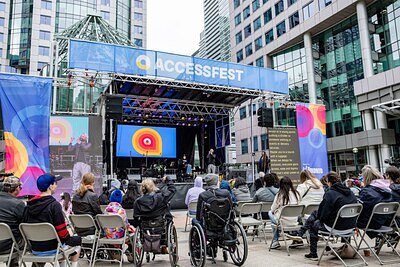
Immediate next steps, like Destination Ontario's participation in AccessFest in Toronto this coming Saturday, are a positive sign. These public-facing engagements are crucial for building trust and ensuring the disability community remains at the heart of the initiative. The success of this venture will be measured not in the volume of press releases, but in the seamless, confident journeys of millions of new visitors exploring every corner of the province.