
- AI-driven energy efficiency improvements can save telecom operators millions annually.
- Singtel's partnership with NVIDIA aims to build sovereign AI ecosystems in Asia.
- SGD 15,000 raised for digital inclusion initiatives at the summit.
Experts agree that Asia's telecom industry is undergoing a fundamental transformation, shifting from traditional connectivity providers to AI-native digital platforms that will drive the next generation of digital economies.
Asia's Telecom Blueprint: Beyond Connectivity to an AI-Native Future
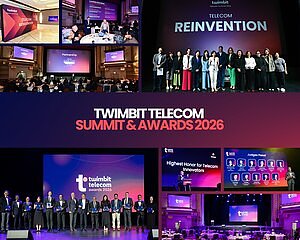
SINGAPORE – June 17, 2026 – Inside Singapore’s historic Capitol Theatre, the conversation wasn't about faster speeds or cheaper data plans. The leaders of Asia-Pacific's largest telecommunications firms, gathered for the Twimbit Telecom Summit, were discussing a far more fundamental reinvention. The old identity of the telco—a utility that provides the pipes for communication—is being deliberately dismantled. In its place, a new, far more ambitious model is emerging: the telco as an AI-native digital platform, the cognitive engine for the next generation of digital economies.
Hosted by research firm Twimbit, the summit crystallized a shift that has been years in the making. The industry that connected continents with copper wire and continents with fiber optic cables is now focused on a new kind of connection: integrating artificial intelligence into the very fabric of its operations, services, and business strategy. This isn't a cosmetic upgrade; it's a complete architectural overhaul.
Beyond the Pipes: The AI-Native Transformation
For decades, the core business of a telecom operator was to manage network traffic efficiently. The new paradigm, as discussed in panels and roundtables, is to leverage that network to generate and act upon intelligence. This transformation is unfolding across every layer of the business, driven by the necessity to find growth beyond selling simple connectivity.
Operationally, AI is being deployed to manage the immense complexity of modern networks. Instead of reacting to outages, AI-driven predictive maintenance algorithms can now anticipate hardware failures or network congestion before they impact customers. Operators are using machine learning to optimize energy consumption across thousands of cell towers, a move that trims significant operational costs and addresses sustainability goals. One industry analyst noted that for a large operator, even a single-digit percentage improvement in energy efficiency translates to millions in annual savings.
On the customer-facing front, the shift is equally profound. AI-powered chatbots and virtual assistants are now the first line of support, handling routine queries with increasing sophistication. More importantly, operators are using AI to move from mass-market offers to hyper-personalization, analyzing usage patterns to predict churn, recommend tailored service bundles, and enhance customer loyalty. This is the new frontier of customer experience, powered by firms like gold sponsor Comviva, whose platforms are designed to help operators monetize data through personalized engagement.
Perhaps the most significant evolution is in the enterprise space. Telcos are leveraging their trusted infrastructure to offer AI-as-a-Service (AIaaS) to businesses, providing everything from IoT analytics for smart factories to secure, AI-driven cloud platforms. This move pits them against tech giants, but they hold a key advantage: control over the underlying network infrastructure, which is critical for low-latency AI applications. The secure delivery of these new applications, protected from sophisticated bot attacks and fraud, is a critical enabler, a domain addressed by summit founding partner F5.
Spotlighting the Trailblazers
The Twimbit Telecom Awards 2026 provided concrete evidence of this transformation in action, celebrating the operators who are successfully navigating this complex transition. The list of winners—including Singtel, Bharti Airtel, Reliance Jio, and Telkomsel—reads like a who's who of Asia's digital vanguard.
Singtel, for example, was recognized for its deep commitment to AI infrastructure. The Singaporean operator's recent partnership with NVIDIA aims to bring advanced AI capabilities to the region, building sovereign AI ecosystems that enterprises can tap into. This isn't just about using AI; it's about building the very platforms on which future AI innovation will run.
In India, both Bharti Airtel and Reliance Jio have demonstrated how AI is integral to deploying and managing 5G at an unprecedented scale. Jio, in particular, has built its entire strategy around a digital ecosystem where the network is merely the foundation for a vast suite of AI-driven services spanning entertainment, education, and finance. These companies exemplify the move from telco to tech-co.
The awards also smartly recognized the foundational layers of this new world. The inclusion of Digital Realty, a global provider of data centers, as a marquee winner underscores a critical truth: the AI revolution runs on massive, specialized, and interconnected physical infrastructure. Without these high-performance data centers capable of handling intense AI workloads, the vision of an AI-native telco remains a blueprint on a screen.
Honoring industry veteran Manoj Kohli with a Lifetime Achievement Award served as a poignant reminder of the industry's journey. Having led Bharti Airtel's massive expansion across emerging markets, Kohli's career represents the pinnacle of the previous era of telecom—growth through scale and connectivity. His recognition at a summit focused on the AI-native future bridges the industry's past with its definitive next chapter.
The Sovereignty Question: A New Digital Nationalism?
One of the most compelling themes at the summit was the growing importance of 'digital sovereignty'. This refers to a nation's ability to control its own digital destiny—its data, its infrastructure, and its regulatory environment. For telecom operators, this is no longer an abstract policy debate; it's a pressing business reality.
Across the Asia-Pacific region, governments are increasingly implementing rules that require sensitive citizen data to be stored and processed within national borders. This compels operators to invest heavily in local data centers and cloud infrastructure, challenging the 'borderless' model of the internet. Furthermore, there is growing pressure to use equipment from 'trusted vendors' for critical 5G networks, a direct response to geopolitical tensions and cybersecurity concerns.
For operators with a footprint across multiple countries, this creates a complex patchwork of compliance requirements. Navigating these diverging regulations while trying to maintain scalable, efficient operations is one of the key strategic challenges of the next decade. It represents a delicate balancing act between embracing global technological innovation and respecting the security and policy imperatives of each nation. The telco is now on the front line of this new, digital-first geopolitics.
From Boardroom to Community: A Broader Mandate
As telecom operators reinvent themselves into central pillars of the digital society, their role and responsibilities are expanding. This was reflected in the summit's partnership with the Goh Chok Tong Enable Fund (GCTEF), which raised over SGD 15,000 to support persons with disabilities in Singapore. While a modest sum in the context of a multi-billion dollar industry, the gesture is symbolic of a larger trend.
By leveraging their technology for social good—whether through funding assistive technology or promoting digital literacy programs—operators can help ensure that the digital future they are building is inclusive. It's an acknowledgment that building a digital economy is not just about technology and profit, but also about people and opportunity.
This sentiment was captured perfectly by Manoj Menon, Founder & CEO of Twimbit. "The telecom industry is entering one of the most defining phases in its history," he stated. "What we witnessed at the summit was not just a conversation about technology, but a conversation about leadership, reinvention, and the future role telecom will play in shaping digital economies." That future role, as the discussions in Singapore made clear, is to be the intelligent, adaptive, and responsible nervous system of our increasingly digital world.