
- Comparor's AI assistant scans thousands of online stores in real-time to compare prices and deliver optimized recommendations.
- Google's AI Shopping service draws on over 50 billion product listings.
- AI assistants aim to combat decision fatigue by providing curated, hyper-personalized shopping experiences.
Experts agree that AI-powered shopping assistants represent a significant evolution in e-commerce, offering consumers more efficient and personalized shopping experiences while posing new challenges for retailers in terms of data privacy and competitive differentiation.
AI Takes the Shopping Cart: New Assistants Promise Smarter Deals
LONDON – February 13, 2026 – The overwhelming maze of online shopping—a digital landscape cluttered with endless tabs, fluctuating prices, and a deluge of reviews—may have a new navigator. Comparor, a retail technology firm, today launched its AI-powered shopping assistant, entering a burgeoning market aimed at simplifying how consumers find and purchase products online.
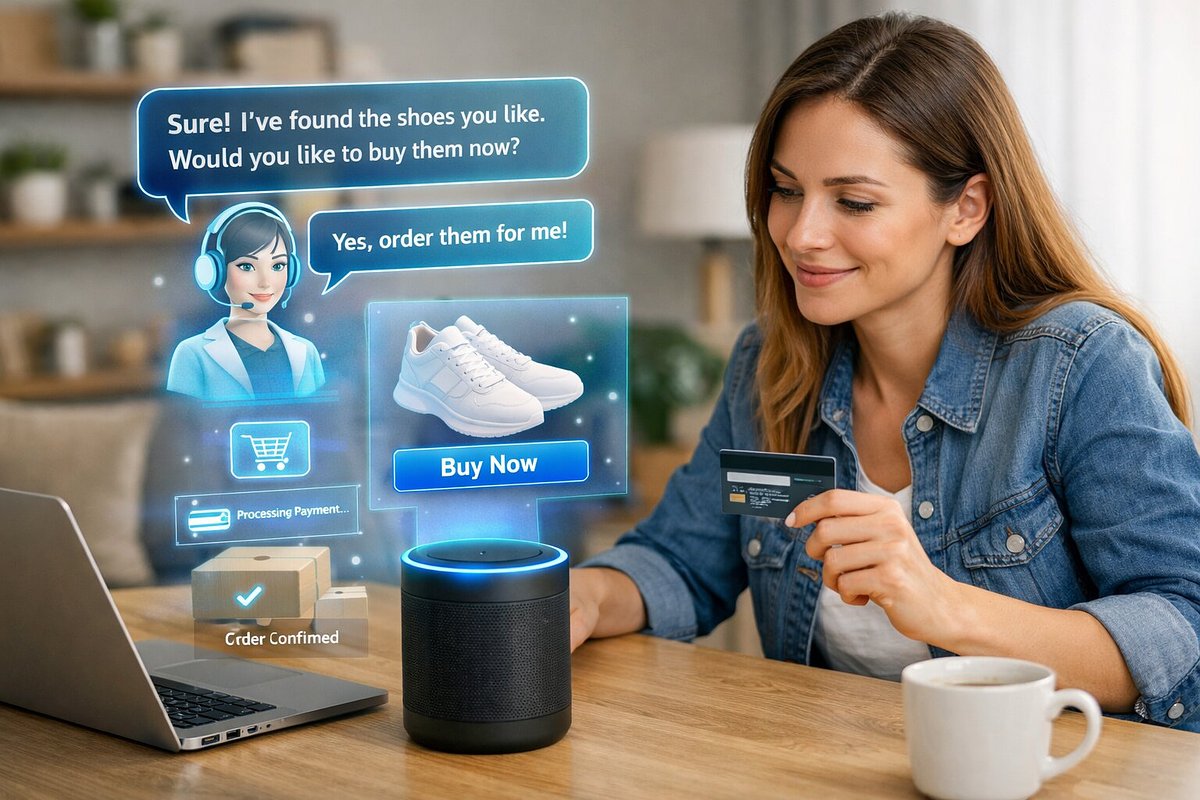
The London-based company’s new conversational platform promises to act as a digital personal shopper. By using natural language, users can ask the assistant to find a product, and the AI will scan thousands of online stores in real-time, comparing prices, identifying equivalent items, and delivering a single, optimized recommendation.
“Online shopping should be convenient, but the growing number of choices and constant price changes can make it overwhelming,” said the Comparor Media Team in a statement accompanying the launch. “Our goal is to make shopping simpler by combining AI-driven recommendations with transparent price comparison in a single experience.”
This launch is the latest signal of a major shift in e-commerce, where artificial intelligence is moving from a back-end tool for retailers to a front-and-center guide for consumers, promising to save them both time and money.
The Rise of the Digital Personal Shopper
At its core, Comparor’s assistant, and others like it, are designed to combat decision fatigue. Instead of manually searching multiple retailer websites, consumers can state their needs conversationally—for example, "Find me a 4K television under £500 with good reviews for gaming"—and receive a curated list of options. The system leverages sophisticated natural language processing (NLP) to understand intent and machine learning to analyze vast troves of product data, from specifications to current stock levels and pricing.
This technology represents a significant evolution from simple price comparison websites. The new generation of AI assistants aims to be "agentic," meaning they don't just provide information but can also learn user preferences, make nuanced recommendations, and in some cases, even execute parts of the purchasing process. The ultimate goal is to create a seamless, hyper-personalized experience that feels less like searching a database and more like consulting a knowledgeable expert.
For the everyday consumer, the appeal is clear. In a world of dynamic pricing where the cost of an item can change multiple times a day, having an AI constantly monitoring the market offers a distinct advantage. These tools can uncover flash sales, identify the most cost-effective retailer, and ensure shoppers make more informed decisions without the hours of manual legwork.
A Crowded Field in the AI E-Commerce Race
Comparor does not enter this market in a vacuum. It steps into a fiercely competitive arena where tech giants have already staked significant claims. Google has been aggressively integrating generative AI into its Shopping service, using its Gemini models to create a conversational "AI Mode" that draws on a massive graph of over 50 billion product listings. Similarly, Amazon has deployed its own AI assistants, Rufus and Alexa, to guide customers through its colossal marketplace with personalized suggestions and proactive deal alerts.
Beyond the giants, a vibrant ecosystem of specialized tools and plugins has emerged. Conversational platforms like ChatGPT host shopping plugins from companies like Klarna, allowing users to find deals directly within a chat window. Meanwhile, a host of startups are developing specialized AI agents for everything from fashion discovery to tracking second-hand alternatives.
For a newcomer like Comparor, differentiation will be critical. Success will depend not just on having a capable AI, but on the breadth and quality of its data. Key questions remain: Which retailers are included in its real-time scans? How accurately can it identify "equivalent" products across different brands and stores? And is its conversational interface truly more intuitive and powerful than the offerings from established players who have access to billions of users' search and purchase histories? The platform's ability to provide unique value, perhaps by covering niche retailers or offering superior price-tracking accuracy, will determine its ability to capture a meaningful share of the market.
The Ripple Effect on Retailers and Shoppers
The proliferation of these AI shopping assistants is poised to fundamentally reshape the digital marketplace, creating both opportunities and challenges for retailers. On one hand, these platforms can drive highly qualified traffic to a store's website, boosting conversion rates and sales. An AI recommendation is often more powerful than a standard ad because it's delivered at the precise moment a consumer is ready to buy.
On the other hand, the intense focus on real-time price comparison risks commoditizing products, forcing retailers into a perpetual race to the bottom on price. Visibility is no longer just about traditional search engine optimization (SEO). Now, businesses must ensure their product data is structured and detailed enough to be accurately interpreted by these AI agents. For small and medium-sized businesses, this presents a new technical hurdle and a potential competitive disadvantage against larger corporations with dedicated tech teams.
This technological shift forces retailers to rethink their strategies. Instead of competing solely on price, many may need to focus on other value propositions, such as exclusive products, superior customer service, or building a strong brand community—factors that an AI might struggle to quantify but that still resonate deeply with human shoppers.
The Currency of Trust: Data Privacy in the AI Era
Underpinning these powerful tools is a constant flow of data. To provide hyper-personalized recommendations, AI assistants analyze browsing history, purchase patterns, and user queries. This reality places data privacy and security at the forefront of the conversation.
Consumers are increasingly aware of how their digital footprints are used, and trust is paramount. For companies like Comparor, transparency will be non-negotiable. This includes being clear about what data is collected, how it is used, and providing users with meaningful control over their information. Adherence to regulations like the GDPR in Europe is not just a legal requirement but a foundational element for building customer loyalty.
Furthermore, the integrity of the AI's recommendations is crucial. Shoppers must be able to trust that the suggestions are unbiased and genuinely represent the best options, rather than being skewed by hidden advertising fees or flawed algorithms. As AI becomes more integrated into the fabric of online commerce, its success will be measured not only by the convenience it offers but by the confidence it inspires in its users. The future of shopping may be guided by artificial intelligence, but it will be built on the very human foundation of trust.