
- 25% increase in energy efficiency with ZTE's Elastic AIDC solution
- 10x capacity increase over 5G-Advanced with 6G GigaMIMO prototype
- 200 Gbps upstream transmission with multi-ONU burst-mode 200G-PON prototype
Experts view ZTE's full-stack AI strategy and 6G vision as a bold, integrated approach that could redefine telecommunications by connecting advanced infrastructure directly to consumer devices, though its success will depend on execution across a diverse portfolio.
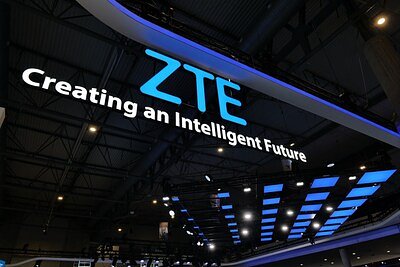
ZTE Unveils Full-Stack AI Strategy and 6G Vision at MWC 2026
BARCELONA, Spain – March 02, 2026 – As the doors open at MWC Barcelona 2026, ZTE has staked its claim on the future of telecommunications with an ambitious, all-encompassing strategy dubbed "All in AI, AI for All." The global ICT solutions provider is leveraging the industry's largest stage to present a comprehensive portfolio that deeply integrates artificial intelligence across its entire value chain, from foundational network infrastructure to the smart devices in consumers' hands. Under the theme "Creating an Intelligent Future," the company is showcasing not just incremental updates, but a strategic pivot towards what it calls a new "IQ era" of intelligent collaboration.
Central to its presentation are eight significant technological breakthroughs, including a first look at a 6G prototype and next-generation optical network technology, signaling the company's intent to lead the charge in defining the next decade of digital transformation.
A Full-Stack AI Blueprint
ZTE's strategy is built upon four interconnected pillars designed to create a seamless AI-powered ecosystem: AI Agentic Connectivity, AI Cloud, AI Home, and Smart Personal Devices. This full-stack approach aims to differentiate the company in a crowded market by offering an integrated framework that spans from massive data centers to individual user experiences.
AI Agentic Connectivity represents the company's vision for smarter, autonomous networks. Moving beyond human-managed systems, ZTE is pushing for Level 4 autonomous networks where AI agents handle complex operations, maintenance, and value-driven decisions. This includes the AIR MAX solution, an AI-native architecture designed to create ultra-efficient mobile networks that use AI to serve AI, optimizing performance and reducing operating expenses for carriers.
For the backbone of the internet, the company is championing a three-stage evolution for optical networks—from basic fiberization to all-optical networks, and finally to AI-infused optical networks that provide an ultra-broadband, sensing-capable foundation for future services.
AI Cloud forms the intelligent core of this strategy. ZTE is showcasing its Elastic AIDC (AI Data Center) solution, which promises modular, rapid deployment and a 25% increase in energy efficiency through advanced cooling and power systems. For enterprises, the company is promoting its Co-Claw AI agent, a full-stack tool designed to integrate into office work, R&D, and operations to enhance corporate efficiency. This is complemented by the SuperPOD, a high-density data center architecture designed to flexibly house up to 128 GPUs in a single rack, providing the raw power needed for large-scale AI model training.
Pushing the Boundaries of Next-Generation Connectivity
Among the most significant announcements is the unveiling of technologies that offer a tangible glimpse into the post-5G world. ZTE is demonstrating its GigaMIMO, a 6G prototype that represents a monumental leap in wireless technology. Featuring an array with over 2,000 antenna elements operating in the U6G band, the company claims this AI-powered system can deliver a tenfold capacity increase over 5G-Advanced networks. While commercial 6G is still years away, such prototypes are critical for driving research and development, showcasing the potential for holographic communications and truly immersive XR experiences that future networks will enable.
Complementing the wireless advancements, ZTE also released the industry’s first multi-ONU burst-mode 200G-PON prototype. This passive optical network technology achieves upstream transmission rates of up to 200 Gbps, a massive increase over the 2.5 Gbps or 10 Gbps common in many fiber-to-the-home deployments today. This advancement paves the way for operators to offer symmetrical multi-gigabit services to homes and businesses, ensuring that the fixed-line infrastructure can keep pace with the demands of future cloud applications, 8K streaming, and the metaverse.
Intelligence in the Home and Hand
ZTE is translating its infrastructure-level AI innovations into tangible benefits for consumers through its AI Home and Smart Personal Devices divisions. The company leverages its strong market position—citing itself as a global leader in shipments of FWA, MBB, and other CPE products—to build a new smart home architecture with "Connectivity as the Base, Screen as the Medium, and AI as the Core."
Key innovations here include the industry's first Wi-Fi 8 CPE for commercial use, designed to deliver true 10-Gigabit connectivity within the home. Another debut is the AI Mid-Screen, a smart display with what the company calls "Dual Brains, Dual Screens, and Full Connectivity," integrating entertainment, security, and smart controls into a central hub. As an "AI-Native Phone Pioneer," ZTE is also showcasing its nubia M153 smartphone, which features a deeply integrated AI assistant capable of executing complex, cross-app tasks, transforming the phone from a simple tool into a more symbiotic partner.
Navigating a Crowded and Competitive Field
ZTE's ambitious AI strategy does not exist in a vacuum. MWC 2026 is a battleground of ideas, with all major network equipment providers showcasing their own AI-centric visions. Competitors like Huawei, Ericsson, and Nokia are also heavily promoting AI for network automation, energy efficiency, and intelligent operations. Ericsson and Nokia, for instance, are heavily focused on leveraging AI to reduce operational costs for telcos and optimize 5G network performance, while Samsung is pushing a dual strategy with advancements in both virtualized RAN and on-device Galaxy AI.
Where ZTE appears to be charting a distinct course is in the sheer breadth of its "full-stack" vision, explicitly connecting its most advanced network infrastructure innovations, like the 6G GigaMIMO, directly to its consumer-facing products, like the AI-native phone. This integrated approach aims to create a virtuous cycle where insights from the network edge inform core operations, and advancements in the core enable new capabilities on user devices. The success of this strategy will depend on the company's ability to execute across this vast and diverse portfolio and convince operators and consumers alike that its interconnected ecosystem offers more value than a collection of disparate, best-in-class products. The announcements in Barcelona are a clear statement of intent to build and own that entire intelligent pipeline.
Topics & Related
Software & SaaS
AI & Machine Learning
Artificial Intelligence
Generative AI
AI & Software Platforms
Related Company Pulse